Debanking Isn’t Rare: ADF Attorney

Alliance Defending Freedom attorney Jeremy Tedesco recently took to social media to explain that debanking is not “rare” in America.

His comments come as Reuters and other media outlets seem to be trying to whitewash debanking or dismiss it altogether.

Since 2021, congressional testimony and news stories have highlighted how federal officials and financial institutions targeted conservative organizations through “reputational risk” policies. Conservatives deemed “high risk” could have their bank accounts closed without warning and without explanation.

During the Biden Administration, the federal Treasury Department gave banks and financial institutions an analysis titled “Bankrolling Bigotry” that listed legitimate, conservative groups such as Alliance Defending Freedom, the American College of Pediatricians, American Family Association, Eagle Forum, Family Research Council, Liberty Counsel, National Organization for Marriage, and the Ruth Institute as “Hate Groups” alongside the KKK and the American Nazi Party.

The “Bankrolling Bigotry” analysis also outlines ideas on policies and laws aimed at preventing these groups from fundraising. Officials from the Treasury Department distributed this document to banks and financial institutions in January of 2021, calling it an “overview on the funding of American hate groups.”

We also now know the U.S. Treasury Department gave banks and other financial institutions guiding “typologies” — patterns they could use to identify suspicious people or activities — the included search terms and patterns like “TRUMP” and “MAGA.”

The department encouraged financial institutions to comb through transactions for terms like, “Bass Pro Shops,” “Cabela’s,” and “Dick’s Sporting Goods” when looking for “Homegrown Violent Extremism.”

These problems went largely unreported until congress began asking serious questions about debanking.

But as of today, corporate shareholdersstate attorneys generalcongressmenfederal investigators, and news outlets all have expressed concerns over conservatives being wrongly labeled as “high risk” or “hate groups” and subsequently debanked.

Jeremy Tedesco is an attorney who serves as Alliance Defending Freedom’s Senior Counsel and Senior Vice President of Corporate Engagement. In a statement issued on X, Tedesco called debanking a “silenced” problem, writing,

Debanking is severely under-reported. Most victims I’ve spoken to won’t go public—fear of the stigma and of losing access to their money is that real. . . .The corporate media’s framing of debanking as “rare” is wrong and misleading. Victims rarely file formal complaints—most are too afraid of being shut out completely.

We can say from experience that Mr. Tedesco is exactly right.

In 2021 Family Council’s credit card processor terminated our account after designating our organization as “high risk.”

At 10:29 AM on Wednesday, July 7, 2021, our office received a terse email from our credit card processor — a company owned by JPMorgan Chase — saying, “Unfortunately, we can no longer support your business. We wish you all the luck in the future, and hope that you find a processor that better fits your payment processing needs.”

Within sixty seconds, our account was terminated and and Family Council could no longer accept donations online. The company never explained why were labeled “high risk.” All we could do was speculate that our conservative principles and our public policy work might have had something to do with the decision.

Filing a consumer complaint or going to court seemed pointless at the time, because the processor’s Terms of Service said it could terminate our account for any reason or no reason at all. Apparently that’s what they decided to do to us.

In 2022, Chase abruptly closed the account of Ambassador Sam Brownback’s National Committee for Religious Freedom with little warning or explanation, and PayPal similarly disabled the account of a group called the Free Speech Union.

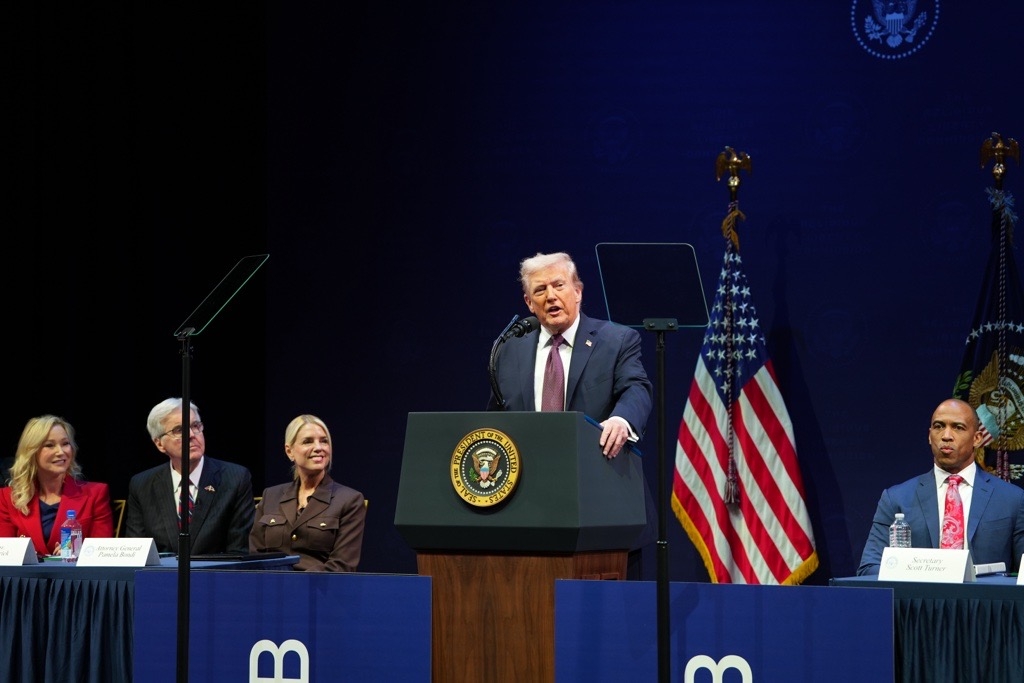
Stories like these are part of the reason President Trump recently signed an executive order against debanking. The purpose of the order is to guarantee fair banking for all Americans.

To their credit, JPMorgan Chase has taken steps to prevent religiously-motivated debanking, and Bank of America has finally done the same. That’s a good thing.

We appreciate groups like Alliance Defending Freedom who have worked so hard to fight against debanking. After all, banks that are too big to fail are too big to discriminate.

Articles appearing on this website are written with the aid of Family Council’s researchers and writers.
Bank of America Updates Code of Conduct to Prevent Debanking

Last week news outlets reported Bank of America is updating its code of conduct to prevent debanking.

The news comes in the wake of Trump Administration executive order “guaranteeing fair banking for all Americans.”

Since 2021, congressional testimony and news stories have highlighted how federal officials and financial institutions targeted conservative organizations through “reputational risk” policies. Conservatives deemed “high risk” could have their bank accounts closed without warning and without explanation.

Corporate shareholdersstate attorneys generalcongressmen, federal investigators, and news outlets all have expressed concerns over conservatives being wrongly labeled as “high risk” or “hate groups” and subsequently debanked.

Since then, JPMorgan Chase has taken steps to prevent religiously-motivated debanking. Now Bank of America is finally doing the same.

In a statement, our friends at Alliance Defending Freedom wrote,

“No American should ever fear that their bank will cancel them or deny them service because of their religious beliefs or political views. Bank of America has taken an important step forward in protecting against future discrimination against its customers. Over the past two years, ADF and our partners in both the private and public sectors have repeatedly engaged with Bank of America’s leadership to advocate for this change—one that is particularly crucial given Bank of America’s disturbing track record of debanking religious clients like U.S.-based Indigenous Advance Ministries, one of its supporting churches, and Timothy Two Project International. Bank of America is taking steps in the right direction to protect its customers from discrimination, but it has a long way to go to rebuild trust in the marketplace. We look forward to more banks following in the steps of JPMorgan Chase, and now Bank of America, as they come into compliance with President Trump’s recent executive order.”

We have written repeatedly about allegations that major financial institutions have deliberately debanked conservative individuals and organizations.

In 2021 Family Council’s credit card processor abruptly cancelled our account after designating our organization as “high risk.” Unfortunately, this was not an isolated incident. Other organizations have had similar experiences as well.

It’s good to see federal regulators and financial institutions finally taking steps to stop debanking. After all, banks that are too big to fail are too big to discriminate.

Articles appearing on this website are written with the aid of Family Council’s researchers and writers.
Atheist Groups Renew Legal Fight Against Arkansas Ten Commandments Monument

Above: Former Sen. Jason Rapert and then-Rep. Kim Hammer unveil Arkansas’ monument commemorating the Ten Commandments in this file photo from 2018. Atheist organizations filed a lawsuit to have the monument removed, but the case has remained in limbo for seven years.

Last Friday, a group of atheist organizations filed a new motion in federal court to remove a monument of the Ten Commandments from the Arkansas Capitol lawn.

In 2015, the Arkansas Legislature authorized a privately funded monument of the Ten Commandments on the Arkansas Capitol Building grounds. The monument is identical to one the U.S. Supreme Court ruled constitutional at the capitol building in Texas.

It was unveiled in 2018, but atheist groups like the Freedom From Religion Foundation and the Satanic Temple quickly filed a federal lawsuit to have the monument removed. The case has been in legal limbo ever since.

Earlier this year the Arkansas Legislature passed a separate law, Act 573 of 2025 by Sen. Jim Dotson (R — Bentonville) and Rep. Alyssa Brown (R — Heber Springs), authorizing privately funded Ten Commandments posters to be displayed in public schools and other public buildings in Arkansas. The measure received strong support in the Arkansas Legislature, but lawyers from the ACLU and a group of atheist organizations filed a federal lawsuit against four public school districts to block Act 573. On August 4, U.S. District Judge Timothy Brooks partially blocked a state law placing copies of the Ten Commandments in Arkansas’ public schools.

The new motion against Arkansas’ Ten Commandments monument argues that the court ruling against the Ten Commandments posters in four Arkansas schools means U.S. District Judge Kristine Baker should rule against Arkansas’ Ten Commandments monument on the capitol grounds.

The new motion claims,

This Court should grant summary judgment for the Cave Plaintiffs, invalidate the Ten Commandments Monument Display Act as violating the Establishment Clause, and order that the Ten Commandments Monument located on the Arkansas State Capitol grounds be permanently removed.

The truth is Arkansas’ monument of the Ten Commandments is identical to one the U.S. Supreme Court ruled constitutional at the Texas Capitol Building in 2005.

As we have said many times, there shouldn’t be anything controversial about a monument honoring the significance of the Ten Commandments.

Historians have long recognized the Ten Commandments as one of the earliest examples of the rule of law in human history, and they have helped shape philosophy and laws in countries around the world.

That’s why the Ten Commandments traditionally have appeared in artwork at courthouses and other public buildings.

Arkansas’ laws commemorating the Ten Commandments honor their historical and cultural legacy. With that in mind, we believe our federal courts eventually will resolve these lawsuits and uphold Arkansas’ Ten Commandments laws as constitutional.

Articles appearing on this website are written with the aid of Family Council’s researchers and writers.