
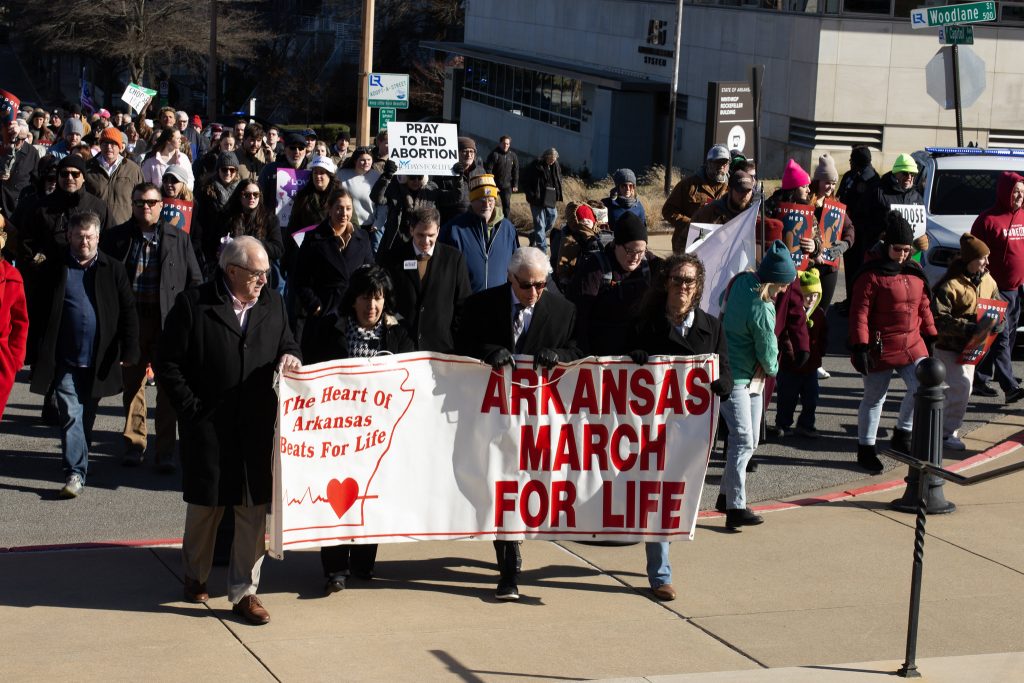
On January 18, pro-lifers from across Arkansas gathered for the 48th annual March for Life in Little Rock.
In its press coverage of the march, the Arkansas Democrat-Gazette quoted a representative from the Arkansas Abortion Support Network who said, “I would love to see the same number of people and churches come out to stand for the lives of the children we already have here in Arkansas. … I would love to see that same energy directed toward lowering our state’s maternal mortality rate and addressing the infant mortality rates that have been rising since abortion was fully banned in Arkansas.”
The truth is, contrary to what many people claim, pro-lifers — and Christians as a whole — are among those who are most likely to support women and children, and they tend to be more charitable than the general population.
In fact, researchers have written about this topic for many years.
Since the reversal of Roe v. Wade, states around the country have ramped up public funding to support women with unplanned pregnancies. Many of these programs are geared toward reducing maternal and infant mortality.
A recent report from our friends at the Charlotte Lozier Institute shows pro-life pregnancy resource centers provided hundreds of millions of dollars in goods and services to families in 2024. Many of these charities offer everything from pregnancy tests and ultrasounds to adoption referrals and parenting classes to maternity clothes, diapers, and baby formula — all typically free of charge.
A 2024 study by the Bipartisan Policy Center found 65% of foster parents attend weekly church services — which the center said was well above the national average of 40%.
Barna Research has also found that practicing Christians are more than twice as likely as the general population to adopt children. Barna writes, “Catholics are three times as likely. And evangelicals are five times as likely to adopt as the average adult.” Barna has also found Christians are more likely to welcome sibling groups, older youth, and children with special needs.
A 2022 survey by LifeWay Research found 44% of Protestant churchgoers say their congregation and its leaders are proactively involved with adoption and foster care.
On a much broader level, Pew Research has found that religious Americans are more likely to support charity and give to the poor, writing:
Among people who pray daily and attend services weekly, 45% also say they volunteered in the past week (including 23% who did so mainly through a church or other religious organization). Just 28% of Americans who are not highly religious say they volunteered in the past seven days. The gap is even bigger when it comes to helping the poor: 65% of the highly religious say they donated money, time or goods to help the poor in the past week, compared with 41% of all other U.S. adults.
Studies show churches, charities, religious colleges and universities, and people of faith as a whole may provide as much as $1.2 trillion worth of value to the American public.
Christians and churches support women with unplanned pregnancies, and they provide families for children in need of adoption and foster care. They always have. That is something to celebrate.
Articles appearing on this website are written with the aid of Family Council’s researchers and writers.