
Arkansas Can Enforce SAFE Act Protecting Children from Sex-Change Procedures
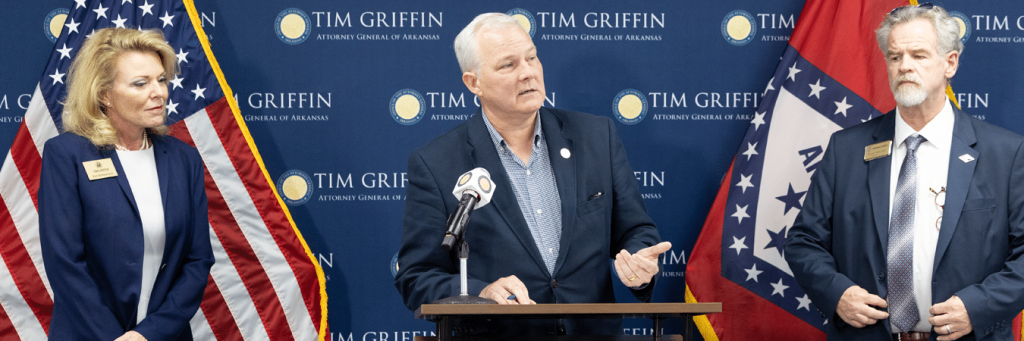
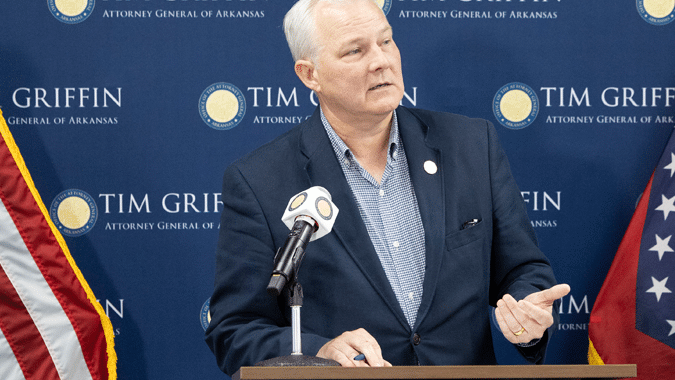
From left: Rep. Robin Lundstrum, Attorney General Tim Griffin, and Sen. Alan Clark discuss the SAFE Act during a press conference on Tuesday, August 12. Rep. Lundstrum and Sen. Clark were the lead sponsors of the measure in 2021.

On Tuesday, the Eighth Circuit Court of Appeals issued a decision letting the State of Arkansas enforce a law protecting children from sex-change procedures.

This decision is a victory for children and for common sense.

In 2021, Arkansas became the first state in the nation to pass a law protecting children from sex-change procedures. The Save Adolescents From Experimentation (SAFE) Act prohibits doctors from performing sex-change surgeries or giving puberty blockers and cross-sex hormones to minors. Unfortunately, the law has been tied up in federal court since 2021 — but Tuesday’s court decision lets the State of Arkansas enforce this good law.

Over the past five years, it has become clear that the medical “consensus” regarding transgender procedures on children has been largely manufactured by pro-LGBT activists.

Men and women have come forward with chilling testimony about how they were rushed through gender transitions as children without knowing the procedures’ risks, consequences, and alternatives.

Sex-change procedures, puberty blockers, and cross-sex hormones can leave children permanently scarred, sterilized, and at risk of serious health conditions.

Doctors do not know the long-term effects that these procedures might have on people.

Public health experts in the U.S.the U.K.SwedenFinland, and other nations have found that science simply does not support giving puberty blockers and cross-sex hormones to kids.

Last month, the Federal Trade Commission (FTC) announced a public inquiry into whether U.S. doctors and clinics may have deceived parents and children about the risks of these procedures, and the U.S. Department of Justice announced it had issued subpoenas to doctors and medical facilities involved in performing sex-change procedures on minors.

In its decision to uphold the SAFE Act, the Eighth Circuit made some important points about sex-change procedures performed on kids:

The judges pointed out that children who use puberty blockers are at greater risk of low bone density.

The court noted that “risks for minors using cross-sex hormones include changes in cholesterol and blood thickness, blood clots (increasing stroke risk), and infertility.”

The judges also cited evidence that sex-change surgeries carry risks and can lead to lifelong regret.

All of these findings underscore just how dangerous these procedures are.

Arkansas Attorney General Tim Griffin celebrated the decision, calling it “the culmination of many years of tireless and skillful legal work by this office. I am grateful for the excellent work done by my Solicitor General team.”

When U.S. District Judge Moody blocked the SAFE Act in 2021, we said we believed a higher court ultimately would overturn his decision. It took four years, but that is what happened on Tuesday.

The SAFE Act is common-sense legislation that protects children. It received overwhelming support from the Arkansas Legislature, and most voters in Arkansas support the law. It looks like our federal courts do too.

Articles appearing on this website are written with the aid of Family Council’s researchers and writers.

U.S. Department of Education Continues to Roll Back Transgender Policies at Schools

Over the past two weeks, the U.S. Department of Education has continued to push back against pro-transgender policies that many schools adopted under the Biden Administration.

Title IX is a federal law that prohibits discrimination on the basis of sex in education and in activities that receive federal funding — like school athletic programs. But the Biden Administration issued executive orders and rules drastically redefining “sex” under federal law to include sexual orientation and gender identity. As a result, many schools, colleges, and universities adopted policies that let male athletes compete in women’s sports and use girls’ locker rooms, showers, restrooms, and changing areas at school.

However, earlier this year, President Trump signed executive orders undoing many of the Biden Administration’s bad policies.

Since then the U.S Department of Education has worked hard to ensure public schools, colleges, and universities treat women and girls fairly.

On July 25, the Department of Education Office for Civil Rights (OCR) announced that five Northern Virginia school districts had policies in place letting biological males use girls’ locker rooms and restrooms at school.

In a press release, the Office for Civil Rights said:

In February of this year, OCR opened an investigation into Alexandria City Public Schools, Arlington Public Schools, Fairfax County Public Schools, Loudoun County Public Schools, and Prince William County Public Schools. The investigation was based on complaints alleging that the Divisions have similar anti-discrimination policies pertaining to “transgender-identifying” students, which violate the sex-based protections of Title IX. The Divisions are also the subject of several lawsuits, informal complaints, and reports, which allege that students in the Divisions avoid using school restrooms whenever possible because of the schools’ policies, and that female students have witnessed male students inappropriately touching other students and watching female students change in a female locker room. 

On August 1, the U.S. Department of Education announced Wagner College in New York has entered into a Resolution Agreement to comply with Title IX.

Earlier this year, female fencer Stephanie Turner forfeited a match after she was forced to compete against a biological male from Wagner College during the women’s event at USA Fencing’s Cherry Blossom Open competition. The Department of Education opened an investigation into Wagner as a result.

According to the Department of Education, Wagner has agreed to make sure biological males do not compete in women’s sports and “issue a personalized letter of apology to any Wagner College female fencer and issue a public statement of apology to all female athletes who were required to compete against a male in a Wagner athletics program designated for women.”

In July, the Department of Education made a similar announcement when it issued a press release saying the University of Pennsylvania had agreed to restore female athletes’ swimming records, issue apologies to female swimmers, and take steps to make sure biological males don’t compete in women’s athletics.

We have written repeatedly about how female swimmerspowerlifterscyclistssprintersvolleyball players, and others have seen their sports radically changed by men who claim to be women.

Letting men compete in women’s sports effectively erases women’s athletics.

It hampers women’s ability to compete for athletic scholarships and hurts their professional opportunities as adults.

In some sports, letting men compete against women can even be dangerous.

Concerned Women for America reports that more than 1,900 male athletes have taken first place medals away from women and girls.

In 2021 Arkansas passed Act 461 by Sen. Missy Irvin (R — Mountain View) and Rep. Sonia Barker (R — Smackover) preventing male student athletes from competing against girls in women’s athletics at school. This good law protects fairness in women’s sports in Arkansas.

Arkansas Attorney General Tim Griffin also recently joined 26 other state attorneys general in signing a formal letter calling on the NCAA to restore records and honors to female athletes.

And Arkansas has adopted good laws protecting physical privacy in school locker rooms, showers, restrooms, changing areas, and sleeping accommodations.

Most Americans agree that athletes should compete according to their biological sex — not their gender identity.

We deeply appreciate our elected leaders and policymakers who work hard to stand up for fairness in women’s sports both in Arkansas and across the country.

Articles appearing on this website are written with the aid of Family Council’s researchers and writers.

Arkansas A.G. Joins Letter Urging NCAA to Protect Fairness in Women’s Sports

Last week, Arkansas Attorney General Tim Griffin joined 26 other state attorneys general in signing a formal letter calling on the NCAA to restore records and honors to female athletes.

The letter led by Mississippi’s attorney general urges the NCAA to reinstate “all championships, titles, wins, awards, records and other recognitions that were wrongfully awarded to male athletes competing in NCAA women’s category events.”

In 2022, transgender swimmer “Lia” Thomas — a biological male who claims to be female — made headlines for shattering women’s swimming records and winning the women’s 500-yard freestyle at the NCAA Division I championship.

The NCAA even went so far as to nominate Thomas for its 2022 Woman of the Year Award.

As a result, in 2024 a group of female athletes filed a lawsuit arguing the NCAA violated their federal rights under Title IX by letting Thomas compete as a woman.

The University of Pennsylvania has announced it plans to revoke Thomas’ medals and apologize to female athletes forced to compete against Thomas. The letter Attorney General Griffin signed urges the NCAA to do the same for all female athletes.

We have written repeatedly about how female swimmerspowerlifterscyclistssprintersvolleyball players, and others have seen their sports radically changed by men who claim to be women.

Letting men compete in women’s sports reverses 50 years of advancements for women and effectively erases women’s athletics.

It hampers their ability to compete for athletic scholarships and hurts their professional opportunities as adults. Concerned Women for America reports that more than 1,900 male athletes who claim to be female have taken first place medals away from women and girls.

In some sports, letting men compete against women can even be dangerous.

That’s why in 2021 Arkansas passed Act 461 by Sen. Missy Irvin (R — Mountain View) and Rep. Sonia Barker (R — Smackover) preventing male student athletes from competing against girls in women’s athletics at school. This good law protects fairness in women’s sports in Arkansas.

Earlier this year, President Trump signed an executive order protecting fairness in women’s sports under Title IX.

Most Americans agree that athletes should compete according to their biological sex — not their gender identity.

We deeply appreciate our elected leaders and policymakers who work hard to stand up for fairness in women’s sports both in Arkansas and across the country.

Articles appearing on this website are written with the aid of Family Council’s researchers and writers.