
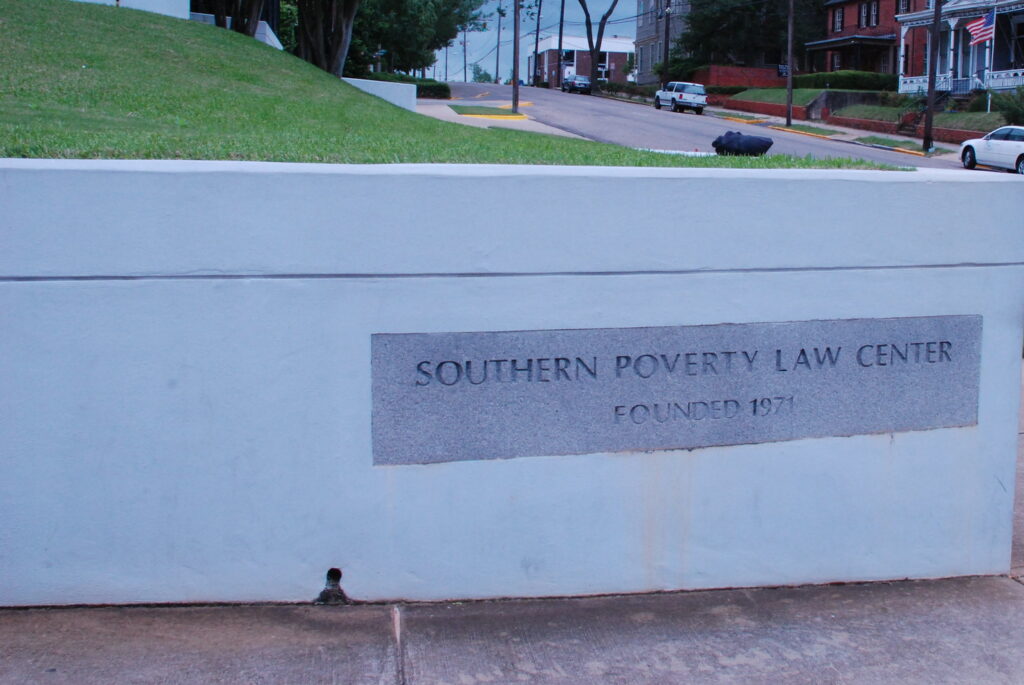
A recent report from federal regulators shows that America’s nine largest banks deliberately closed accounts belonging to conservative individuals and organizations based in part on information from the liberal Southern Poverty Law Center (SPLC).
Americans rely on banks and other financial institutions every day, and they expect these institutions to serve everyone regardless of their religious convictions or political positions. But over the past five years, congressional testimony and news stories have highlighted how federal officials and financial institutions targeted conservative organizations through debanking. Conservatives deemed “high risk” could have their bank accounts closed without warning and without explanation.
The SPLC has dismissed concerns about debanking, referring to it as a “conspiracy theory movement” led by “Christian dominionists.” But last month’s Office of the Comptroller of the Currency (OCC) report shows that financial institutions debanked conservatives for their political positions and religious convictions — and that in some cases, banks actually based their decisions on information from the SPLC.
The SPLC has a long history of labeling legitimate, conservative organizations as “hate groups” alongside the KKK and Neo-Nazis.
The OCC report says that WePay — a company owned by JPMorgan Chase — used information from the SPLC as part of its screening and debanking pratices. The report says:
“In December 2020, WePay closed the account of a conservative legal advocacy organization ‘for [terms of service] due to the merchant being associated with a known hate group and fundraising for their initiatives.’ The related notes flagged the Southern Poverty Law Center’s identification of the organization as a ‘hate group.’ . . .
“In June 2021, WePay closed the account of a customer that employees characterized in the bank’s internal tracking system as a ‘[r]ight wing religious conservative non profit with strong anti LGBTQ rhetoric.” WePay escalated the matter to JPMorgan reputation risk employees. The escalation discussed recent negative media linked to the merchant’s position on hate crime legislation and the Southern Poverty Law Center’s categorization of the organization as an ‘extremist hate group.’ WePay had maintained an account for the merchant since 2019, and there was no evidence to suggest the merchant’s views changed during that time. JPMorgan reputation risk employees advised WePay that ‘from a Reputation Risk perspective, we would recommend an exit from this account.'”
The report indicates other financial institutions also relied on the SPLC when deciding whether to close accounts.
In 2024, Alliance Defending Freedom Senior Counsel Jeremy Tedesco pointed out that the Southern Poverty Law Center “one of the biggest proponents” of debanking.
It’s important to note that earlier this year a federal Grand Jury in Alabama charged the SPLC with 11 counts of wire fraud, false statements to a federally insured bank, and conspiracy to commit concealment money laundering.
According to the indictment, the SPLC secretly funneled millions of dollars to a covert network of informants affiliated with groups like the Ku Klux Klan. Some of these informants were listed on the SPLC’s own “Extremist File” fundraising webpage at the same time the SPLC was secretly paying them. The indictment says the SPLC also used these informants to indirectly funnel money to other violent extremist group leaders. Leaders have gone on record saying the evidence indicates the SPLC is “manufacturing hate.”
The SPLC has denied any wrongdoing.
In 2021, Family Council’s credit card processor WePay — a company owned by JPMorgan Chase — terminated our account after designating our organization as “high risk.”
At 10:29 AM on Wednesday, July 7, 2021, our office received a terse email from WePay saying, “Unfortunately, we can no longer support your business. We wish you all the luck in the future, and hope that you find a processor that better fits your payment processing needs.”
Within 60 seconds, Family Council could no longer accept donations online. The processor never explained why we were labeled “high risk.” All we could do was speculate that our conservative principles and our public policy work might have had something to do with the decision to close our account.
Unfortunately, this was not an isolated incident. As the OCC report illustrates, many other organizations have had similar experiences.
Family Council is grateful to the many people and organizations who have stood up against debanking in recent years. Your religious views should not cost you your bank account. After all, banks that are too big to fail are also too big to discriminate.
Articles appearing on this website are written with the aid of Family Council’s researchers and writers. Photo Credit: Ian McKellar (CC BY-SA 2.0).
Related posts:
 Federal Grand Jury Charges Southern Poverty Law Center with Fraud, Conspiracy to Commit Money Laundering
 Jeremy Tedesco Debunks Southern Poverty Law Center’s Lies About De-banking
 Quena González on the Debanking Practices of the Largest U.S. Banks
 JPMorgan Chase Changes Policy That Led to Politicized Debanking of Conservatives