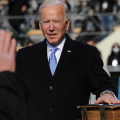
On Thursday, President Trump signed an executive order to expedite the process of moving marijuana from Schedule I to Schedule III of the Controlled Substances Act. The change would put marijuana in the same category as anabolic steroids or Tylenol with Codeine.
Rescheduling marijuana would not legalize marijuana outright, but it will create more confusion about marijuana’s legal status and make it much easier for people to grow and use marijuana.
A body of scientific evidence reveals that marijuana is harmful — especially for teens and young adults.
Nationwide, since 2019, the number of kids diagnosed with cannabis-induced mental disorders, including schizophrenia and psychotic episodes, has increased by 50%.
And research has shown time and again that marijuana has a significant potential for dependence and abuse.
Modern scientific evidence links marijuana to deadly heart diseases, cancers, stroke, mental illness, and birth defects. In fact, researchers say marijuana doubles a person’s risk of death from heart disease.
And instead of decreasing crime, marijuana legalization has actually emboldened drug cartels and increased the flow of illegal drugs across America.
Unilaterally reclassifying marijuana as a Schedule III substance is a major step in the wrong direction.
On Wednesday, Arkansas’ U.S. Senator Tom Cotton joined several of his colleagues in a letter urging President Trump not to reclassify marijuana. The letter reads:
We write to ask you to uphold marijuana’s status as a Schedule I drug. Rescheduling marijuana to a Schedule III drug will undermine your strong efforts to Make America Great Again and to usher in America’s next economic Golden Age. The only winners from rescheduling will be bad actors such as Communist China, while Americans will be left paying the bill.
Marijuana continues to fit the definition of a Schedule I drug due to its high potential for abuse and its lack of an FDA-approved use. The evidence shows that marijuana is harmful to its users, especially to young people and women who are pregnant and nursing.
According to the Substance Abuse and Mental Health Administration, studies show that marijuana is linked to “depression, anxiety, suicide planning, and psychotic episodes.” Tragically, mass shootings have a link to marijuana use, including school shootings; in fact, the shooter who attacked a Catholic school in Minneapolis blamed his actions on “gender and weed” and wrote, “I wish I never tried experimenting with either.” Additionally, marijuana has long-term effects on brain health, including “permanent IQ loss” when a person starts using marijuana at a young age.
Lastly, babies are also at risk from marijuana, as marijuana use during pregnancy may result in “fetal growth restriction, premature birth, stillbirth, and problems with brain development, resulting in hyperactivity and poor cognitive function.”
We cannot reindustrialize America if we encourage marijuana use. America’s workplace and America’s roads are endangered by marijuana use. The National Institute for Occupational Safety and Health at the Centers for Disease Control and Prevention has identified studies linking marijuana use to “impaired judgment” and “lack of concentration,” as well as research finding increases in industrial accidents, injuries, and absenteeism among employees who tested positive for marijuana versus those who tested negative.
Additionally, the National Highway Traffic Safety Administration warns that marijuana users are more likely to be involved with car crashes and studies show that marijuana impacts motor skills, cognitive functions, and user’s ability to multitask, which is a “critical skill” for drivers.
Rescheduling would also give a massive tax break to marijuana companies. These companies are currently prohibited from taking business tax deductions under Section 280E of the Internal Revenue Code due to their involvement with marijuana, given its status as a Schedule I drug. According to the marijuana industry’s own researchers, marijuana companies would obtain a $2.3 billion tax break if marijuana were to be rescheduled.
Marijuana business leaders have said they will use this infusion of funds to increase their marketing and to expand their businesses into additional states.8 While supporters of rescheduling argue that extending tax benefits to marijuana businesses will create economic growth, the costs of workplace and vehicular accidents caused by increased marijuana usage far exceeds any perceived benefits— not to mention the moral costs of marijuana advertising that could reach kids.
In light of the documented dangers of marijuana, facilitating the growth of the marijuana industry is at odds with growing our economy and encouraging healthy lifestyles for Americans. We urge you to continue your strong leadership of our country and our economy, and to turn away from marijuana rescheduling.
Last year Arkansas Attorney General Tim Griffin joined 10 other state attorneys general in a letter asking the Biden Administration not to reclassify marijuana as a Schedule III substance.
Among other things, the A.G.’s comments noted that “rescheduling marijuana would violate the United States’ international treaty obligations” regarding illicit drugs, and that rescheduling marijuana would “compound the harms” that marijuana already causes.
As Family Council told the federal government in our public comments we submitted in July of 2024, reclassifying marijuana signals that marijuana has an accepted medical use when it actually does not. It ignores the potential for abuse and dependence among users. And it risks contributing to psychotic disorders and mental illnesses in America.
Marijuana may be many things, but “harmless” simply is not one of them.
Articles appearing on this website are written with the aid of Family Council’s researchers and writers.