
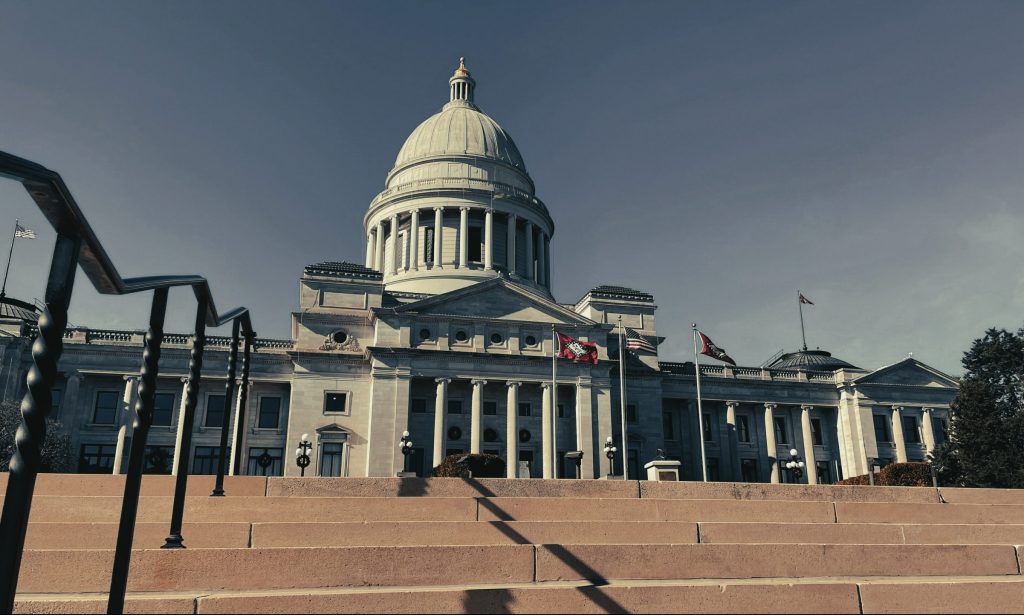
On Thursday, Arkansas Secretary of State Cole Jester announced the Arkansas Ballot Measure Rights Amendment failed to qualify for the November ballot, citing examples of “potential signature forgery” and other shortcomings on the amendment’s petitions.
The Arkansas Constitution lets canvassers circulate petitions to place measures on a general election ballot. Its original intent was to give citizens a way to function as a “legislative body.” But instead of giving everyday people a way to enact their own laws, special interests have hired people to circulate petitions to place misleading, deceptive, and poorly written measures on the ballot in Arkansas.
Last year, Arkansans testified in legislative committees about petition canvassers allegedly trying to provoke altercations and encouraging people to sign petitions multiple times.
In response, the Arkansas Legislature has passed several good laws intended to address petition fraud and other problems with the initiative process, but those laws have been tied up in court.
The Arkansas Ballot Measure Rights Amendment would amend the Arkansas Constitution to keep the ballot initiative process wide open and prevent the state legislature from enacting safeguards against petition fraud and other offenses.
Most of the ballot measure’s financial support appears to have come from out of state.
Ethics filings show the National Education Association in Washington, D.C., donated nearly $1.4 million to the campaign for the amendment this year. The National Education Association is the largest teacher labor union in the United States.
Another $250,000 came from The Fairness Project in Washington, D.C. According to its website, the Fairness Project currently opposes pro-life efforts in Missouri and supports a pro-abortion measure in Virginia.
On Thursday, news outlets reported Secretary of State Jester sent a letter notifying Protect AR Rights, the group backing the Arkansas Ballot Measure Rights Amendment, that it did not provide enough valid petition signatures to place the measure on the November ballot.
The Secretary of State’s letter reportedly noted a number of deficiencies and irregularities with the group’s petitions. KLRT Fox 16 News in Little Rock reports:
In a letter to Protect AR Rights, Jester wrote:
“Notably, 87 petition parts were for a different constitutional amendment, The Educational Rights Amendment of 2026, but were submitted with your petition. Two thousand seven hundred and seventy-nine (2,779) signatures were from individuals whose names were on the petition more than one time, whether due to them illegally signing multiple times or due to forgery. Fifteen times a notary appears to have notarized a canvasser’s blank signature line. Most troubling, in 504 occurrences someone appears to have forged another’s information or signature.”
The Secretary of State’s office also provided a 15-page document on its website highlighting examples of petitions that the office said were improperly notarized or that contained potentially illegal or ineligible signatures.
After counting the number of valid petition signatures submitted, the Secretary of State’s office reportedly determined that the proposal did not have enough signatures to qualify for the November ballot.
Articles appearing on this website are written with the aid of Family Council’s researchers and writers.
Related posts:
 Marijuana Amendment Fails to Qualify for November Ballot for Now
 BREAKING: Secretary of State Disqualifies Abortion Amendment Petitions for Failing to Comply With State Law
 Secretary of State Disqualifies Abortion Amendment Petitions for Failing to Comply with State Law
 Arkansas Supreme Court Orders Secretary of State to Count Abortion Amendment Petitions Circulated by Volunteers