Arkansas’ SAFE Act Goes to Trial Monday
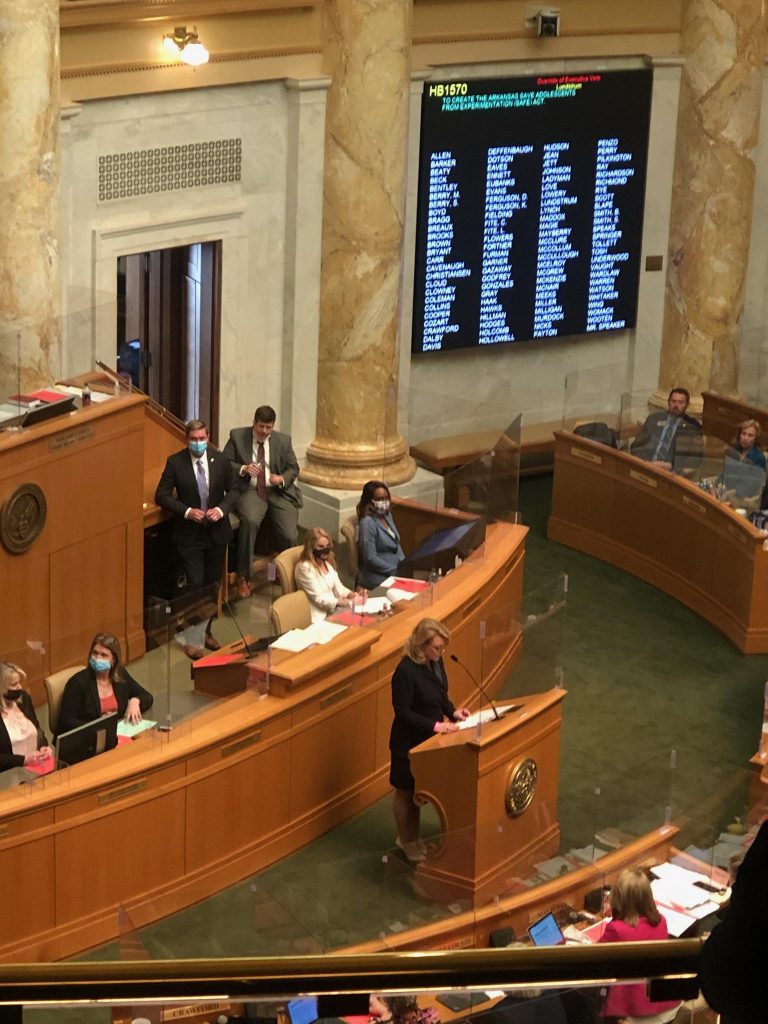
Above: Rep. Robin Lundstrum (R — Springdale) explains the SAFE Act to the Arkansas House of Representatives in this file photo from 2021.

The federal lawsuit over Arkansas’ Save Adolescents From Experimentation (SAFE) Act will go trial at 9:00 AM on Monday, October 17, 2022. The U.S. District Court’s schedule indicates the trial will last all day, with Judge James Moody presiding over the case.

The SAFE Act is an excellent law that protects children from sex-reassignment procedures, puberty blockers, and cross-sex hormones.

The Arkansas Legislature overwhelmingly passed the Save Adolescents From Experimentation (SAFE) Act last year.

Researchers do not know the long term effects that puberty blockers and cross-sex hormones can have on kids.

The U.S. Food and Drug Administration has never approved puberty blockers and cross-sex hormones for the purpose of gender transition. Doctors are giving these hormones to kids off-label, in a manner the FDA never intended.

In July the U.S. Food and Drug Administration added a warning label to puberty blockers after biological girls developed symptoms of tumor-like masses in the brain.

In 2021 a major hospital in Sweden made headlines after announcing it would no longer administer puberty blockers and cross-sex hormones to children.

Over the summer news broke that a U.K. gender clinic that prescribed puberty blockers and cross-sex hormones to children for many years now faces the possibility of lawsuits from upwards of 1,000 families.

Despite mounting evidence that sex-change hormones and procedures are not appropriate for children, the ACLU and others have asked the federal courts to strike down Arkansas’ SAFE Act.

Several business interests and the Biden-Harris Administration also have joined the fight against Arkansas’ SAFE Act.

The lawsuit over the SAFE Act has underscored several key points about gender dysphoria, including:

  • The science surrounding gender identity remain in flux.
  • The demographics of transgender youth is changing in ways that scientists do not yet understand.
  • Randomized clinical trials do not support the adolescent gender transition processes that many doctors in America use.

U.S. District Judge James Moody has temporarily blocked the state from enforcing the law while the lawsuit progresses. 

Arkansas’ SAFE Act protects children. We believe federal courts ultimately will recognize that fact and uphold this good law as constitutional.
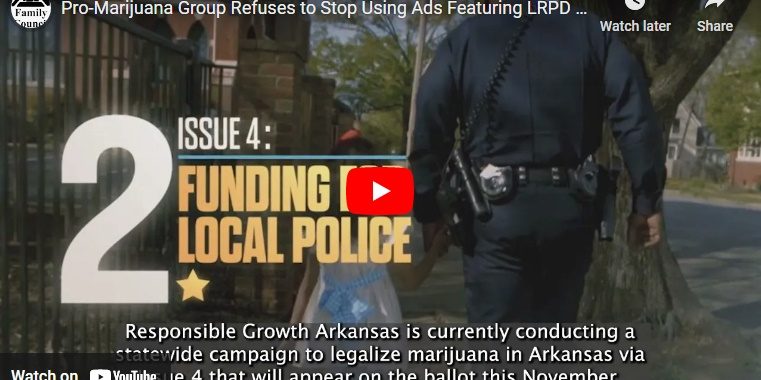
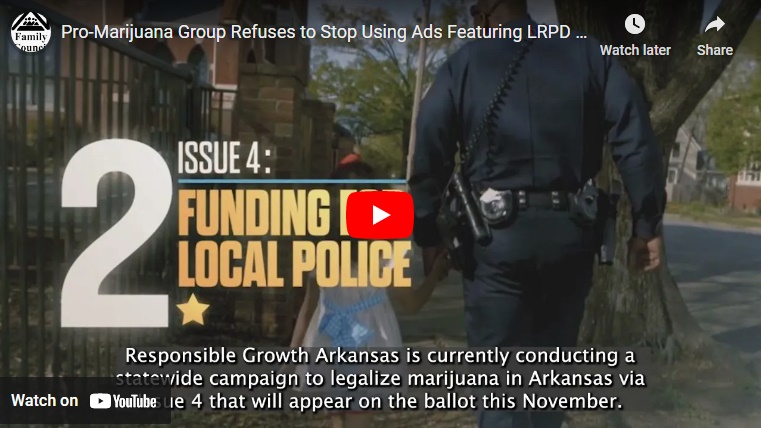
Pro-Marijuana Group Refuses to Stop Using Ads Featuring LRPD Officers Despite Letter From City Attorney

Responsible Growth Arkansas — the group behind marijuana Issue 4 — has refused to stop using a set of advertisements that feature footage of Little Rock Police Department officers.

Little Rock City Attorney Tom Carpenter recently sent Responsible Growth Arkansas a cease and desist letter asking the group to stop using the ads, because the ads included footage of LRPD officers without the department’s knowledge or consent.

An attorney for Responsible Growth Arkansas reportedly told the city “we see no legal basis for the demand that RGA [Responsible Growth Arkansas] cease and desist from further use of this video.”

Watch this video to learn more.

Recreational Marijuana Supporters Campaign Against Marijuana Issue 4

The following is a press release from Family Council Action Committee.

FOR IMMEDIATE RELEASE
Wednesday, October 12, 2022

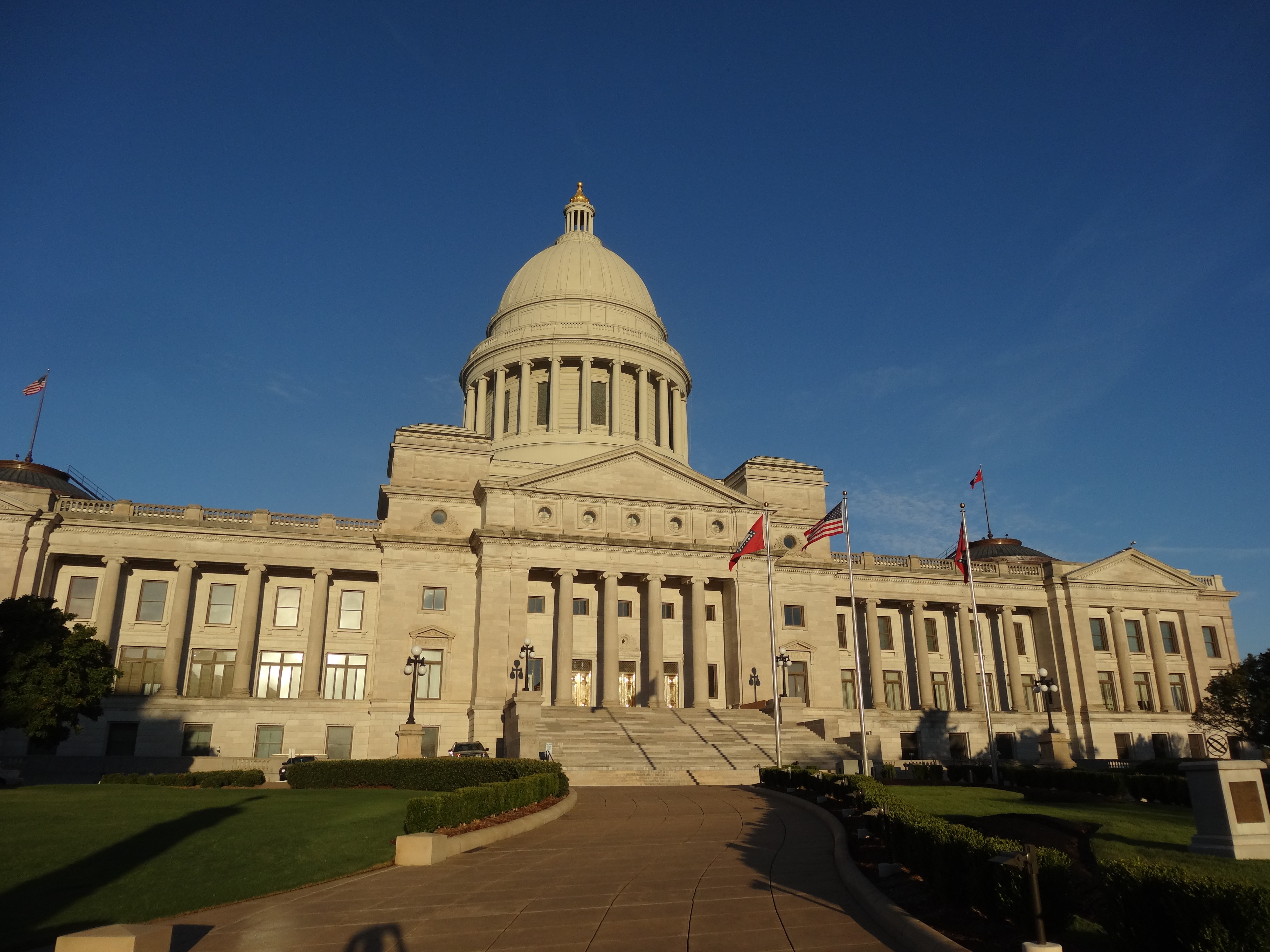
Little Rock — On Wednesday marijuana advocate Melissa Fults hosted a press conference opposing marijuana Issue 4 at the Arkansas Capitol Building. Fults is a firm supporter of medical and recreational marijuana in Arkansas, but said she strongly opposes Issue 4.

In a statement, Fults said, “Issue 4 lets a greedy monopoly control marijuana in Arkansas. The way this measure distributes cultivator and dispensary licenses, the entire cannabis industry could be owned by as few as four to eight people who may not even live in Arkansas. That isn’t right.”

Fults pointed out that Issue 4 fails to expunge criminal records for drug offenders. “Issue 4 doesn’t expunge marijuana convictions. Growers will be making millions of dollars, and it will be legal for consumers to use marijuana, but the people whose lives have been ruined by marijuana convictions will continue to have their lives ruined by that criminal record.”

Fults said Issue 4 affects much more than recreational marijuana. “Under Issue 4, the same monopoly that controls marijuana cultivation would control hemp and CBD production as well. Issue 4’s definition of cannabis fails to exclude industrial hemp and CBD oil. This would take away hemp farmers’ licenses and put CBD stores out of business. Other states excluded hemp from their recreational cannabis laws, but Issue 4 fails to do that.”

Fults was joined by Family Council Action Committee Executive Director Jerry Cox, a longtime marijuana opponent. Cox released a statement, saying, “I’m pleased to be part of a bipartisan effort against marijuana amendment Issue 4. This amendment was cooked up by industry insiders from out of state. It writes a marijuana monopoly into our constitution. Issue 4 is the kind of swamp politics that Arkansans are sick of. Voters need to understand that even if you support marijuana legalization, Issue 4 isn’t the way to go.”

Family Council Action Committee is a conservative 501(c)(4) public policy organization based in Little Rock with a mission of promoting, protecting, and strengthening traditional family values in the political arena.

###