


A Christian Reflection on the Dangers of Marijuana and THC

Marijuana and drugs made from THC have spread across the nation, and marijuana’s supporters often say these products are completely harmless. But the evidence tells a very different story.
Marijuana can damage adolescent brains — resulting in permanent loss in IQ, difficulty thinking and problem-solving, reduced coordination, and increased risk of psychosis.
High-potency marijuana can trigger serious mental health problems.
One recent study found nearly half of drivers killed in car accidents had THC levels well above legal DUI limits. Another found car crashes increase in states where recreational marijuana is legal.
Medical marijuana has failed to live up to its promises. Researchers writing in the Journal of the American Medical Association (JAMA) found that “evidence is insufficient for the use of cannabis or cannabinoids for most medical indications.” Even worse, the study revealed that 29% of people using marijuana for “medical” purposes actually developed cannabis use disorder — meaning they became dependent or addicted.
Scripture reminds us to be sober-minded (1 Peter 5:8) and not allow ourselves to be dominated by anything (1 Corinthians 6:12). Marijuana and THC are not harmless. They can enslave the mind and dull discernment.
Christians have a responsibility to speak the truth about these dangers, offer support for those struggling with addiction, and teach that true peace and healing ultimately come from Christ.
Articles appearing on this website are written with the aid of Family Council’s researchers and writers.

Marijuana Use Reduces Brain Activity: Study

Research published last year reminds us that heavy marijuana use is associated with reduced activity in regions of the brain that are critical for young adults.
Authors at Neuroscience News recently reexamined the study first published in JAMA Network Open. They noted that “63% of heavy lifetime users and 68% of recent users showed diminished neural response during working memory tasks.”
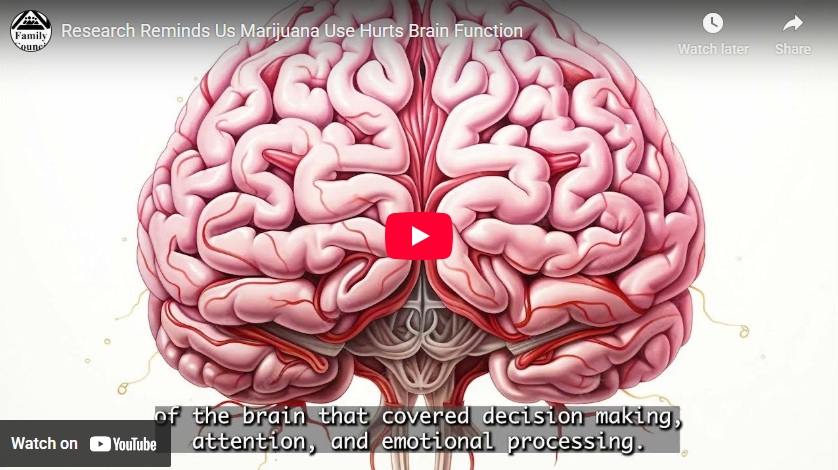
Using a functional MRI, researchers found heavy marijuana users suffered reduced activity in areas of the brain that governed decision making, attention, and emotional processing.
It’s important to remember that modern strains of marijuana are much more powerful than in past. Today’s marijuana can contain 15% to 30% THC, compared to just 3% THC in marijuana from the 1960s. That’s troubling, because because high levels of THC in marijuana has been shown to trigger serious mental health problems.
Scientific research continues to find that marijuana use is harmful — especially for children, teens, and young adults.
A recent study from Columbia University found even “casual” marijuana use is linked to higher rates of depression, anxiety, and impulsive behavior in teenagers.
Researchers at Massachusetts General Hospital found teen psychiatric emergencies spiked after marijuana commercialization began in the state.
And instead of decreasing crime, marijuana’s legalization has actually emboldened drug cartels and increased the flow of illegal drugs across America.
All of this underscores what we have said for years: Marijuana may be many things, but “harmless” simply is not one of them.
Articles appearing on this website are written with the aid of Family Council’s researchers and writers.