ASP Seizes Hundreds of Pounds of Illegal Marijuana Presumably From Out of State
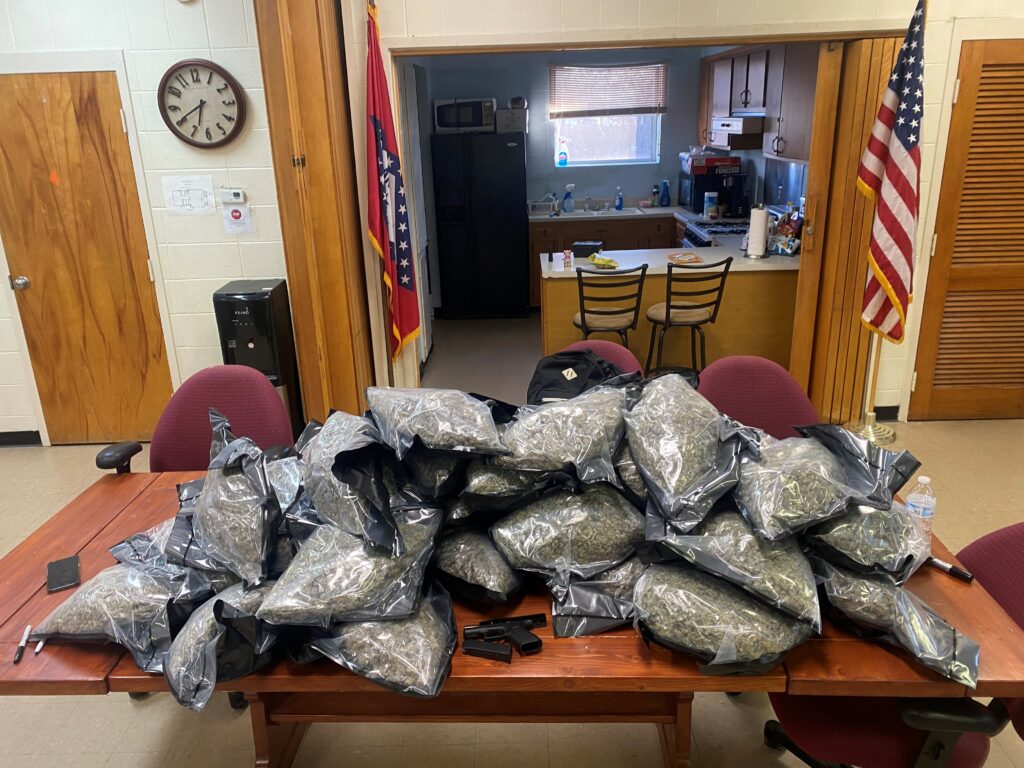
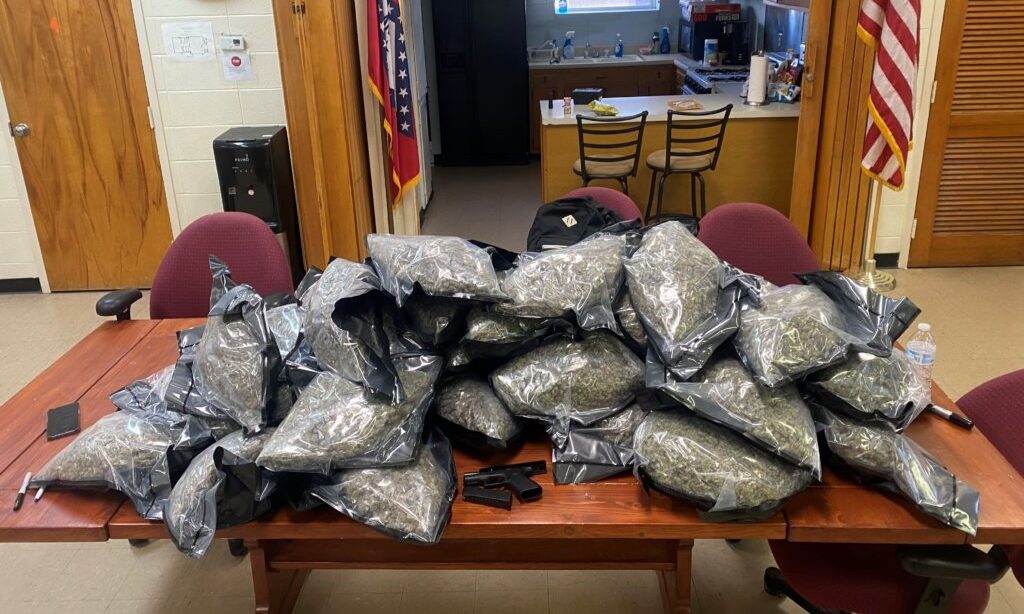
This month Arkansas State Police seized hundreds of pounds of illegal marijuana over the course of several routine traffic stops.
The drivers arrested during the traffic stops primarily appeared to be from out of state.
In a press release, the Arkansas State Police wrote,
MORE THAN 200 POUNDS OF ILLEGAL MARIJUANA AND LOADED HANDGUN DISCOVERED BY ASP DURING TRAFFIC STOP
At approximately 12:10 p.m. on February 20, 2024, a black GMC pickup truck was pulled over by the ASP on Interstate 40 Eastbound at the 8-mile marker for a traffic violation. The driver told the Trooper he was traveling from Oregon to Florida.
Troopers searched the truck and found nine duffle bags containing 211 pounds of illegal marijuana in 190 vacuum-sealed bags. Troopers also discovered a loaded 357 Magnum revolver in a fanny pack on the passenger side of the vehicle, along with $3,978.
ASP transported the driver, Thomas Elliott, 51, of Deerfield Beach, FL, to the Crawford County Jail. Elliott is facing multiple charges, including Simultaneous Possession of Drugs and a Firearm.
ASP FINDS ILLEGAL MARIJUANA AND HANDGUN DURING TRAFFIC STOP IN CRAWFORD COUNTY
On February 20, 2024, ASP stopped a white Chevrolet Suburban traveling Eastbound on Interstate 40 at the 5-mile marker in Crawford County.
Upon searching the SUV, Troopers discovered three large boxes containing 50 pounds of illegal marijuana in the rear cargo area. Additionally, a 9mm Glock handgun was found in the center console.
ASP transported the driver, Wynton Foy, 33, of Snellville, GA, and the passenger, De’Ja Johnson, 28, of Atlanta, GA, to the Crawford County Detention Center, where they were charged with Possession with Purpose to Deliver Controlled Substance, Possession of Felony Drug Paraphernalia, and Simultaneous Possession of Drugs and a Firearm.
ASP SEIZED MORE THAN A TON OF THC VAPES AND 21 POUNDS OF ILLEGAL MARIJUANA
On February 22, 2024, at approximately 10:30 a.m., at the 2-mile marker Eastbound on Interstate 40, ASP pulled over a white Silverado pickup truck towing an enclosed trailer due to a traffic violation.
Troopers searched the trailer and found 2,628 pounds of illegal marijuana vapes and 21 pounds of contraband marijuana.
Troopers arrested Janet Arreola, 29, and Jose Escobedo, 35, both of Cumming, Georgia, and transported them to the Crawford County Detention Center. Both were charged with Trafficking Controlled Substances and Endangering the Welfare of a Minor.
ASP FINDS MORE THAN 100 POUNDS OF ILLEGAL MARIJUANA DURING TRAFFIC STOP IN LONOKE COUNTY
On February 20, 2024, ASP stopped a black 2023 Chevrolet Equinox near the 173-mile marker on Interstate 40 Eastbound in Lonoke County for a traffic violation.
Upon searching the vehicle, the Trooper discovered a shrink-wrapped package containing 119 bundles of illegal marijuana weighing a total of 126 pounds.
Troopers transported driver Zang Xiong, 34, of Holmen, Wisconsin, to the Lonoke County Detention Center, where he was charged with Felony Possession of a Scheduled VI Controlled Substance with the Purpose to Deliver. Xiong told the police he was traveling to Mississippi from Oklahoma.
FOURTEEN POUNDS OF ILLEGAL CONTRABAND DISCOVERED DURING TRAFFIC STOP ON INTERSTATE 40
On February 22, 2024, at approximately 4:04 p.m., ASP stopped a gold Chevrolet Malibu near the 2-mile marker Eastbound on Interstate 40 in Crawford County.
Troopers searched the trunk of the vehicle and located approximately four pounds of illegal marijuana and 10 pounds of illegal marijuana products. Troopers seized the contraband and arrested the driver, Chip Ervin, 45, of Mississippi.
Troopers transported Ervin to the Crawford County Jail, where he was charged with multiple charges, including Possession with Intent and Deliver Possession of Drug Paraphernalia.
Stories like these underscore that marijuana‘s legalization in other states has actually fueled the black market and the drug cartels rather than weakening them.
California’s Unified Cannabis Enforcement Taskforce seized more than $312 million worth of illegal marijuana during 2023.
Oregon has been inundated by industrial scale marijuana cultivation sites operated illegally by organized crime and drug cartels. Some of these marijuana operations are tied to labor trafficking and violent crime.
If Arkansas had passed marijuana amendment Issue 4 in 2022, our marijuana laws arguably would be more lax than many states’.
A similar marijuana amendment is currently vying for the 2024 ballot in Arkansas right now.
Contrary to popular belief, legalization does not decrease drug-related crime, and it does not alleviate drug abuse. If anything, it seems to make these problems worse.
Articles appearing on this website are written with the aid of Family Council’s researchers and writers.