Paid to Provoke? Pro-Life Leaders Testify About Shady Abortion Petition Tactics

On Tuesday pro-life leaders appeared before the Arkansas Senate State Agencies Committee in support of several good bills shoring up Arkansas’ ballot initiative process.

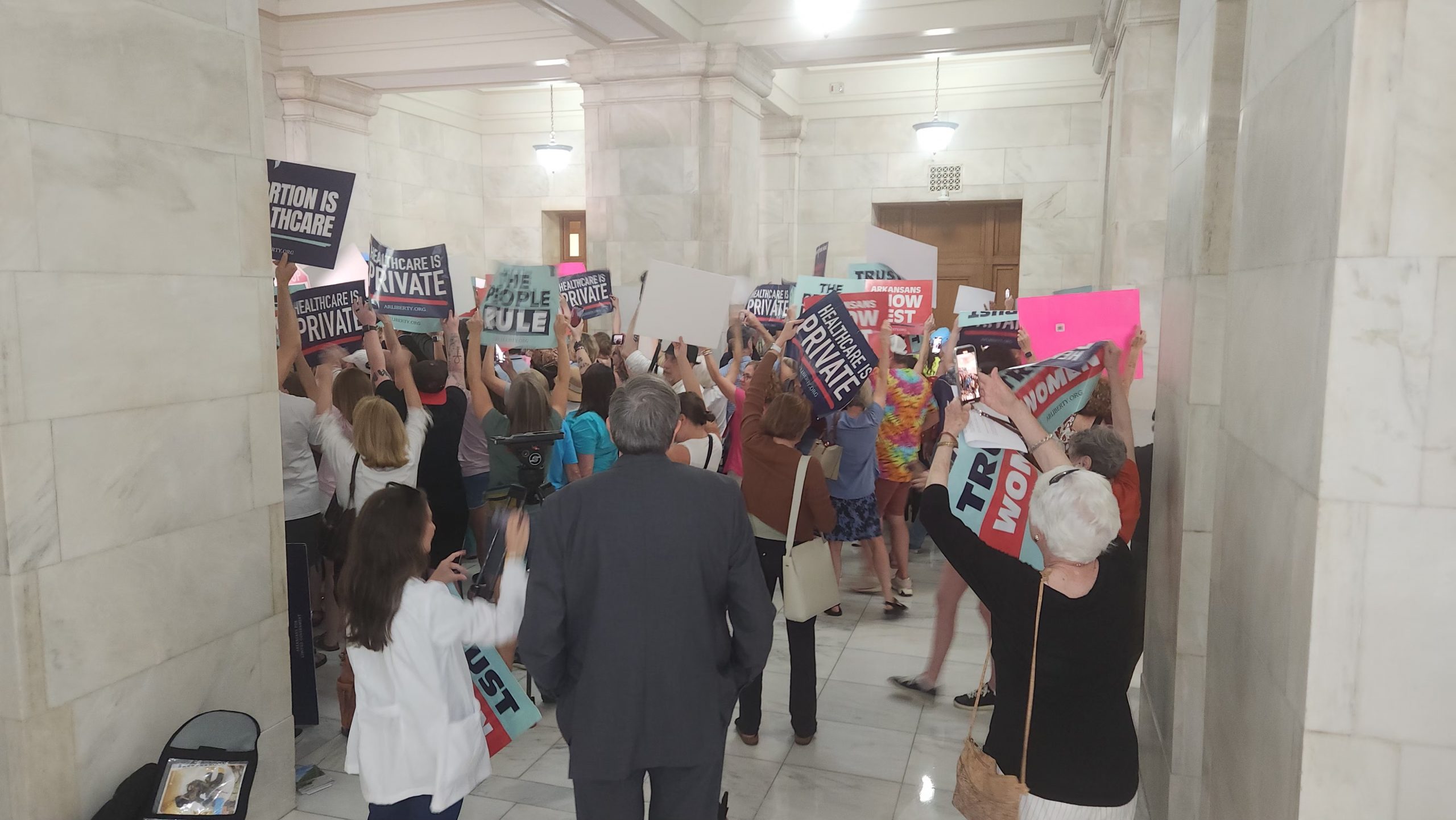
During committee testimony, pro-life leaders Vikki Parker and Wendy Curry gave testimony alleging that canvassers for the 2024 Arkansas Abortion Amendment violated state law and were paid $500 bonuses for “altercations” with pro-lifers who opposed the abortion amendment.

During her testimony, Parker indicated that the allegations were reported to the authorities.

Last year, sponsors of the Arkansas Abortion Amendment hired canvassers to circulate petitions for the measure. Under Arkansas law, petition canvassers are not supposed to let people sign a petition more than once, but on Tuesday Vikki Parker testified that canvassers for the abortion amendment actually encouraged people to do exactly that. You can watch part of her testimony below.

Pro-life leader Wendy Curry also testified that she and other pro-life volunteers encountered aggressive petition canvassers who eventually said they were promised $500 each per “altercation” with pro-lifers, in addition to their regular pay as petition canvassers. You can watch part of her testimony below.

Nationwide, pro-lifers have seen pro-abortion groups use aggressive and deceptive tactics to support amendments that write abortion into state constitutions.

The Arkansas Constitution lets canvassers circulate petitions to place measures on a general election ballot. However, in recent years Arkansas’ ballot initiative process has become the opposite of what it was intended to be. Its original intent was to provide citizens a means of functioning as a “legislative body.” Instead, powerful special interests have used our own ballot initiative process against us.

Tuesday’s committee testimony underscores why states like Arkansas need to reexamine all laws concerning the ballot initiative process. It’s simply too easy for powerful special interests to buy their way to the ballot by hiring petition canvassers or spending millions of dollars on deceptive advertising for misleading measures.

Right now, Sen. Kim Hammer (R — Benton) is sponsoring several good bills that shore up Arkansas’ ballot initiative laws:

  • H.B. 1221 making it clear that petition signatures expire at the end of a General Election cycle. This would prevent canvassers from collecting signatures across multiple election cycles and help ensure sponsors don’t submit old signatures that are outdated or more likely to be invalid.
  • H.B. 1222 clarifying that the Arkansas Attorney General cannot approve a measure’s sponsors to begin collecting signatures to place a measure on the ballot if the measure conflicts with the U.S. Constitution or federal law. The bill also prevents sponsors from asking the attorney general to certify conflicting measures.
  • S.B. 207 requiring petition canvassers to inform people that petition fraud is a crime before obtaining their signatures on a petition.
  • S.B. 208 requiring canvassers to verify a person’s identity via photo ID before obtaining the person’s signature on a petition. This helps prevent people from fraudulently signing someone else’s name on a petition.
  • S.B. 209 clarifying that the signatures a canvasser collects will not count if the Secretary of State finds the canvasser has violated Arkansas’ laws concerning canvassing, perjury, forgery, or fraud in the process of gathering signatures.
  • S.B. 210 requiring people to read the ballot title of the measure before signing a petition. The ballot title includes a summary of the ballot measure. Reading the ballot title helps ensure people understand the measure before they sign a petition to place the measure on the ballot.
  • S.B. 211 requiring petition canvassers to file an affidavit with the Secretary of State verifying that the canvasser complied with the Arkansas Constitution and all Arkansas laws concerning canvassing, perjury, forgery, and fraud in the process of gathering signatures.
  • S.B. 212 creates the Document Validity Division within the Arkansas Secretary of State’s office to investigate, subpoena, and nullify fraudulent or false documents related to ballot initiatives.

If the Arkansas Legislature does not enact good laws that bring accountability and transparency to the ballot initiation process, the problems highlighted during Tuesday’s senate committee meeting will simply continue to get worse.

Articles appearing on this website are written with the aid of Family Council’s researchers and writers.
Why Family Council Supports Regulating the Ballot Initiative Process

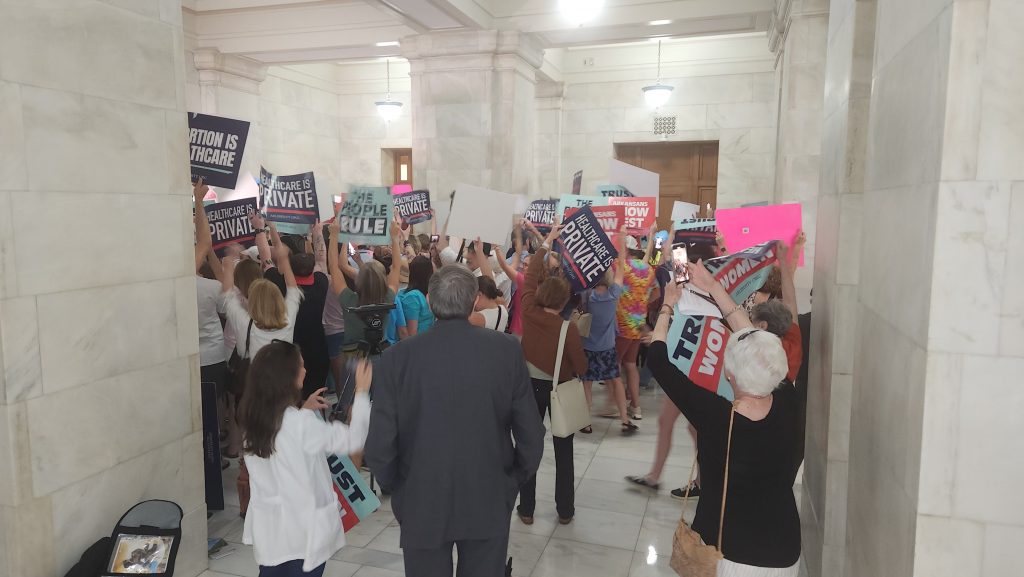
Above: Supporters celebrate as petitions for the Arkansas Abortion Amendment arrive at the state capitol on July 5, 2024.

The Arkansas ballot initiative process was passed by voters in 1910, giving them the constitutional right to propose laws by circulating petitions and placing measures on the ballot for a statewide vote. This law served Arkansans well for almost 100 years. But over the past century, the cost of running a political campaign has grown, and today the initiative process is out of reach for virtually everyone except wealthy special-interests who want to change Arkansas’ constitution or laws for their benefit. The growing influence of businesses that specialize in gathering petition signatures allows anyone with legislation, no matter how obscure or dangerous, to hire hundreds or even thousands of workers to gather as many petition signatures as is needed to qualify for the ballot. As a result, individuals or groups with enough money can easily acquire the necessary signatures. This makes it possible for almost any issue to be placed on the Arkansas ballot for a statewide vote, if the sponsors have enough money at their disposal. If the Arkansas Legislature does not enact good laws that bring accountability and transparency to the ballot initiation process, these problems will simply get worse.

Arkansas’ ballot initiative process has become the opposite of its intended purpose. Its original intent was to provide citizens a means of functioning as a “legislative body.” If lawmakers refused to act — and enough citizens decided “there ought to be a law” — the people could write the law, create a groundswell of public involvement, mount a volunteer effort to get the necessary signatures, and place their idea before voters in a statewide election. This works as long as the movement is truly grassroots, with average citizens taking time to circulate petitions because they believe, “It’s the right thing to do.”

In 2003 I worked with lawmakers at the capitol to propose a simple resolution stating that marriage is the union of a man and a woman. Lawmakers killed the resolution in a committee vote. So, in  2004 I led the effort to place an amendment on the ballot declaring that marriage in Arkansas is the union of one man and one woman. By the time we turned our signatures in to the Secretary of State, over 5,000 people statewide had volunteered and circulated petitions. That year, we needed about 85,000 signatures, but we turned in over 200,000. The marriage amendment was placed on the ballot, and Arkansas voters approved it with 75% of the vote. This was done without paying any canvassers or having to run deceptive ads, because it was a fundamental issue that lots of people cared deeply about. 

Today the Arkansas Constitution is for sale — and it’s cheap. We’re a small state, so it only takes about 90,000 petition signatures to qualify for the ballot. All you need is about 100 temporary workers who will work as canvassers and each get about 1,000 signatures and you’re done. Imagine how easy it would be if you had enough money to hire 400 or 500 paid canvassers, which is what sponsors of the 2024 marijuana amendment did.  As far as I know every “citizen-led” measure that has appeared on the ballot in the past 20 years has used paid canvassers. What was once a form of direct democracy has become just the opposite. It is a tool of the powerful that they can use to impose their will on the rest of us. Something needs to be done to stop the harm already being done. 

Powerful corporate special interests have used our own ballot initiative process against us. The legislature tried to protect our citizens from a state-run lottery, but the special interests used the ballot initiative process to inflict it on our state anyway. They wrote the lottery into our state constitution. The legislature tried to protect our citizens from legalized marijuana, so the marijuana industry spent millions of dollars circulating petitions and successfully wrote “medical” marijuana into our state constitution. In 2018 powerful gambling interests paid people to gather signatures for a state constitutional amendment to give four casino operators a monopoly over the casino business in Arkansas. They succeeded, and now casino gambling is protected by our constitution. In 2022 and 2024 the marijuana industry returned for a second bite at the apple to further amend our State Constitution to give themselves a monopoly over the entire Arkansas marijuana business. In 2024, pro-abortion groups pooled their money and hired paid canvassers to go out and get signatures to overturn all of Arkansas’ pro-life laws. None of these measures would have seen the light of day if they had depended strictly on volunteer canvassers instead of hiring canvassers. 

The marijuana industry has money to burn. So it’s nothing for them to come back every two years with an amendment to give themselves a monopoly over the marijuana business in Arkansas. The same people who sponsored the amendment to gut Arkansas’ laws against abortion have vowed to return. Imagine how many signatures they can collect if they get funding from out-of-state to out-source all the signature gathering to a professional petition signature canvassing company. If these and other groups can successfully “buy” their way to the ballot, think of how much money they will spend to lie to voters and confuse them into making abortion a guaranteed constitutional right. 

Some might say that regulating the ballot initiative process is against democracy. There is nothing democratic about multi-billion dollar industries using this “democratic” process to write their business or vice into our constitution. 

Some might say that letting the people vote on these measures is the democratic way.  But it is unfair for clever lawyers and their high-powered business partners to write deceptively worded measures that mislead voters. The marijuana amendment that passed in 2016 was over 10,000 words long. The abortion amendment of 2024 used legal terms that sound one way to voters but mean something different in the courtroom. Sometimes people who are against a measure end up voting for it because the wording is so deceptive. Not to mention the advertising. Slander and liability laws do not apply to ballot measures, so proponents of an amendment that legalizes abortion for the entire nine months of pregnancy can run millions of dollars worth of ads that totally deceive voters. This has already been done in states like Ohio and Arizona. 

For years, I and my organization, Family Council, have defended attacks on the ballot initiative process. However, when I see dark forces using the ballot initiative process to inflict harm like marijuana, gambling, and abortion on our citizens, I have to stand up. 

In 2019 several lawmakers sponsored legislation, including a proposed state constitutional amendment, to address these and other problems. Most of these measures failed to pass. Things have only become worse since then, and they will continue to get worse unless lawmakers act now. 

That is why, going forward, people can expect Family Council to be in support of just about every bill that our lawmakers put forth to fix this dangerous situation.

By Jerry Cox. February 9, 2025.

Lawmaker Withdraws Bill Concerning Acts of Negligence by Healthcare Professionals

Last Tuesday Rep. Lee Johnson (R — Greenwood) withdrew a bill that dealt with criminal liability for negligence and misconduct by healthcare professionals.

Right now if someone is harmed because of a healthcare professional’s negligence or misconduct, authorities can investigate the situation, and prosecutors can take appropriate action.

H.B. 1168 was a bill similar to legislation that other states have proposed to protect healthcare professionals from being prosecuted for honest mistakes. But H.B. 1168 was drafted in such a way that its wording could have made it difficult to prosecute healthcare workers who deliberately hurt another person. Fortunately, Rep. Johnson took the time to listen to people with concerns about the way the bill was drafted, and he chose to withdraw it from the legislature.

It’s important to protect good healthcare professionals, but our laws need to hold bad actors accountable as well. That is part of the reason Family Council has consistently opposed legislation that would shield nursing homes and similar facilities when their negligence harms or kills another person.

Family Council deeply appreciates Rep. Johnson taking the time to listen to Arkansans who had concerns about unintended consequences H.B. 1168 might have caused, and we support his decision to withdraw the bill from consideration.

Articles appearing on this website are written with the aid of Family Council’s researchers and writers.