
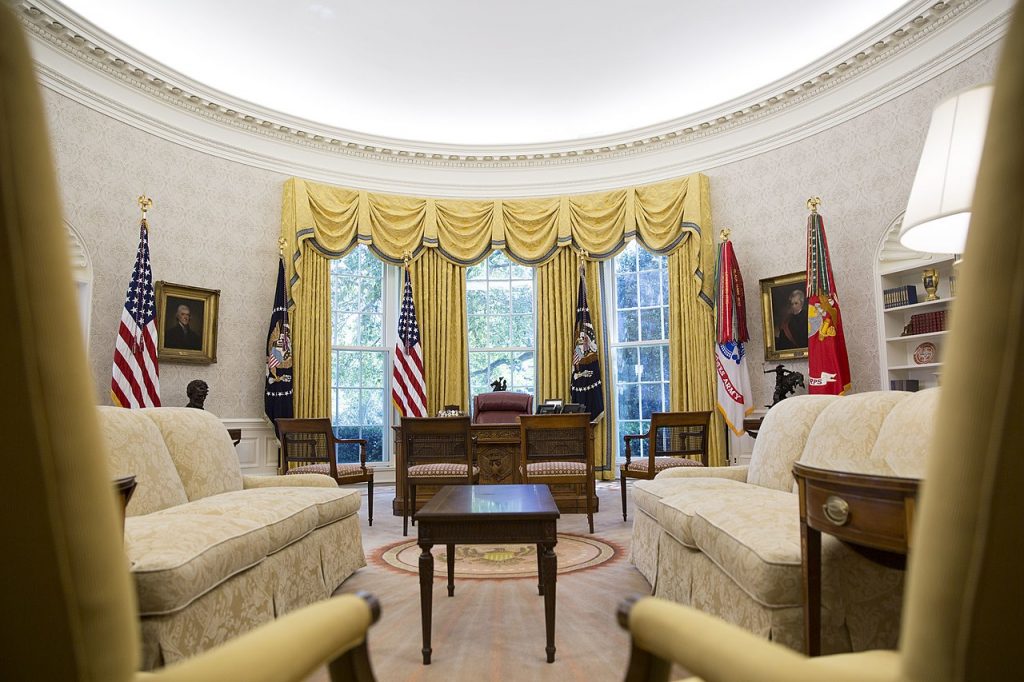
As our nation prepares to mark 250 years of independence, the Presidential Religious Liberty Commission has issued a preliminary report on ways the federal government could uphold the free exercise of religion.
Religious liberty is recognized and protected under the First Amendment, and it is one of the hallmarks of our nation. But religious freedom has repeatedly come under attack in court, in government, and elsewhere.
News outlets and congressional testimony have alleged that government policies and government agencies have been weaponized against people of faith — especially conservative and Christian groups.
Last year President Trump signed an executive order establishing the Presidential Religious Liberty Commission. The commission is responsible for “producing a comprehensive report on the foundations of religious liberty in America, strategies to increase awareness of and celebrate America’s peaceful religious pluralism, current threats to religious liberty, and strategies to preserve and enhance protections for future generations.”
Over the past twelve months, the commission has heard testimony from Americans who are deeply concerned about protecting the free exercise of religion. In a summary of its draft report, the commission highlighted some of the ways religious freedom has been infringed, writing:
For example, elementary student Shea Encinas was bullied for standing up for his Christian faith when he was forced to read his peer a book that told him he could choose his gender—the school refused to help and doubled down on pushing gender ideology onto the students. Teacher Marisol Arroyo-Castro was told she had to remove a cross near her desk or lose her job. Jennifer Mead’s 11-year-old daughter was pressured by school authorities to believe she was a boy. Navy Seal Blake Martin lost his pension when he was just three years away from retirement eligibility because he objected to the COVID-19 vaccine. Dr. Eithan Haim was indicted by the Biden Department of Justice for blowing the whistle on Texas Children’s Hospital’s gender mutilation surgeries for minors. Shabbos Kestenbaum was targeted on Harvard’s campus simply for being Jewish. And Lacey Smith was fired from her flight attendant position at Alaska Airlines because she answered the invitation to respectfully share her thoughts on the Equality Act. These Americans have suffered greatly for their religious beliefs.
The commission also released a list of 12 ways the federal government could strengthen religious liberty for all Americans — such as by repealing the Johnson Amendment and by directing federal agencies to “issue ‘Know Your Rights’ Posters for students, parents, public school teachers and administrators, religious leaders, religious institutions, healthcare workers, and military servicemembers.”
People should be free to live and operate according to their deeply held religious convictions. That is why it is so important for our laws — and the government agencies that enforce those laws — to protect religious liberty as much as possible.
Over the years, Arkansas has enacted a number of good laws that do exactly that.
For example, in 2015 Gov. Hutchinson signed Arkansas’ Religious Freedom Restoration Act into law, and in 2023 lawmakers passed additional legislation to further strengthen that good law.
In 2021 Arkansas passed Act 462 protecting healthcare workers’ rights of conscience. Before 2021, Arkansas’ conscience protections were narrowly written, and they protected very few people. Act 462 helped broaden those protections for all healthcare workers.
Last year, the Arkansas Legislature passed Act 400, the Religious Rights at Public Schools Act of 2025. This good law by Sen. Mark Johnson (R — Little Rock) and Rep. Alyssa Brown (R — Heber Springs) affirms public school students’ and teachers’ religious liberties.
Lawmakers also enacted Act 677 of 2025 by Rep. Robin Lundstrum (R — Elm Springs) and Sen. Gary Stubblefield (R — Branch) ensuring that religious organizations and religious individuals are not penalized for living out their deeply held religious convictions, and Act 970 by Sen. Kim Hammer (R — Benton) and Rep. Lee Johnson (R — Greenwood) strengthening the healthcare workers’ rights of conscience law Arkansas passed in 2021.
Family Council deeply appreciates our policymakers at the state and federal levels working diligently to protect the free exercise of religion. It’s a fundamental freedom that is truly worth protecting.
Articles appearing on this website are written with the aid of Family Council’s researchers and writers.
Related posts:
 Religious Liberty Commission Discusses Faith at Schools
 Good Legislation Would Protect Religious Freedom, Rights of Conscience in Arkansas
 President Trump Addresses Federal Religious Liberty Commission
 School Will Let Arkansas Student Share His Faith Following Calls from Gov. Sanders, Religious Freedom Advocates