Please Pray for Peace and Healing

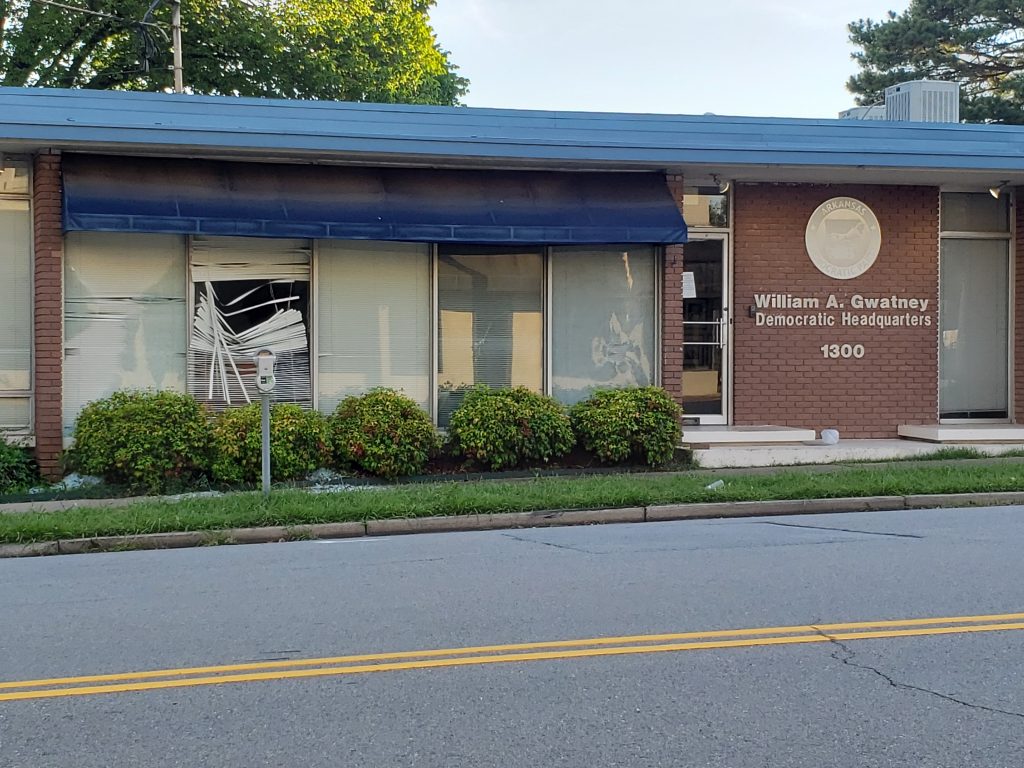
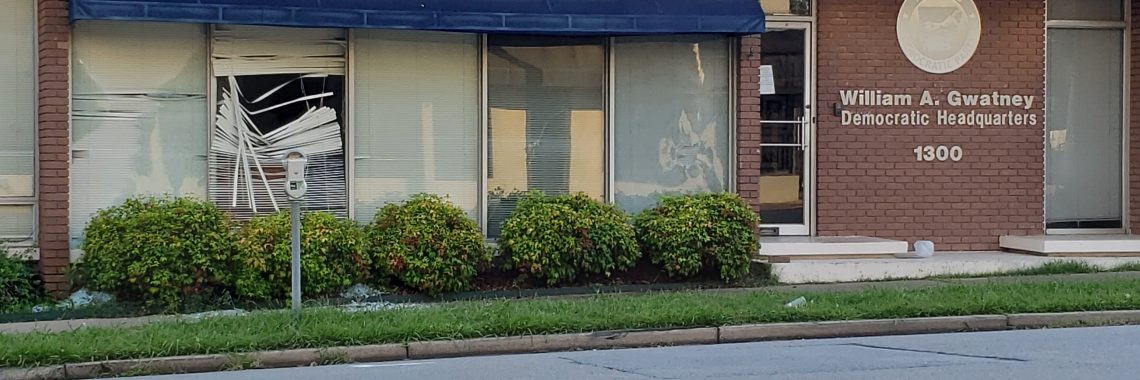
Above: The Democratic headquarters in Little Rock damaged during protests.

In the past week, our country has been rocked by a series of protests and riots in response to the death of George Floyd in Minneapolis.

Over the weekend, protests took place throughout Arkansas — including downtown Little Rock.

In some cases, things turned violent and destructive.

It’s difficult to know what to say during times like these, but in a series of statements made online last week, Rev. Franklin Graham offers these words, writing,

What took place Monday on a Minneapolis street, by the Minneapolis Police Department should deeply concern each and every American. It’s inexcusable. . . . Police are not the judge and jury. These officers will have to stand before God and the authorities on this earth for what they have done. . . .

However, burning, destroying, and looting communities isn’t the answer. This just heaps more pain and hurt on lives and livelihoods. . . .

George’s loved ones and friends have said he was a gentle giant and that he would’ve been devastated to see the rioting.

I ask Christians across the country to pray—for calm, for peace, and for an end to the violence. This honors no one and may cost many more lives. I ask every church to contact your members and ask them to pray. Our nation is in trouble. The only One who can heal the racial divide is Jesus Christ who has the power to transform the human heart.

You can read Franklin Graham’s full statements here, here, and here.

During these unprecedented times, I hope you and your church will join us in praying for peace and healing in our state and across our country.
How The COVID-19 Stimulus Bill Helps Churches

Last week Congress passed the “Coronavirus Aid, Relief, and Economic Security (CARES)” Act.

The bill was signed into law by President Trump on Friday.

It provides approximately $2 trillion in relief and economic stimulus in the wake of the COVID-19 outbreak.

Our friends at Family Research Council in Washington, D.C. have analyzed the ways in which the measure helps churches and other non-profits.

They have identified four key areas affecting churches:

  • Direct loans to small businesses, nonprofits, and churches
  • Incentivizing giving to churches and nonprofits
  • Unemployment insurance assistance for those who work for nonprofits
  • Encouraging and aiding churches’ responses to the coronavirus outbreak

They also highlight paid medical and sick leave requirements that may implicate nonprofits and churches.

You can read more about Family Research Council’s findings here.

Small Business Loans

According to Family Research Council, the CARES Act creates federally-guaranteed loans for small businesses and other entities, including nonprofit organizations.

The loans cover eight weeks of necessary expenses.

Tax Incentives and Unemployment Insurance

The bill creates additional tax incentives for charitable giving, which will help churches and nonprofits, and it offers unemployment insurance to employees of nonprofits and charities.

FRC writes that “the CARES Act expands unemployment insurance to help those who are without work because of the coronavirus outbreak. This bill creates a temporary Pandemic Unemployment Program that will run through the end of the year. The program provides unemployment benefits for those who do not usually qualify, including religious workers, the self-employed, independent contractors, and those with limited work history. It also covers the first week of lost wages in states that do not cover the first week a person is unemployed.”

Additional Grant Money for Charitable Programs

The CARES Act allocates additional funding for Community Service Block grants. These grants are federally funded and awarded through the state government. The money can be used to fight poverty in local communities.

Under the CARES Act, churches and charities may be able to apply for additional government funding to help serve members of their communities.

Learn more at FRC’s website.

College Students Rehash Outdated Arguments On Sex-Education

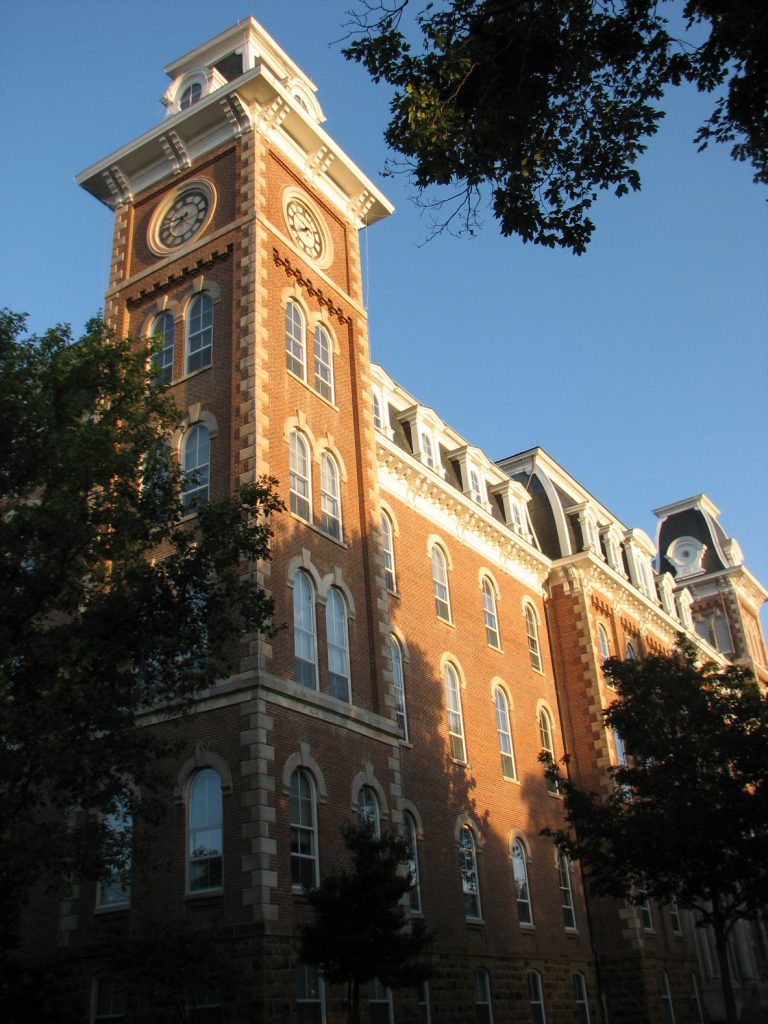
Earlier this week the University of Arkansas’ Arkansas Traveler published an article about sex-education in the state.

The article quoted college students who feel Arkansas should stop promoting abstinence sex-education and instead mandate comprehensive sex-education in its public schools.

One person quoted in the article said the state’s position on sex-education is “archaic” and “fueled by misinformation.”

Here’s the truth about sex-education in Arkansas:

Policymakers in Arkansas worked to implement comprehensive sex-education in the 1980s and 1990s.

These programs focused on teaching public school students about contraceptive use.

During that time, Arkansas’ teen birth rate remained high, and teenagers were among those most likely to have an abortion.

In 1997 the state switched strategies, promoting abstinence-based sex-education in public schools. The results were nothing short of staggering.

Teen birth rates and teen abortion rates in Arkansas plummeted.

From 1997 to 2003, the teen abortion rate fell by approximately 37%, and the teen birth rate fell by 16%.

The program was so successful that it garnered national attention from other states.

In 2016 the federal Center for Disease Control released a 200-page report on sexual health among students.

The report indicated that not only does abstinence education work — it positively affects every area of a student’s life.

The CDC writes, “High school students who are virgins rate significantly and consistently better in nearly all health-related behaviors and measures than their sexually active peers.”

According to the CDC report, students who are abstinent are healthier by virtually every measurement — from bike helmet and seat belt use to substance abuse, diet, doctor’s visits, exercise — even tanning bed use.

Bottom line: If any notion about sex-education is “archaic” and “fueled by misinformation,” it’s the idea that comprehensive sex-education in our public schools will somehow be good for students.

Photo Credit: RebelAt at English Wikipedia [CC BY (https://creativecommons.org/licenses/by/3.0)]