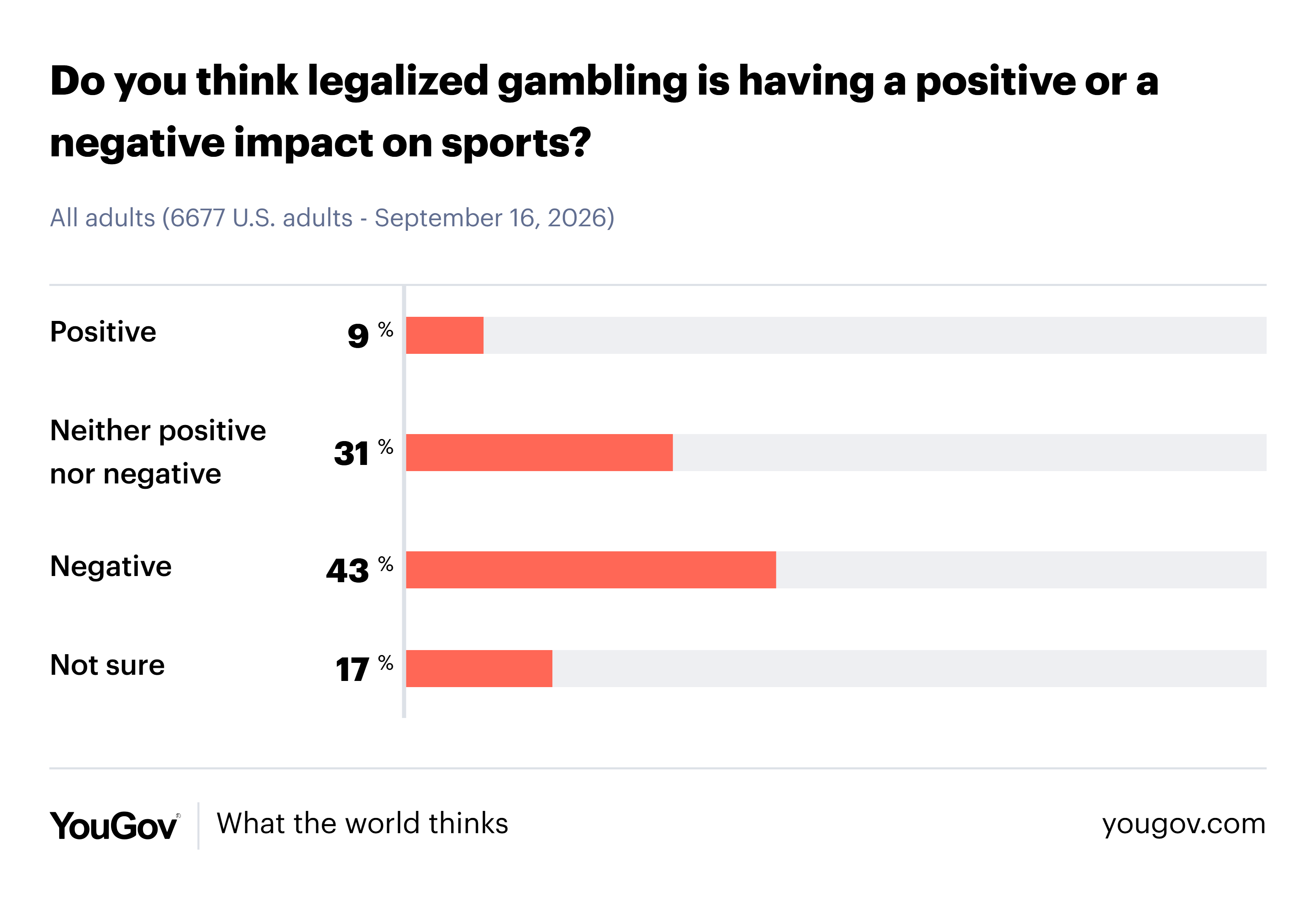
A recent YouGov survey found most adults in the U.S. do not believe legalized gambling is having a positive impact on sports.
Sports betting is legal in 39 states — including Arkansas, where people wager an average of $2.5 million on sports every single day. But evidence shows many Americans are concerned about unintended consequences sports betting may have for athletic programs.
On September 16, researchers at YouGov published survey responses from 6,677 U.S. adults about the impact legalized gambling is having on sports.
Only 9% said they believe legalized gambling is having a positive impact on sports. Forty-three percent said they believe the impact is negative.
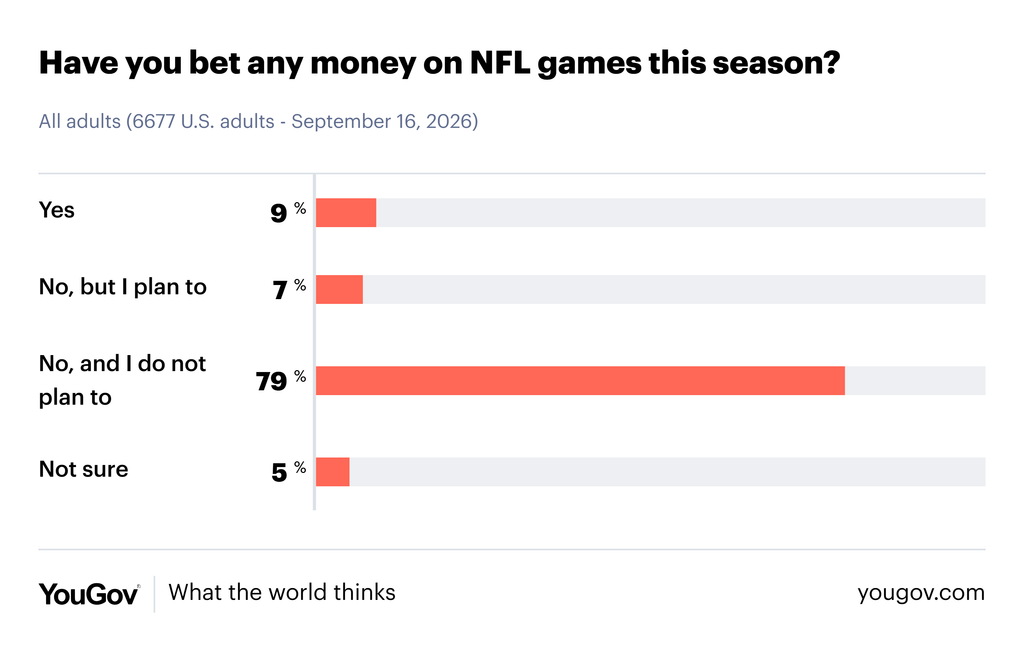
YouGov also asked people if they have wagered any money on NFL games this season. Sixteen percent said they either have bet on an NFL game or plan to at some point. Seventy-nine percent said they have not placed any bets and do not intend to.
We have written before about how Americans increasingly see sports betting as a bad bet all around.
The NCAA has opened investigations into dozens of student-athletes for sports betting violations. Student-athletes have been accused of scheming to help each other win bets they placed on one another.
Federal prosecutors have announced indictments in connection with alleged bribery and point-shaving schemes to fix college basketball games.
People who gamble on sports are at an increased risk of suffering from gambling problems. When sports betting happens online or on a smartphone, the rate is even higher.
Mobile sports betting apps make gambling as easy as sending a text. These platforms use addictive technology to hook people — especially young adults. A recent report from mental health professionals at Baptist Health South Florida found that internet gambling platforms are engineered to keep people engaged, using instant rewards and near-misses to trigger the same brain chemistry as other addictions.
One study published this summer found gambling disorder diagnoses have risen more than 60% in states that legalized sports betting. Researchers said the largest increase in gambling disorders was found among young adults ages 18 – 29.
Bankruptcy attorneys across the country say online sports betting is driving a surge in personal bankruptcies — especially among young men in their 20s and 30s — and researchers at UCLA estimate that online sportsbooks are linked to an increase of roughly 30,000 more bankruptcies per year nationwide.
Experts are also sounding the alarm over “prediction markets” that they say are not regulated under state gambling laws, but are still just as addictive as other forms of online gambling.
Sports betting isn’t harmless entertainment — it’s predatory, and it’s growing.
Family Council has identified practical ways Arkansas could protect families from predatory sports betting — like prohibiting sportsbooks from accepting credit cards or offering prop bets and parlays.
As powerful corporations try to make gambling part of everyday life, it’s important for Arkansas to protect its citizens and families from predatory gambling. Otherwise, gambling addiction will simply continue wrecking lives and hurting people in our state.
Articles appearing on this website are written with the aid of Family Council’s researchers and writers.