Remembering Charlie Kirk

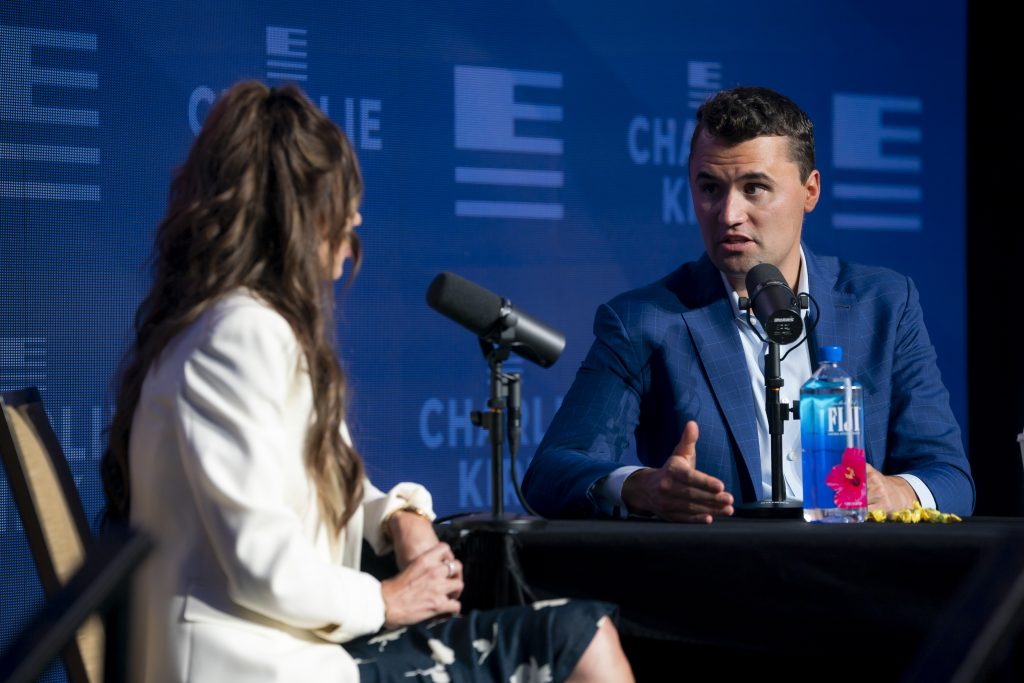
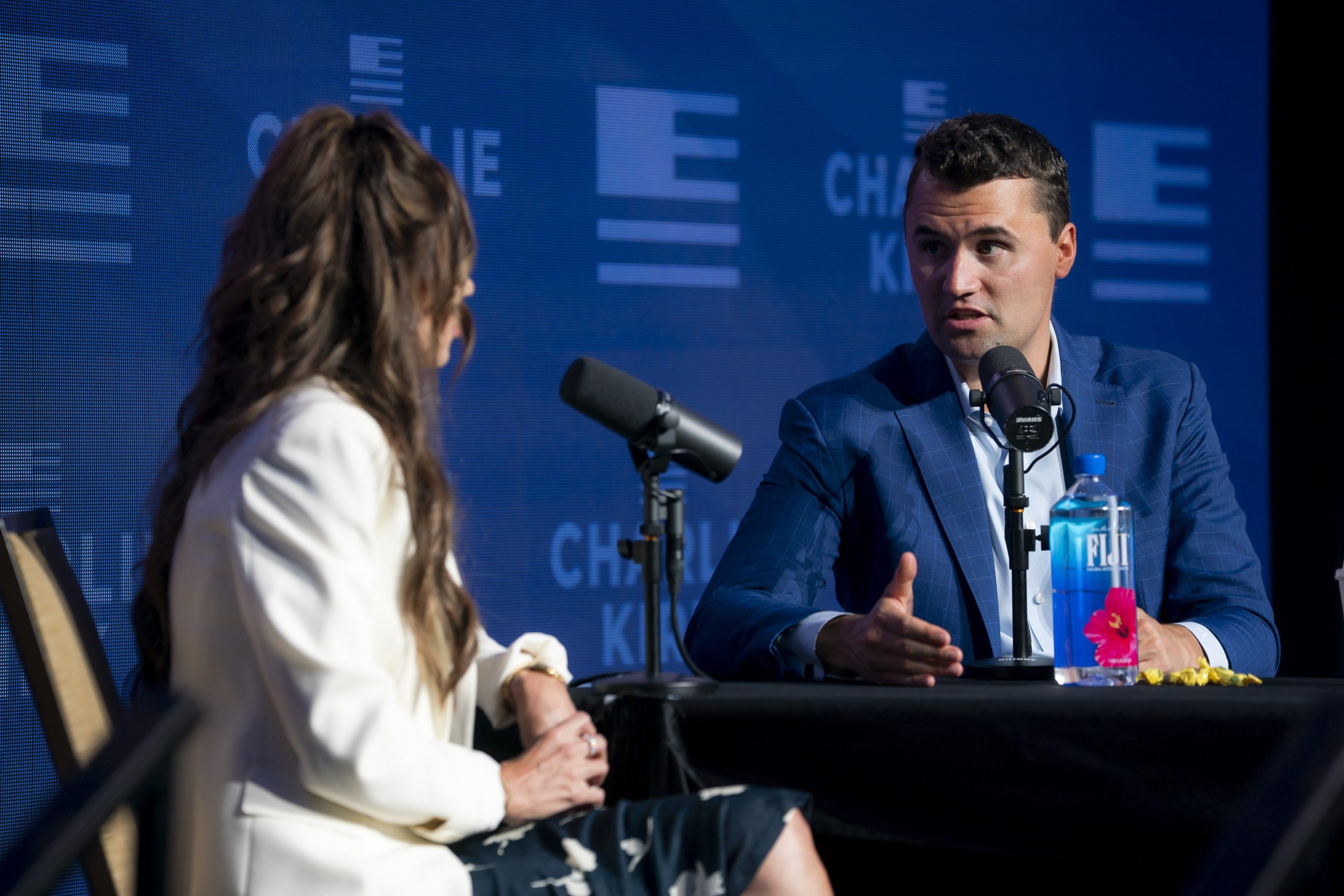
There are certain people whose lives leave an indelible mark on the world and when tragedy strikes, their voice is looked to for comfort and answers. Charlie Kirk was one of those voices, but on September 10, his voice was no longer there. The tragic assassination of the 31 year old conservative activist, author, speaker, husband, father, and Christian has left us shocked, grieving, and wondering what to do next amidst such evil. We cannot comprehend the heinous act and grieve for his family and Turning Point USA staff. 

I first heard of Charlie Kirk and Turning Point USA many years ago as they began growing traction on the national stage alongside their online presence. Turning Point USA, the organization he helped start and lead, promotes free speech and conservative values on school campuses — including schools in Arkansas. I first met a TPUSA state director over four years ago and was very impressed by the thoroughness of his work. He went from campus to campus in Arkansas, leading and encouraging Turning Point groups, and he put great effort toward investing in young people all across the state. 

In 2021, I was invited to speak at a TPUSA event at Ecclesia College in Northwest Arkansas and met dear friends that night. There again I realized how important the impact TPUSA was having on my state and the United States. I saw it as a countercultural movement that spoke truth into the next generation. That was who Charlie Kirk was. And that is why his loss hits so hard. 

Another impact point for Arkansas is in 2017, our friends at Alliance Defending Freedom filed a lawsuit on behalf of a local Turning Point USA student chapter against Arkansas State University in Jonesboro after the university tried to restrict free speech on campus to sanctioned “free speech” zones. The university’s policy at the time reportedly restricted free speech to 1% of its campus.

The lawsuit prompted the Arkansas Legislature to pass Act 184 of 2019 — the FORUM Act — preventing public colleges and universities from infringing on the free speech of students and faculty on campus. Family Council was pleased to support that good law, but it might never have passed if Turning Point USA hadn’t taken a stand for free speech on campus.

The impact of Turning Point was due to its leader and the truth that he held onto. Charlie was a man of deep faith and he was outspoken about it. Not only that, he practiced his faith, leading his family by example. He led a nationwide movement that reached into the grassroots and impacted hearts and minds. We may never know the extent of his influence on this side of Heaven. But the great thing about Charlie is that he had his priorities straight. Charlie believed that God, family, and country, in that order, were of utmost importance. He fought for them, he lived for them, and in the end, he gave his life for them. We will never forget his life and the impact he made. 

What are Christians to do when faced with such a tragic event, the loss of a voice like Charlie’s, and the fear to speak truth in the public square? It can be tempting to shut the door and hide away. I thank God that this movement and the church aren’t made up of people who back down when faced with evil. We face challenges head-on and continue to speak the truth into a violent and hostile world because Christ is our example and beckoning guide, and the great cloud of witnesses who have gone before are cheering us on. 

Charlie Kirk’s murder is a heartbreaking tragedy. I ask all of you to join our team in praying for Charlie’s family and our nation. 

Erin Hogan serves as Director of Government Relations for Family Council.

President Trump Signs Executive Order to Target Debanking

On August 7, President Trump signed an executive order “guaranteeing fair banking for all Americans.”

Since 2021, news outlets and congressional testimony have highlighted how federal officials and financial institutions targeted conservative organizations through “reputational risk” policies. Conservatives deemed “high risk” could have their bank accounts closed without warning and without explanation.

President Trump’s new executive order directs federal banking regulators to “remove the use of reputation risk or equivalent concepts that could result in politicized or unlawful debanking.”

The order says,

Financial institutions have engaged in unacceptable practices to restrict law-abiding individuals’ and businesses’ access to financial services on the basis of political or religious beliefs or lawful business activities.  Some financial institutions participated in Government-directed surveillance programs targeting persons participating in activities and causes commonly associated with conservatism and the political right following the events that occurred at or near the United States Capitol on January 6, 2021.

In a separate statement, the White House said,

President Trump believes that no American should be denied access to financial services because of their political or religious beliefs, and that banking decisions must solely be made on the basis of individualized, objective, and risk-based analyses.

We have written repeatedly about allegations that major financial institutions deliberately targeted conservative individuals and organizations.

In 2021 Family Council’s credit card processor terminated our account after designating our organization as “high risk.” 

At 10:29 AM on Wednesday, July 7, 2021, our office received a terse email from our credit card processor — a company owned by JPMorgan Chase — saying, “Unfortunately, we can no longer support your business. We wish you all the luck in the future, and hope that you find a processor that better fits your payment processing needs.”

Within sixty seconds, our account was terminated and Family Council could no longer accept donations online.

We later learned our processor had flagged us as “high risk,” but we were unable to get an explanation from the company. All we could do was speculate that our conservative principles and our public policy work might have had something to do with the decision to close our account.

Unfortunately, this was not an isolated incident. Other organizations have had similar experiences as well. In fact, corporate shareholdersstate attorneys generalcongressmen, and other organizations all have expressed concerns over conservatives being wrongly labeled as “high risk” or “hate groups” and subsequently debanked.

Since then, JPMorgan Chase has taken steps to prevent religiously-motivated debanking. That’s good, but our state and federal government need to make sure this sort of thing never happens to anyone again.

We deeply appreciate the Trump Administration leading the way in getting rid of “reputation risk” policies that have been used to debank conservatives. After all, banks that are too big to fail are too big to discriminate.

Articles appearing on this website are written with the aid of Family Council’s researchers and writers.

Unpacking Judge Brooks’ Ruling Over Ten Commandments in Public Schools

On Monday, U.S. District Judge Timothy Brooks partially blocked a state law placing copies of the Ten Commandments in Arkansas’ public schools.

Act 573 of 2025 by Sen. Jim Dotson (R — Bentonville) and Rep. Alyssa Brown (R — Heber Springs) requires privately funded copies of the Ten Commandments to be displayed in public schools and other public buildings in Arkansas.

The measure received strong support in the Arkansas Legislature earlier this year, and Act 573 was slated to take full effect on August 5.

However, lawyers from the ACLU and a group of atheist organizations filed a federal lawsuit against four public school districts to block Act 573.

Below are a few key points from Judge Brooks’ ruling that partially blocked Act 573.

The Ruling Is a Preliminary Injunction

Judge Brooks’ decision is a preliminary injunction. It blocks four school districts in Arkansas from complying with Act 573 while the lawsuit plays out in court.

This means that Act 573 has not been ruled unconstitutional. The law has been partially blocked for the time being while the attorneys argue the case in federal court. It could be months before a final decision is reached in the case, and that decision could be appealed to a higher court.

The Ruling Only Affects Four School Districts

Judge Brooks blocked the following four school districts from complying with the law:

  • The Fayetteville School District
  • The Springdale School District
  • The Bentonville School District
  • The Siloam Springs School District

Act 573 still applies to other school districts in Arkansas that are not part of the lawsuit.

The Ruling Does Not Affect Public Buildings Other Than Public Schools

Act 573 is part of a larger law allowing the national motto — “In God We Trust” — to be displayed in government buildings along with the U.S. flag and the Arkansas flag.

Besides public school classrooms, Act 573 says the Ten Commandments can be placed in state colleges and universities and in any “public building or facility in this state that is maintained or operated by taxpayer funds.”

That means posters of the Ten Commandments could be placed in city buildings, county courthouses, public libraries, and other government buildings or offices across the state.

The decision to partially block Act 573 has no bearing on these other public buildings.

The Ruling Does Not Affect Posters of the National Motto

In 2017 Arkansas passed the National Motto Display Act allowing the national motto — “In God We Trust” — to be displayed in Arkansas’ classrooms along with the U.S. flag and the Arkansas flag. Act 573 amended the National Motto Display Act to add the Ten Commandments to the list of historical items displayed in school.

Judge Brooks’ ruling does not block schools from displaying the national motto as state law allows.

We Expect Higher Courts Will Uphold Act 573

During her testimony in support of Act 573 last April, Rep. Alyssa Brown noted that the U.S. Supreme Court now uses a “longstanding history and tradition test” to decide if it is constitutional to display something like a copy of the Ten Commandments. Rep. Brown said, “The Ten Commandments without a doubt will pass this longstanding history and tradition test.”

Over the years, the U.S. Supreme Court has ruled that states are free to honor and recognize documents or symbols that are important to our nation’s history — like the Ten Commandments or the national motto.

In the court proceedings over Act 573, Attorney General Tim Griffin’s office pointed out:

As the [U.S.] Supreme Court has repeatedly recognized, the Ten Commandments have enormous historical significance “in America’s heritage.” . . . It is therefore beyond serious dispute—and settled by the Supreme Court—that the Ten Commandments have historical significance and are “one of the foundations of our legal system.”

The Ten Commandments are one of the earliest examples of the rule of law, and they have had a profound impact in shaping our society and our government.

We believe our federal courts ultimately will agree and uphold Act 573 as constitutional.

Help Promote the Ten Commandments in Arkansas

Visit the website RestoreAmericanschools.com to order Ten Commandments posters that you can donate to public buildings in your community in Arkansas.

You can also read Act 573 here.

Articles appearing on this website are written with the aid of Family Council’s researchers and writers.