
Policy Advocates Renew Calls for Planned Parenthood-Style Sex-Education Law in Arkansas

On Monday the media outlet Arkansas Advocate reported on a renewed push for Planned Parenthood-style comprehensive sex-education in the state.

The goal is to “improve” sex-education and reduce teen pregnancy in Arkansas.

On the surface, it may sound like a good idea. However, Arkansas has been down this road before, and we know from experience that Planned Parenthood-style sex-education is bad for Arkansas.

In the 1980s and 1990s, public officials in Arkansas promoted comprehensive sex-education, but the programs failed to have a meaningful impact on teen pregnancy and abortion in the state.

Then in 1997 the Arkansas Legislature and Governor Mike Huckabee began promoting abstinence education in Arkansas. From 1997 to 2005, Arkansas’ teen birthrate decreased 17%, and Arkansas’ teen abortion rate plummeted a staggering 48%.

Governor Huckabee’s abstinence education model was so successful in Arkansas that it drew national recognition. Family Council was pleased to support Arkansas’ good abstinence education program. The program continued into the early 2000s, but was gradually scaled back as a result of budget cuts and changes in state and federal government.

According to the CDC, teenagers who practice abstinence are healthier in nearly every way than teenagers who are sexually active.

Sexually-active teens have been found to be less healthy and to engage in riskier behavior.

In other words, abstinence is linked to healthier lifestyles overall.

Comprehensive sex-education programs often focus on contraceptives and “risk-reduction” without encouraging abstinence or teaching teenagers to avoid risky situations altogether. This leads to riskier behavior among teens. Those are just some of the reasons Family Council opposes comprehensive sex-education in Arkansas.

Articles appearing on this website are written with the aid of Family Council’s researchers and writers.


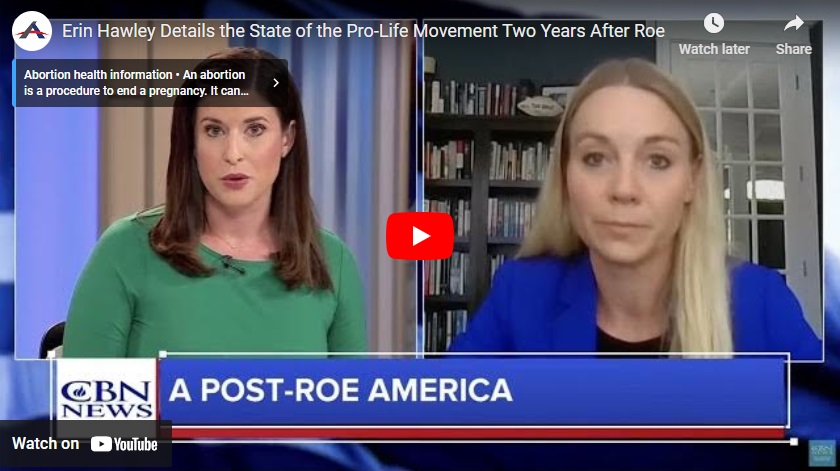
ADF Details the State of the Pro-Life Movement Two Years After Roe

Two years after Roe v. Wade was overturned, the pro-life movement still has plenty of work to do to protect life.

Alliance Defending Freedom’s Senior Counsel Erin Hawley joined “CBN News” to discuss pro-life states’ response to the overturning of Roe, the importance of pregnancy centers and churches to the pro-life movement, and more.

Watch her interview below.

Pro-Abortion Group Claims Secretary of State “Unlawfully Rejected” Its Petitions

On Thursday the group backing an abortion amendment in Arkansas sent Secretary of State John Thurston a letter alleging his office “unlawfully rejected” its petitions.

Arkansans for Limited Government submitted petition signatures to the Secretary of State last Friday to place an abortion amendment on the November ballot.

Arkansas law tasks the Secretary of State with counting and validating the petition signatures before certifying a measure for the ballot. Petitions that do not comply with state law must be disqualified.

On Wednesday the Arkansas Secretary of State’s office disqualified all of the petitions for the Arkansas Abortion Amendment for failing to properly identify paid canvassers who collected signatures for the abortion measure, as required by state law, and for failing to file a signed statement verifying that each paid canvasser was provided a copy of the most recent edition of the Secretary of State’s initiative and referenda handbook and given an explanation of Arkansas’ legal requirements for obtaining petition signatures.

Arkansas law says a person filing petition signatures with the Secretary of State must bundle the petitions by county and file an affidavit stating the number of petitions and signatures being filed.

If the signatures were gathered by paid canvassers, the law says the person filing the petitions with the Secretary of State must also identify the paid canvassers by name and file a signed statement verifying that each paid canvasser was provided a copy of the most recent edition of the Secretary of State’s initiative and referenda handbook and given an explanation of Arkansas’ legal requirements for obtaining petition signatures.

On Thursday Arkansans for Limited Government sent a letter to Secretary of State Thurston claiming the organization provided documents regarding its paid petition canvassers on June 27 — the week before it filed its abortion petitions — and alleging the Secretary of State does not have the authority to reject the petitions.

The letter does not address the fact that state law indicates the paid canvasser information must be submitted at the same time as the petitions.

Family Council has received documents obtained via the Freedom of Information Act that show Arkansans for Limited Government hired more than 70 paid canvassers after June 27. The letter does not specifically address whether these canvassers were provided information and training in compliance with state law.

While the abortion measure has been disqualified for failing to comply with state law, legal experts have pointed out the Arkansas Abortion Amendment would prevent the State of Arkansas from restricting abortion during the first five months of pregnancy — which is more extreme than Roe v. Wade — and would allow thousands of elective abortions on healthy women and unborn children every year.

The measure also contains various exceptions that would permit abortion on demand through all nine months of pregnancy in many cases.

The amendment does not contain any medical licensing or health and safety standards for abortion, and it does not require abortions to be performed by a physician or in a licensed medical facility.

It also nullifies all state laws that conflict with the amendment, jeopardizing basic abortion regulations — like parental-consent and informed-consent requirements that both sides of the aisle have supported in the past.

Articles appearing on this website are written with the aid of Family Council’s researchers and writers.