Video: Abortion in Arkansas Near Historic Lows
The number of abortions performed in Arkansas each year is near record lows, according to the latest findings from the Arkansas Department of Health. Watch the video below to learn more.

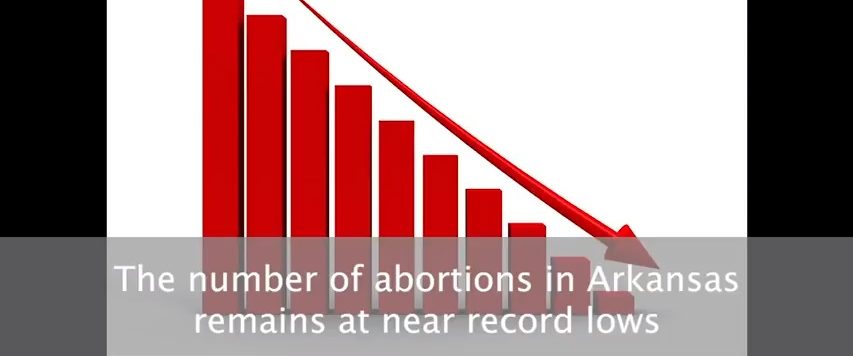
The number of abortions performed in Arkansas each year is near record lows, according to the latest findings from the Arkansas Department of Health. Watch the video below to learn more.

Last week Arkansas won a major, pro-life victory in court. Watch this video to learn more.
 FOR IMMEDIATE RELEASE
Tuesday, June 5, 2018
On Tuesday the Arkansas Department of Health published its annual report on the number of abortions performed in Arkansas. The report shows abortion remained near record lows last year, with 3,249 abortions performed in Arkansas in 2017.
Family Council President Jerry Cox released a statement saying, “3,249 abortions were performed in Arkansas last year, slightly up from 2016 to 2017, but overall, the number has fallen by more than a thousand since 2014, and it is less than half of what it was in the early 1990’s. For two years in a row, abortion in Arkansas has remained at its lowest levels since 1977, and Arkansas is now the second most pro-life state in the U.S., according to Americans United for Life. Arkansans are winning the fight to protect unborn children.”
Cox credited a series of pro-life laws passed in recent years with much of the decline in abortion. “In 2015 Arkansas passed one of the best informed-consent laws in the nation. It ensures women are given all the facts about abortion up front, including information about abortion’s risks, consequences, and alternatives. According to state reports, over the past two years more than seven hundred women have chosen not to have abortions after being given that information. Last year the legislature improved this pro-life law and passed more than half a dozen others.”
Cox said abortion in Arkansas could decline even more in the future thanks to last week’s U.S. Supreme Court decision. “In 2017 921 drug-induced abortions were performed in Arkansas. Three years ago Arkansas passed a law requiring abortion facilities that do drug-induced abortions to contract with a physician who has admitting privileges at a hospital. Federal courts have upheld that law, and last week the U.S. Supreme Court chose not to hear a legal challenge against it. As a result, Planned Parenthood has chosen to stop doing drug-induced abortions in Arkansas for the time being. The Arkansas Legislature has passed good, pro-life laws. Attorney General Leslie Rutledge is defending those laws successfully in court, and the lives of unborn children are being saved as a result.”
Cox also praised the work of Arkansas’ pregnancy resource centers. “Pregnancy resource centers help women with unplanned pregnancies. They provide everything from ultrasounds and adoption information to maternity clothes, diapers, and baby formula free of charge. Pregnancy resource centers give women real options besides abortion. That’s why Family Council is working on a program to help provide funding for these centers. We hope to have that program in place within the next year.”
Cox said Family Council will continue working to end abortion in Arkansas. “While we are glad the number of abortions is near historic lows, it’s important to remember that the vast majority of the abortions performed last year were on healthy women carrying healthy babies. Abortion is a tragedy. We intend to continue working to end abortion in Arkansas.”
Family Council is a conservative education and research organization based in Little Rock, Arkansas.
###