Senate Committee Backs Ballot Initiative Reforms

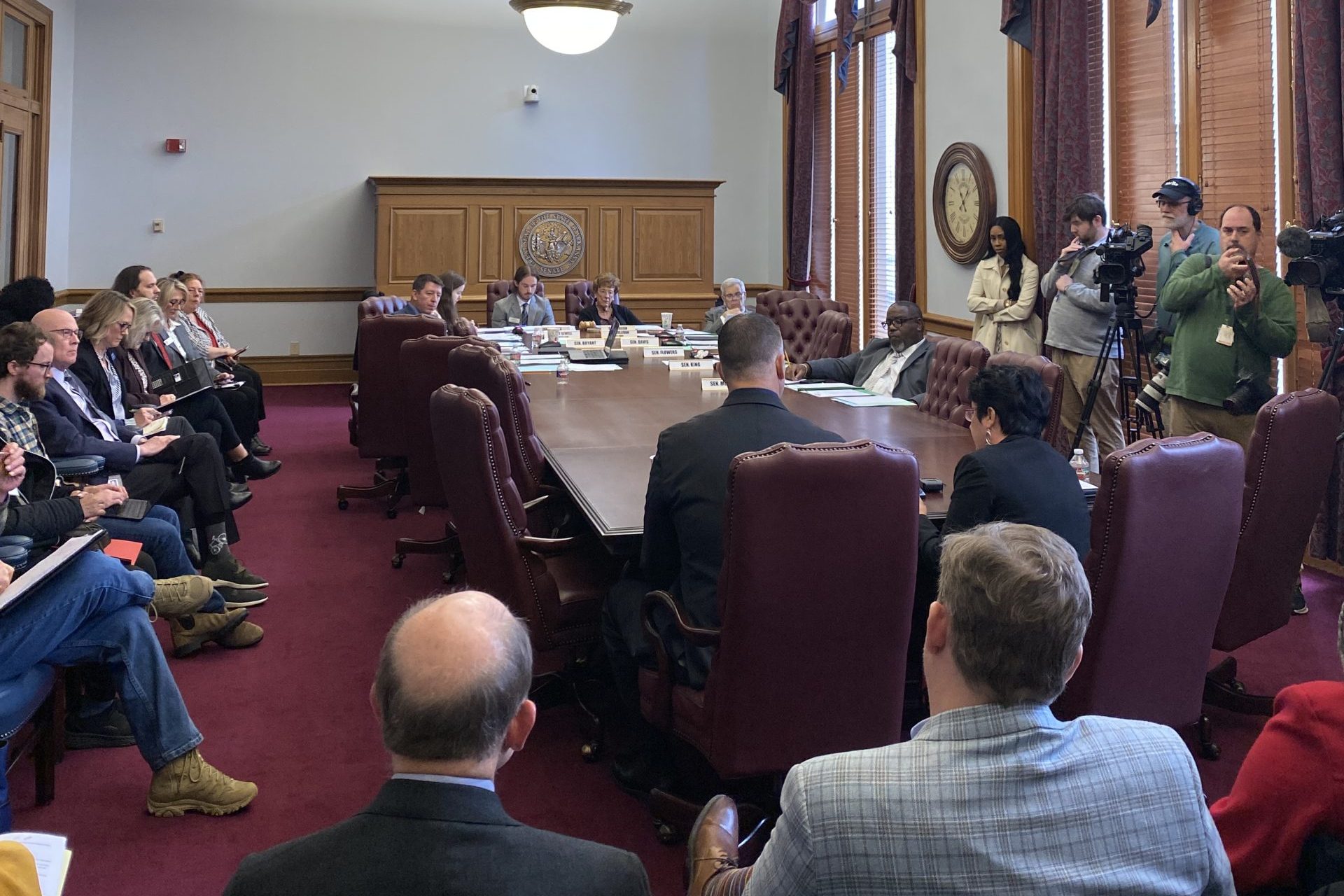
On Tuesday the Senate State Agencies Committee passed several good bills shoring up Arkansas’ ballot initiative process.

The Arkansas Constitution lets canvassers circulate petitions to place measures on a general election ballot. However, in recent years Arkansas’ ballot initiative process has become the opposite of what it was intended to be. Its original intent was to provide citizens a means of functioning as a “legislative body.” Instead, powerful corporate special interests have used our own ballot initiative process against us.

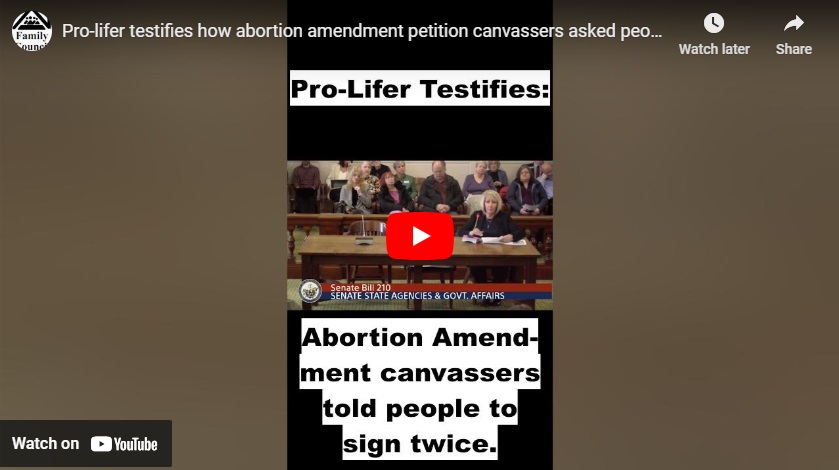
During committee testimony on Tuesday, pro-life leader Vikki Parker testified about how canvassers for the Arkansas Abortion Amendment encouraged people to sign the abortion petition more than once — which is against the law.

Following extensive testimony on Tuesday, the Senate State Agencies Committee passed the following good bills by Sen. Hammer and Rep. Underwood concerning ballot measures:

  • S.B. 207 requiring petition canvassers to inform people that petition fraud is a crime before obtaining their signatures on a petition.
  • S.B. 208 requiring canvassers to verify a person’s identity via photo ID before obtaining the person’s signature on a petition. This helps prevent people from fraudulently signing someone else’s name on a petition.
  • S.B. 209 clarifying that the signatures a canvasser collects will not count if the Secretary of State finds the canvasser has violated Arkansas’ laws concerning canvassing, perjury, forgery, or fraud in the process of gathering signatures.
  • S.B. 210 requiring people to read the ballot title of the measure before signing a petition. The ballot title includes a summary of the ballot measure. Reading the ballot title helps ensure people understand the measure before they sign a petition to place the measure on the ballot.
  • S.B. 211 requiring petition canvassers to file an affidavit with the Secretary of State verifying that the canvasser complied with the Arkansas Constitution and all Arkansas laws concerning canvassing, perjury, forgery, and fraud in the process of gathering signatures.

These bills now go to the entire Arkansas Senate for consideration.

Articles appearing on this website are written with the aid of Family Council’s researchers and writers.

Lawmakers File Measure Addressing Marijuana Use in Public, On the Highway

A new bill filed at the Arkansas Legislature would clarify state laws concerning medical marijuana use in public and on the highway.

H.B. 1452 by Rep. Robin Lundstrum (R — Elm Springs) and Sen. Tyler Dees (R — Siloam Springs) amends Arkansas law concerning the use and transportation of medical marijuana in Arkansas.

The bill clarifies that it is illegal to smoke marijuana in public — including at a school, a daycare, a college, a drug and alcohol abuse treatment center, at a community or recreation center, on a military base, in the presence of a pregnant woman — or anywhere that tobacco smoking is prohibited by law.

The bill also makes it clear that it is illegal drive on a highway with an unsealed container of smokable medical marijuana within reach of the driver or passenger.

Research shows that marijuana use clouds brain function. Marijuana exposure is a public health hazard that harms pregnant women and children.

H.B. 1452 will help uphold public health and safety in Arkansas when it comes to marijuana. You Can Read The Bill Here.

Articles appearing on this website are written with the aid of Family Council’s researchers and writers.
Senate Education Committee Fails to Pass Pro-Life Ultrasound Education Bill

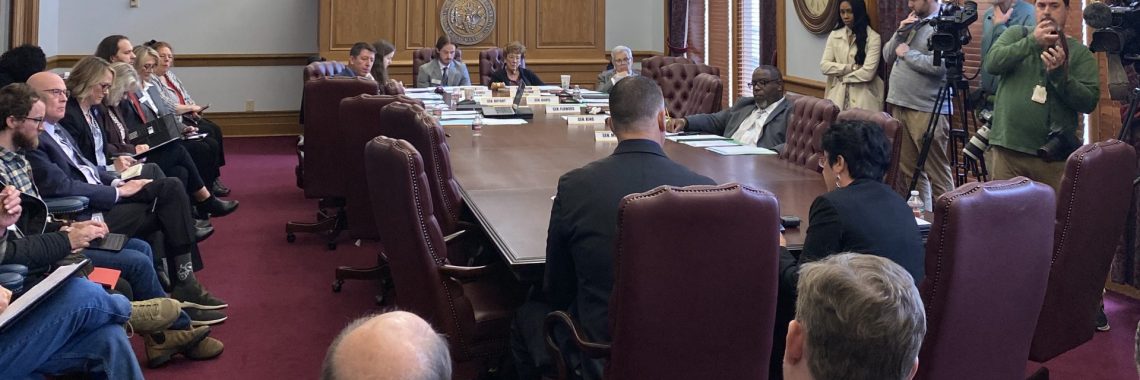
On Monday the Arkansas Senate Education Committee failed to pass a good bill that provides public school students with appropriate education about unborn children.

H.B. 1180, The Baby Olivia Act, by Rep. Mary Bentley (R — Perryville) and Sen. Clint Penzo (R — Springdale) ensures public schools show students a recording of a high-definition ultrasound video that is at least three minutes long as part of sex-education and human growth and development education courses. It also lets students see Live Action’s computer-animated “Meet Baby Olivia” video that teaches about human development from conception to birth.

The bill passed with overwhelming support in the Arkansas House last week, but the Senate Education Committee failed to pass H.B. 1180 during its meeting Monday morning.

After roughly an hour of discussion, the bill’s sponsors offered to pull the bill down so they could address concerns expressed by members of the committee. However, Sen. Stephanie Flowers (D — Pine Bluff) made a motion “Do Not Pass” on H.B. 1180 in order to kill the bill before the sponsors could address the committee’s concerns.

A “Do Not Pass” motion is a relatively rare motion at the Arkansas Legislature. It calls for the committee to vote to reject the bill.

Adopting a “Do Not Pass” motion requires five votes in committee. Fortunately, the motion only received four votes.

The following senators voted in favor of the “Do Not Pass” motion on H.B. 1180 (bad vote):

  • Sen. Stephanie Flowers (D — Pine Bluff)
  • Sen. Breanne Davis (R — Russellville)
  • Sen. Reginald Murdock (D — Marianna)
  • Sen. Jane English (R — North Little Rock)

The following senators voted against the “Do Not Pass” motion on H.B. 1180 (good vote):

  • Sen. Jim Dotson (R — Bentonville)
  • Sen. Joshua Bryant (R — Rogers)
  • Sen. Dan Sullivan (R — Jonesboro)

After narrowly avoiding a motion “Do Not Pass,” H.B. 1180’s sponsors pulled the bill down, and indicated they might bring an amended version of the bill back for consideration. That means the Senate Education Committee may have another opportunity to pass the Baby Olivia Act.

Ultrasound images help clearly demonstrate that unborn children are living human beings. Very few medical advancements have done more to change hearts and minds about unborn children than ultrasound technology. And it’s important for students to learn about the development of unborn children in an age-appropriate manner. H.B. 1180 is a good bill that does exactly that.

Articles appearing on this website are written with the aid of Family Council’s researchers and writers.