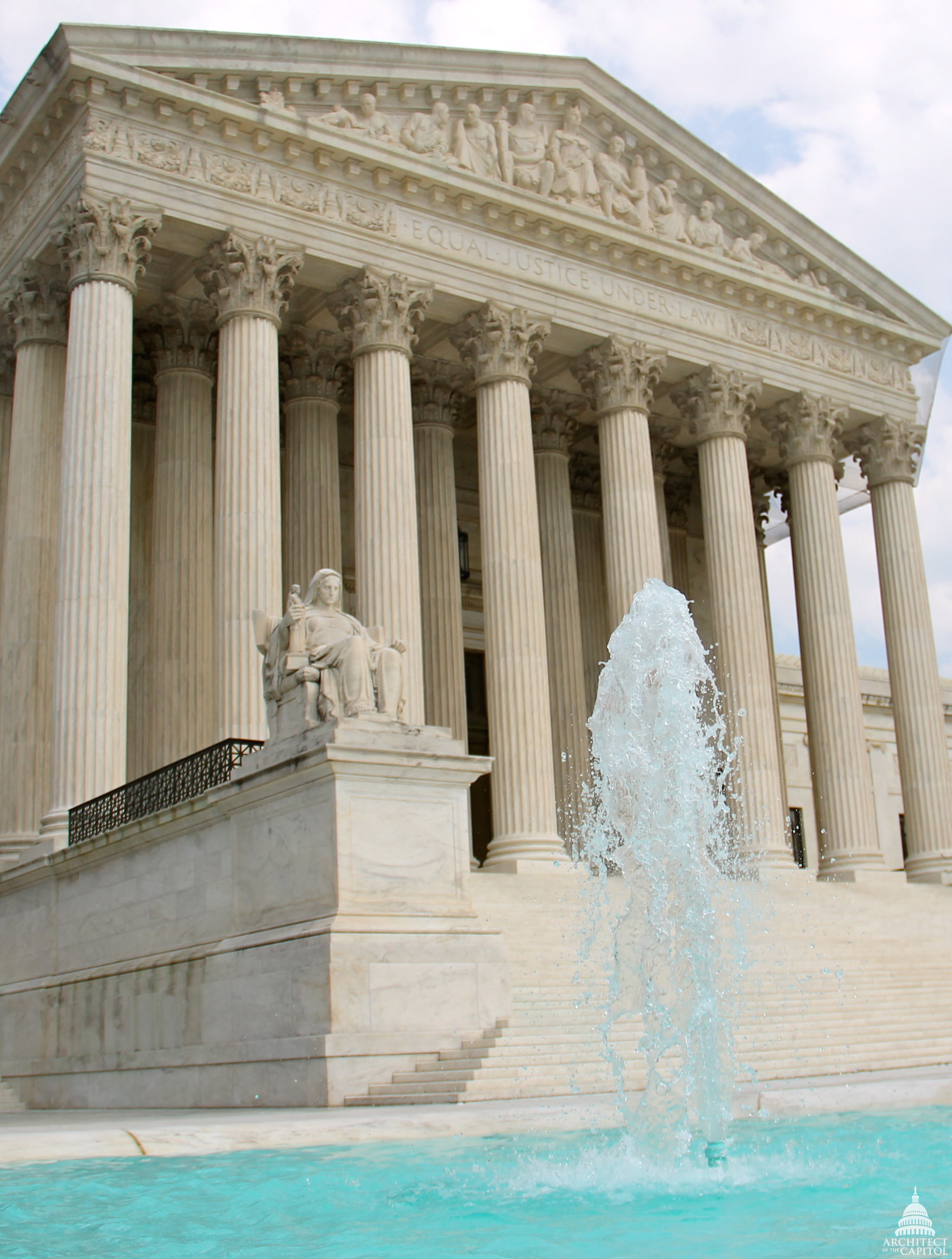
In 2013 the U.S. Supreme Court struck part of the federal Defense of Marriage Act in its United States v. Windsor decision. As Supreme Court Justice Antonin Scalia noted in his dissenting opinion, the court quoted a number of different cases, but ultimately pinned its ruling on the speculation that the Defense of Marriage Act was motivated by animus—hate—toward gay people. On June 26, 2015, the U.S. Supreme Court struck all state marriage laws defining marriage as the union of one man and one woman, making same-sex marriage the law of the land.
As a result many Christians who formerly championed traditional marriage have begun saying the government should simply get out of the “marriage business” altogether. This is a shortsighted answer to the marriage debate, and it carries grave consequences.
People who advocate abolishing state-sanctioned marriage as we know it rightly point out that marriage predates government. Christians believe marriage was not ordained by a country, but by God—“Therefore shall a man leave his father and his mother, and shall cleave unto his wife: and they shall be one flesh,” (Genesis 2:24). The view that marriage and family precede government, however, is not a reason to end state-recognized marriage—just the opposite, in fact. It is the reason states recognize marriage in the first place.
Organized governments aid society by protecting human liberties while facilitating human interactions, but governments are also heavily dependent on society. The core environment in which humans naturally socialize is the nuclear family, and the foundation of the nuclear family are the husband and wife. States recognize marriage because marriage is the cornerstone of family, society, and government. Marriage predates human government in the same sense that a foundation predates a house: It is that upon which everything else rests. Without it, nothing will stand for long. Any effort to redefine or abolish society’s foundations will undermine society.
Some argue we can compromise by recognizing two types of marriage—a secular marriage and a religious marriage. The theory is Christian churches can go on solemnizing marriages as they always have while state governments can solemnize same-sex marriages or any other type of marriage the state sees fit to recognize. In practice, this compromise might actually be worse than ceasing to recognize marriage altogether. If marriage is segmented into religious and non-religious institutions, will polygamous cults have their marriages recognized in any fashion? Will adults be allowed to marry children if their religion permits it? How can we possibly guarantee both types of marriage will be treated equally under the law? Religious liberty is a great thing, but segmenting marriage into religious and non-religious categories needs to be followed to its logical outworking.
Finally, even if states stop recognizing marriage, they cannot stop recognizing personal property or child custody, nor can states expect people to stop purchasing property or having children. Cohabitation and births out of wedlock already make for some of the most complicated litigation in our legal system. If the government were to decide marriage was purely a private arrangement, judges would still be called on to arbitrate disputes between couples or divide property upon a person’s death. Without statutory guidelines identifying the rights of couples and their children, how will courts make these important decisions? How many new laws and rulings will it take to replace the institution of marriage? The unintended consequences are enormous.
The marriage of one man to one woman has been the bedrock of western civilization for almost a thousand years. Marriage licenses were issued in colonial America more than a century before the signing of the Declaration of Independence. Marriage is part of the lifeblood of our society. Those are facts no Supreme Court can change. But for the state to cease to recognize marriage—or fundamentally change the way it treats marriage under the law—would be social bloodletting. There is nothing hateful in wanting to maintain the pillars that support our civilization, and there is nothing wise in knocking those pillars out from under our own feet.
Friday’s Supreme Court decision already carries significant consequences. However, at this point ceasing state recognition of marriage altogether does not solve those problems. It simply creates additional ones.
READ MORE