Myth, History, and a Muslim Utopia: Guest Column
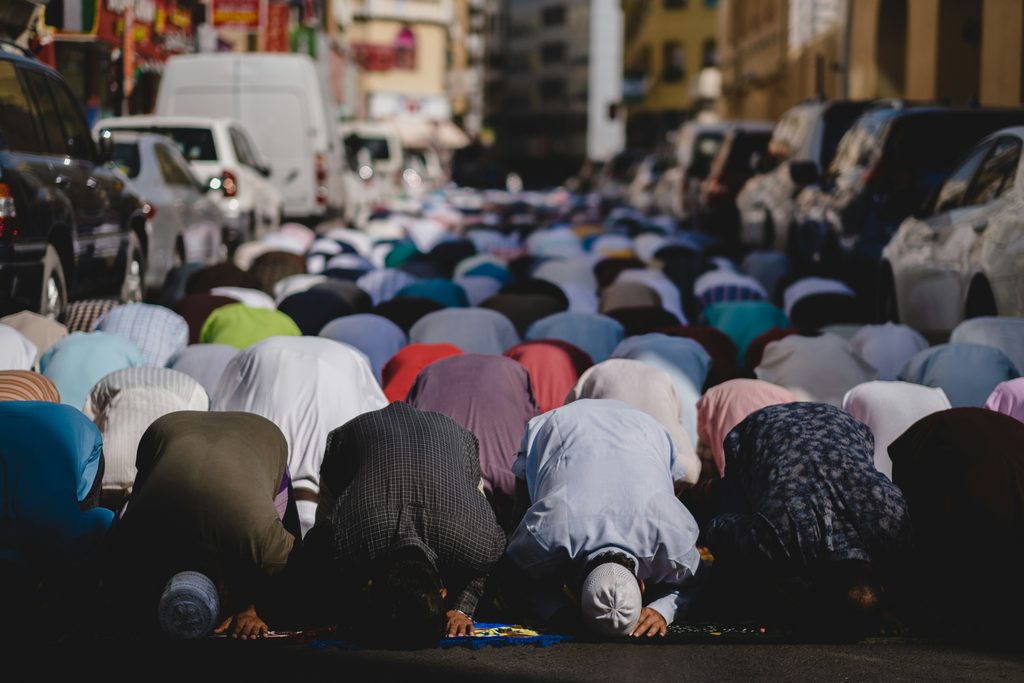
Western liberals claim Islam is a religion of peace, but history proves otherwise.

In a recent substack, Ayan Hirsi Ali pointed to something that former President Barak Obama once said, that “Islam has a proud tradition of tolerance,” which “we see . . . in the history of Andalusia and Cordoba.” President Obama was referring to the time between 711 and 1492, when Islam conquered and ruled a region of modern-day Spain, Portugal, and parts of southern France. Hirsi Ali then quoted Osama Bin Laden. Responding to American retaliation for the 9/11 attacks, the terrorist leader proclaimed, “We shall never accept that the tragedy of Andalucia would be repeated in Palestine.” He was referencing the end of that nearly 800 years of Muslim rule. 

Islamists have a longer commitment to historical memory than the West does. Most Americans and Europeans are not familiar with events from the fifteenth century or what they have to do with current conflicts. For Muslims, that time of Islamic rule within the West is remembered as a golden age of progress, tolerance, and enlightenment. And that is the story repeated by an increasing number of Western academics. The example of Andalucia is often trotted out in response to the violent history of Islam or Christianity’s role in building the West. 

As Hirsi Ali noted in her article: 

This story is presented as an established fact in Western textbooks and popular media; it pervades museums and the pattern of tour guides across southern Spain. It is the first story Western liberals reach for when arguing that Islam is a “religion of peace,” eminently tolerant of other faiths. 

It is also a complete fiction. 

One of the strangest ironies of contemporary discourse about religion and history is that Christianity is scorned as imperialistic, theocratic, and intolerant. Islam, however, gets a pass. It’s related to another strange irony, one more contemporary; what’s come to be called the Red-Green alliance. For reasons that match neither history nor current reality, far-Left groups—including Marxists, feminists, and transgender activists—embrace Islamists as fellow champions of “liberation.”   

These agitators know neither history nor Islam. Whereas the first three centuries of Christianity, and nearly all of Jewish history, were defined by persecution against Christianity, the first 300 years of Islam were characterized by militarism, conquest, and slavery by Islam. By the time of his death, Mohammad had captured nearly all of Arabia. A century later, the ancestors of the French were fighting against Muslims in Western Europe, and Muslim armies were making their way into what’s now Pakistan and India. As late as 1683, Muslim Turks laid siege on Vienna.  

Anywhere they conquered, an absolute theocracy was established. There was no democracy, much less any separation between Mosque and state. Pagans and idolators were given the choice of conversion or death. Christians and Jews were tolerated, but only barely. They were allowed to live under frequent persecution, but only if they paid a jizyah tax for their own occupation. In many cases, it was Christian and Jewish second-class citizens who built a reputation for scholarship and administration, which was then assumed by Muslim leaders. 

Christians who conquered and oppressed others did so in defiance of the teachings of Christ as reported in the Bible. The Muslims who attempt to conquer the world for Allah are obeying the tenets of their faith as taught in the Qur’an. Basically, every one of the evils that secularists blame on religion is true, not only about many Muslims but also about Islam within the Islamic worldview. When these accusations are true of Christians, they are in contradiction with Christ and the Christian religion.  

If secularists hope to engage religion, especially a reemerging Islam, they must get the historical facts straight. The lived and academic experience of someone like Ayaan Hirsi Ali is a great place to begin.

Copyright 2026 by the Colson Center for Christian Worldview. Reprinted from BreakPoint.org with permission.

Islam’s Growth in the West: Guest Column

Less than 25 years after Muslim terrorists killed nearly 3,000 people on 9/11, New York City, home of “ground zero,” just elected a Muslim as its next mayor. Some European cities are already majority Muslim, so what does this mean for America? 

 Today on Breakpoint, speaker and author Abdu Murray takes a closer look at Islam in America and how Christians should respond. 

The truth, as usual, is complicated. There are legitimate concerns about Islam’s growing influence in Western life. But there are also exaggerations—or flat-out falsehoods. Take the rumor that Dearborn, Michigan, has implemented anti-Christian missionary laws. It hasn’t. I’ve read the ordinances and confirmed with Christian friends who live there that they can still share the Gospel in Dearborn’s parks and streets. 

Still, there are real tensions. When Dearborn’s mayor, Abdullah Hammoud, told Christian Dearborn resident and street preacher Ted Barham that he wasn’t welcome in Dearborn, the backlash was swift. In response, Hammoud issued a “sorry, not sorry” statement that Dearborn is open to people of all faiths. But he didn’t apologize or even address Barham. With a population that’s roughly 55% Muslim, Hammoud likely feels no need. His base will keep him in office. 

That’s what makes the situation interesting—and instructive. Islam’s growth in the West isn’t hypothetical. It’s real, and it’s reshaping local cultures and politics. But contrary to some fears, Shariah law isn’t taking over Western legal systems. Islam’s spread in America isn’t primarily legal or coercive. It’s cultural, demographic, and deeply spiritual. 

Despite its global PR problems—association with extremism, restrictions on women, authoritarian regimes—Islam continues to grow in the U.S. Yes, that’s partly due to immigration and birth rates. But it’s also because Islam offers what secularism can’t: a clear message and a sense of belonging. 

For young men especially, Islam presents masculinity as virtuous, not toxic. It calls them to discipline, duty, and identity. In a culture that sneers at male strength and a mainline church that too often avoids moral rigor, Islam’s conviction can look like courage. 

Islam also carries an underdog appeal. In the Western imagination, Islam is often the David facing a secular (or Western colonialist) Goliath—a minority religion maligned by elites. For younger generations trained to root for the oppressed, that story resonates. It resonates so strongly that some Western youth support Hamas despite knowing that Hamas wouldn’t return the favor. Meanwhile, many churches have grown timid. We’ve replaced persuasive proclamation with emotional appeal, trading substance for sincerity. In that void, Islam’s stridency looks refreshing. 

It’s important to remember that Islam is not just a religion—it’s a total worldview that encompasses politics. Many Muslims envision a world submitted to Allah’s law. Muslims differ on how they think that should happen. Most believe in persuasion, service, and exemplary living. Others rely on demographic growth and migration. And a smaller—but concerning—minority openly speaks of Islam’s global dominance and rejects religious pluralism altogether. 

Even secular observers have taken notice. Years ago, atheist Richard Dawkins remarked that “I have mixed feelings about the decline of Christianity, insofar as Christianity might be a bulwark against something worse.” That’s a remarkable admission, and it underscores that Gospel proclamation to Muslims and serious Christian discipleship are not only spiritually vital, they’re essential to preserving the moral foundations of the West. 

None of this justifies hostility or paranoia. But neither does it allow for naïveté. As Muslim populations grow in key Western cities, the temptation to use social or political leverage to silence criticism or limit evangelism is real. Dearborn’s situation reminds us that political pressure to self-censor can emerge even in democratic societies. History shows that when fear of backlash overrides justice or truth, victims suffer and wrongdoing festers. Moral clarity must outrank cultural sensitivity. 

But the greater danger isn’t that Muslims are gaining power. It’s that they’re gaining people. Islam is winning some hearts that long for meaning, conviction, and community—hearts that should be hearing the credibility of the Gospel of Jesus Christ. The tragedy isn’t that Islam is advancing. It’s that the Church has been retreating. Islam’s growth doesn’t prove that the religion is true. It proves its followers take their faith seriously, and that should wake us up. 

The Christian response must be urgency, not alarm. We need to recognize what makes Islam appealing—its conviction, its courage, its sense of mission—and rekindle our sense of those same virtues, but undergirded by the truth of Christ. 

Our witness must be both persuasive and personal. Muslims and secular seekers alike should see in Christians a faith that is intellectually credible, morally grounded, and compassionately lived. The Gospel doesn’t offer domination, but deliverance; not control, but communion with the living God. So, let’s engage our Muslim neighbors, not avoid them. Let’s support those ministering in Muslim-majority communities. Let’s disciple men and women who embody truth with humility and conviction. 

Islam’s rise in the West is not a reason to panic—it’s a reason to preach. Our Muslim neighbors aren’t the enemy. They’re people made in the image of God, searching for what only Christ can give.

This Breakpoint was co-authored by Abdu Murray.

Copyright 2025 by the Colson Center for Christian Worldview. Reprinted from BreakPoint.org with permission.