Courageous Culture Building in a World of Desecration

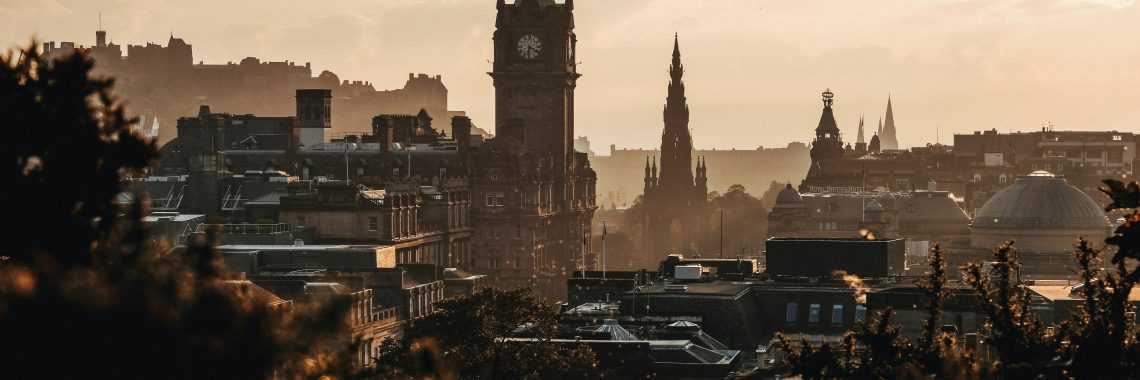
Walking the streets of Edinburgh, Scotland I saw a long line of historic buildings and cobblestone streets that millions traverse every year. As my group walked along the historic alleyways and the famous Royal Mile, rainbow flags came into view. They were being displayed for the pride parade taking place downtown. I even saw a “pride” banner on the grounds of the Tolbooth Kirk which was originally designed to be a meeting hall for the General Assembly of the Church of Scotland. In the same field of view, a Scotsman, dressed in full kilt, played Amazing Grace on the bagpipes. I saw an older gentleman bravely standing amidst the pro-LGBTQ crowd with a sign that told people Jesus loved them, calling them to repent.
I had no idea there would be a pride parade that day with hundreds of people crowding the streets, including drag queens. The city center became incredibly crowded with an influx of people, some celebrating, others taken aback at what they saw, and some simply trying to eat their lunch.
I recall thinking of the dramatic contrast between the noise of the bagpipe blaring out Amazing Grace and the boisterous clamoring of people celebrating pride, all in a beautiful country that has a rich history of Christian reformers.
Back in the U.S, things are hardly different. One day I saw a bumper sticker that read, “ I love my gay dog.” And here I thought Aristotle said that the thing which separates the human animal from all other animals was man’s ability to reason. Now humans are confusing the poor animals with their “reasoning.” Just like the scene in Edinburgh, these sorts of odd statements are a downstream effect of humanity’s denial of God and His statutes. It is an all too unfortunate result of individuals and families who push away the abundant blessings that God offers.
Vice President JD Vance’s new book Communion talks of this denial of God’s truth. In the book, the Vice President explains his own return to faith, but he also explains the societal disease that has inflicted society as a whole—Secularism. Individuals, societies, politics, marriages, and the dynamics of world leadership are infected by the destruction of Secularism. As a result, life spans are shorter, people are having fewer kids or none at all, gay marriage has risen, and hopelessness is rampant.
Thankfully, truth can be found in God’s word and His gospel. Every human being is made in the image of God and because of this, our value system should stem from that understanding. As Christians, we should always be making the case for a return to faith in God as the foundation for flourishing families and fulfilling lives. This is culture building. When humanity gets the truth distorted, it needs the light of the gospel. If Christians do not stand up and fight secularism and the distortions it inflicts, humanity will fall into the depravity that calls dogs gay and more tragically, desecrate themselves in the process.
Erin Hogan has worked with Family Council since January of 2019, where she serves as Director of Government Relations.