
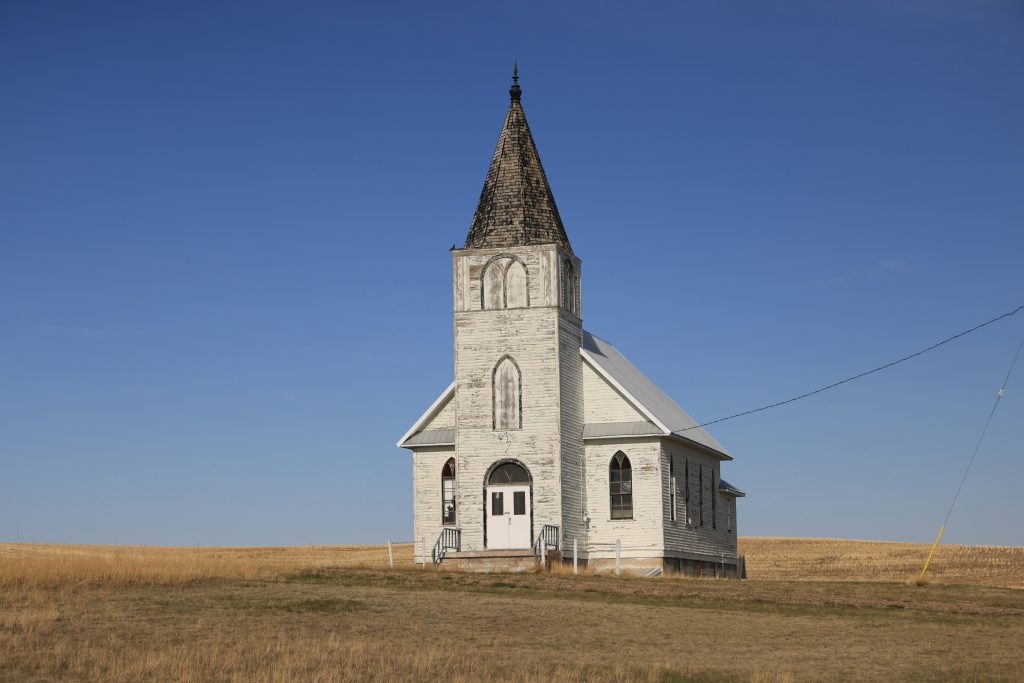
Public opinion polling seems to be sending mixed signals when it comes to Americans’ religious affiliation.
Bible reading surged in 2024 and 2025, and last year news outlets reported how a large share of American adults have rediscovered Christianity in the wake of the COVID-19 pandemic. According to Barna, Millennial and Gen Z churchgoers attend services approximately twice a month, on average, and teens are “very motivated to learn about Jesus.“ Gallup even announced last June that a growing share of Americans actually see religion’s influence increasing.
But earlier this month, Gallup released a poll showing that “religious engagement” in America is still low. Religiously unaffiliated “Nones” in America rose to 24% last year. Less than half of U.S. adults now say religion is “very important,” and less than one in three attend church weekly. Some predict the U.S. could see as many as 100,000 churches close in the next few years.
Some reports seem to show Christianity growing in America while others suggest it’s declining. Which is it?
There are a few possible explanations.
One may be that the distinction between religious and non-religious people is becoming more pronounced.
Few people may go to church weekly, but the ones who do go to church are highly committed to their faith.
Some people may describe this as a decline in cultural or “nominal” Christianity: People who don’t take their faith seriously may be less likely to call themselves Christians or attend church. But those who do profess to be Christians are very devout.
That could help explain why we see so much engagement with the Bible and so many headlines about young adults going to church even as the number of religious “Nones” has gone up.
Another point to consider is that Americans’ church preferences may be changing.
For decades Christians have shifted away from mainline churches and denominations in favor of less formal evangelical or nondenominational churches.
If some churches are shrinking — or closing altogether — while others are remaining stable or growing, that doesn’t represent a decline in Christianity. It may just mean that Christians’ church and denominational preferences are still changing.
On a broader level, in 2017, Pew Research Center found a growing share of Americans identify as “spiritual but not religious.” Many people may think they can be spiritual or even follow Christ without going to church. But being part of a local community of believers is an important part of discipleship. Christians encourage one another and help build each other up in the faith. Church isn’t optional for Christians. It’s essential.
Articles appearing on this website are written with the aid of Family Council’s researchers and writers.