New Study Confirms Abortion Brings Lasting Grief

A recent study confirms what many women have experienced firsthand: That abortion often brings deep, lasting grief that can persist for decades.

The research published in the Journal of Psychosomatic Obstetrics & Gynecology surveyed nearly 2,000 American women ages 41 to 45. The findings paint a sobering picture of abortion’s emotional toll.

The study found that 70% of women who had abortions described their decision as “inconsistent with their values,” “unwanted,” or “coerced.” Only 30% said the abortion was truly wanted and consistent with their beliefs.

Women who felt pressured into abortion suffered the most. More than half of coerced women showed signs of prolonged grief disorder.

Even two decades later, 39% of women said they still experienced negative feelings from the abortion. Many reported intrusive thoughts, nightmares, and interference with daily life and relationships.

Abortion hurts women, and it takes the lives of unborn children.

Over the years, Arkansas passed a number of good laws requiring abortionists to tell women about abortion’s risks, consequences, and alternatives.

Today, abortion is generally prohibited in Arkansas except to save the life of the mother, and legislators have supported public funding for pregnancy resource centers that give women alternatives to abortion. This latest research helps further underscore that Arkansas is on the right track when it comes to protecting women and unborn children from abortion.

Articles appearing on this website are written with the aid of Family Council’s researchers and writers.

Canada Killed a Record 16,499 People Through Assisted Suicide Last Year

Canada killed a record 16,499 people through physician-assisted suicide in 2024, according to new data from the government.

The Canadian government released its Sixth Annual Report on Medical Assistance in Dying in November. The report shows euthanasia and assisted suicide are on the rise in Canada and now account for roughly one in twenty deaths in the country.

All told, more than 76,000 people have died through Canada’s euthanasia program since the country legalized assisted suicide in 2016.

The numbers reveal a troubling trend that should serve as a warning to Arkansas and other states.

Canada operates two different “tracks” for assisted suicide. Track 1 lets doctors kill patients whose natural death is “reasonably foreseeable” — meaning they are terminally ill. But Track 2 allows euthanasia for people who are not dying at all.

Track 2 deaths increased by 17% in 2024, with 732 people killed even though they were not terminally ill. These victims tended to be younger, more likely to be women, and far more likely to be living with a disability.

The reasons people gave for choosing death are deeply concerning. The report shows that loneliness and isolation were factors in nearly 22% of Track 1 deaths and 45% of Track 2 deaths. That means at least 3,800 people were killed in Canada last year partly because they felt lonely.

Many of these patients needed counseling and support — not a prescription for deadly drugs.

Canada’s definition of who qualifies for assisted suicide is dangerously broad. Patients can be approved for euthanasia based on cancer, organ failure, or neurological conditions. But they can also be killed for diabetes, chronic pain, hearing problems, or even “feelings of loneliness.”

The situation is about to get worse. In 2027, Canada plans to expand assisted suicide to include people suffering solely from mental health conditions like anxiety or depression. One advocacy group is even pushing to make children under 18 eligible for euthanasia.

This is exactly the slippery slope that pro-life advocates have warned about for years.

We have seen similar problems in Oregon, which legalized physician-assisted suicide in 1998. Official state reports show that less than 1% of Oregon patients who received lethal prescriptions last year were referred for psychiatric evaluation. Most patients cited loss of autonomy and dignity as their primary reasons for asking about assisted suicide.

In parts of the U.S. where assisted suicide is legal, insurance companies have refused to pay for patients’ medical care but offered to cover the cost of suicide drugs instead. This robs patients of compassionate care and pushes them toward death.

And we have heard stories about patients in Europe and Canada being denied care or actively euthanized thanks to bad government policies.

Just like abortion, euthanasia and assisted suicide are murder, and they violate the sanctity of human life.

Being pro-life means believing innocent human life is sacred from conception until natural death. That’s why Family Council has spent years opposing assisted suicide and euthanasia in Arkansas.

The tragedy unfolding in Canada shows us where this path leads. When society accepts the premise that some lives are not worth living, vulnerable people suffer the consequences. Instead of offering death as a solution, we should focus on providing better palliative care, mental health support, and compassionate assistance to those who are struggling.

Arkansas families, churches, and voters must continue to stand for the sanctity of human life and oppose any efforts to legalize assisted suicide in our state.

Articles appearing on this website are written with the aid of Family Council’s researchers and writers.

A Few of Our “Greatest Hits” from 2025

Since 1989, Family Council has worked to promote, protect, and strengthen traditional family values in Arkansas.

This year we’ve supported good laws, opposed bad laws, stood up for home schooling, promoted religious freedom, defended the sanctity of innocent human life, blunted the radical LGBT agenda, and much more.

It’s been a good year. Here’s a brief look at just a few of Family Council’s “Greatest Hits” from 2025.

Fielding One of the Best Lobby Teams in the Nation at the Arkansas Capitol

Above: Family Council staff members pause for a photo with Rep. Robin Lundstrum (R — Elm Springs) on the final day of the regular legislative session.

Family Council is consistently able to field one of the best teams of statewide lobbyists in the nation. Our friends at national organizations often talk about how effective our staff is at the state capitol. No one on our lobby team serves in the legislature, so none of us gets to vote on laws. Arkansas’ legislators deserve credit for passing good bills and voting against bad ones. But Family Council still helps secure passage of good laws by being at the legislature and by informing and equipping everyday voters across the state to make their voices heard.

Doing Our Part to Keep Arkansas the Most Pro-Life State in America

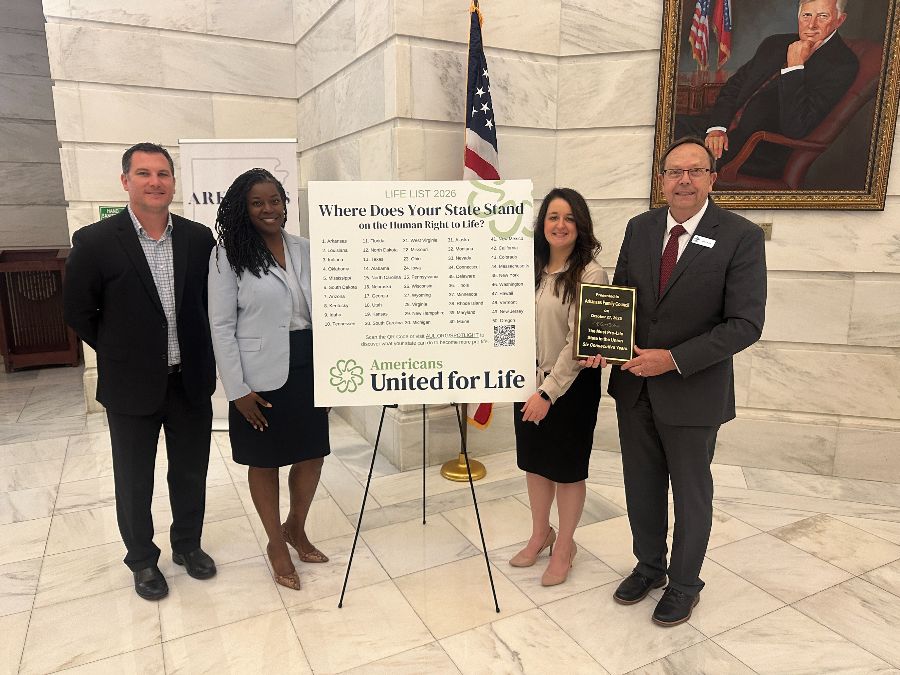
Our friends at Americans United for Life recognized Arkansas as the most pro-life state in the nation thanks to all of the good laws we have enacted that respect innocent human life from conception to natural death. Making Arkansas the most pro-life state in America took a lot of work from many different pro-life leaders. Ministers, churches, elected officials, pregnancy resource centers, and everyday Arkansans all have helped make Arkansas the pro-life state that it is today. Family Council has been pleased to do our part year after year to make sure our pro-life laws are the very best in the country.

Defending Homeschool Rights in Arkansas

One of our top priorities for this year was making sure no legislation would hurt homeschooling in Arkansas. We have been able to do that.

We have also been able to work with the Arkansas Department of Education and the Division of Higher Education to make sure homeschoolers who take concurrent credit high school and college courses continue to have access to scholarships.

On February 26, more than a thousand homeschoolers, policymakers, and elected officials gathered for Home School Day at the Capitol. Homeschoolers heard from Governor Sarah Huckabee Sanders, Lt. Governor Leslie Rutledge, Attorney General Tim Griffin, Secretary of State Cole Jester, State Auditor Dennis Milligan, State Treasurer John Thurston, State Land Commissioner Tommy Land, and others. Rep. Cameron Cooper presented a special resolution in the Arkansas House of Representatives recognizing and honoring homeschooling across the state. Home School Day at the Capitol gives homeschool families a wonderful opportunity to gather with one another, meet legislators, watch committee meetings, and tour the capitol.

Growing Our Church Ambassador Network

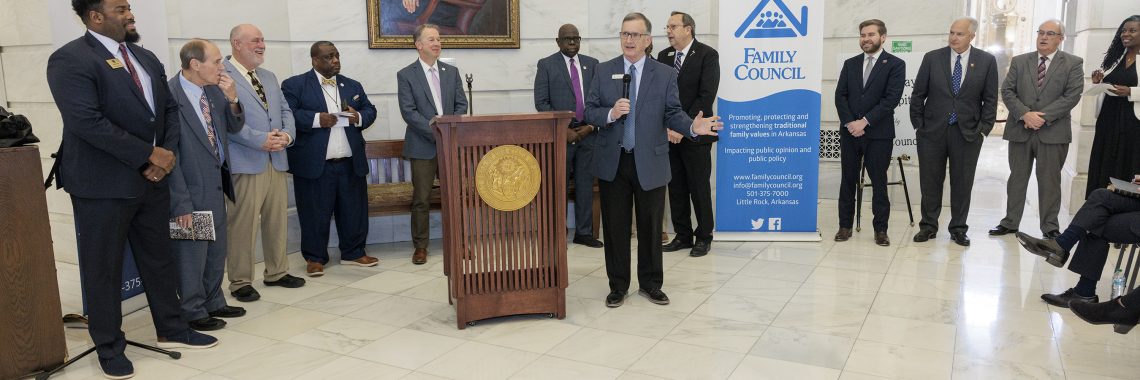
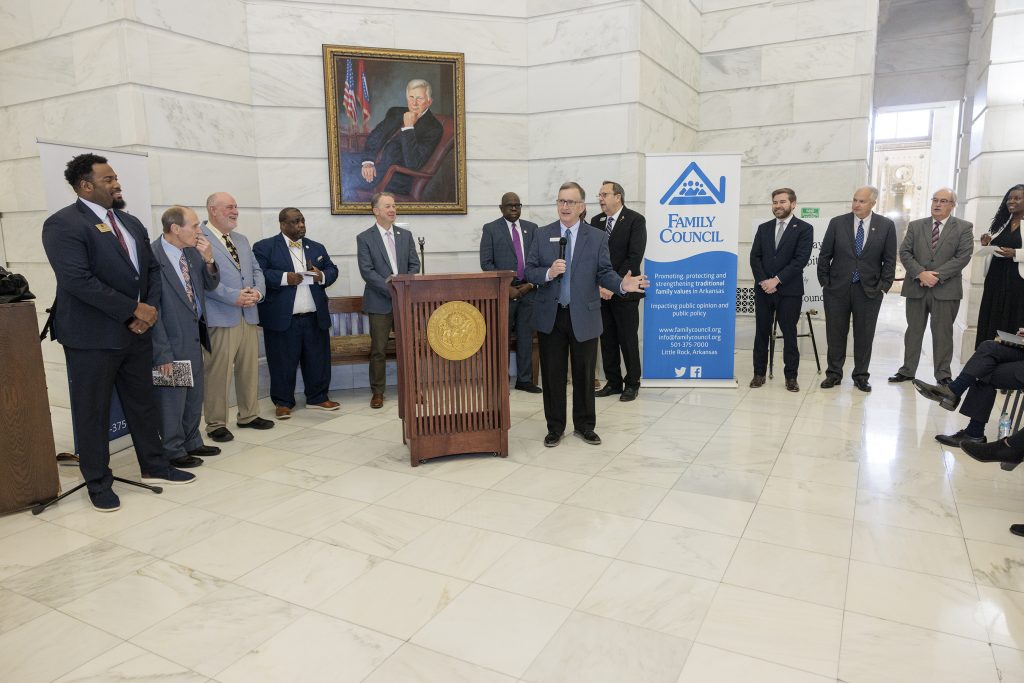
Family Council launched its Church Ambassador Network to help bridge the gap between church leaders and community leaders. The Church Ambassador Network fosters intentional relationships between pastors and elected officials so pastors can minister to Arkansas’ government leaders—offering wisdom, encouragement, and prayer. This year our Church Ambassador Network grew to include several hundred ministers from different churches, and we were able to host several meetings with Arkansas’ elected officials.

Bringing Ministers and Church Leaders to the Capitol

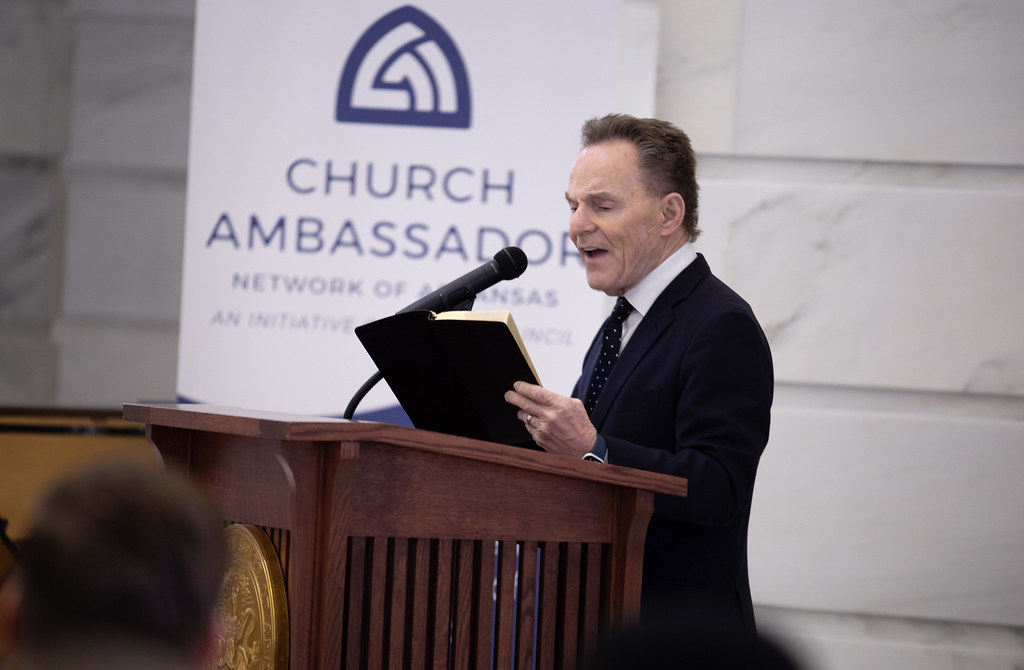
On March 6, ministers and church leaders from across Arkansas gathered for Pastors’ Day at the Capitol. Family Council and its Church Ambassador Network initiative sponsored this excellent event. This year we got to hear from Dr. Ronnie Floyd as well as different ministers and elected officials. Pastors’ Day at the Capitol gives church leaders an opportunity to worship in the Capitol rotunda and pray over the state’s policymakers—and it’s one of the best things we do all year. Plenty of groups and organizations come to the capitol each week, but none of them gather for prayer and worship like we do.

Promoting Religious Freedom in the Public Square

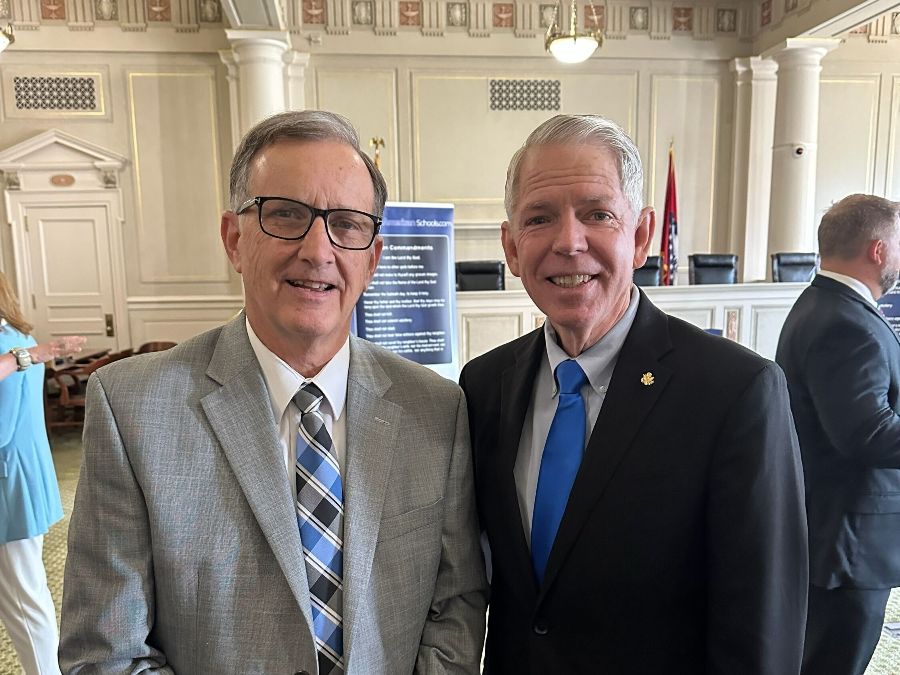
From left: Dr. Jim Lagrone, Director of Family Council’s Church Ambassador Network initiative, and David Barton of WallBuilders.

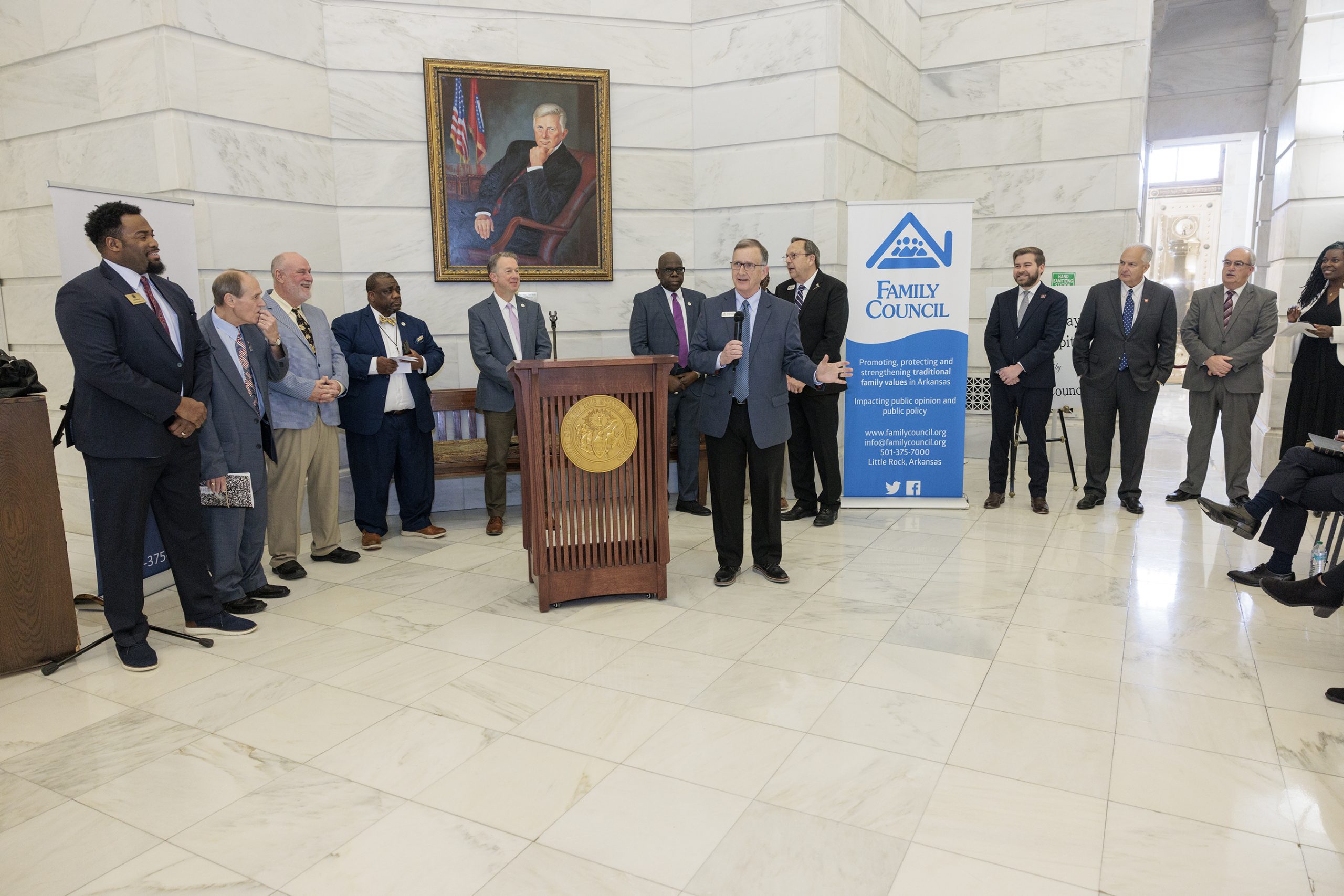
This year, Family Council supported Act 573 of 2025 by Sen. Jim Dotson and Rep. Alyssa Brown letting Arkansans place privately funded copies of the Ten Commandments in public schools and other public buildings. We also have worked with outside groups to help distribute posters of the Ten Commandments across Arkansas. In August, we coordinated a press conference in Little Rock alongside our friends at First Liberty, WallBuilders, Patriot Mobile, and the Arkansas General Assembly to encourage Arkansans to donate posters of the Ten Commandments to their local public buildings. The ACLU has sued to strike down Act 573, but we believe it is a good law and that our federal courts ultimately will uphold it as constitutional.

Other Highlights from 2025

Articles appearing on this website are written with the aid of Family Council’s researchers and writers.