
Study Finds Vegetative Patient “Not Just Aware, but Paying Attention”

A recent study published in the journal Neuroimage: Clinical has found some patients in a persistent vegetative state (PVS) are aware of the world around them — and some are “not just aware, but paying attention.”

Scientists at the Medical Research Council Cognition and Brain Sciences Unit and the University of Cambridge published their research last month. In the study, researchers examined 21 PVS patients, asking the patients to listen and mentally respond to a series of words. Scientists used electroencephalography to measure electrical activity in the brain, and compared brain activity in the patients with brain activity in healthy volunteers who were asked the same questions.

Researchers at Cambridge write,
(more…)

Students Learning ‘Death Panel’ Ethics

Last week, The Chuck Colson Center for Christian Worldview devoted one of its daily “Breakpoint Commentary” pieces to a recent situation at an Illinois high school.

Ninth and tenth-graders at St. Joseph-Ogden High School were given an assignment, which John Stonestreet describes as follows:

“The lesson began by telling students that ten people shared a serious problem: Without access to a dialysis machine, they would all die.

“Unfortunately, they were told, the local hospital only has enough machines for six of them. The assignment was to decide who got the treatment and who didn’t. The students were asked to rank the potential recipients from one, the person they most wanted to receive treatment, to ten, the person they least wanted.

“All they knew about the people was age, race, and occupation or lack thereof: a housewife, doctor, lawyer, disabled person, cop, teacher, minister, college student, ex-convict, and prostitute.”

The school has defended the exercise, saying the lesson was about “bias.” If that’s the case, why ask students to make theoretical life-and-death decisions about total strangers using little more than racial, occupational, and medical information? Why not at least give them additional info and ask students to weigh whether a person’s value is tied to more than what they contribute to society through their job?

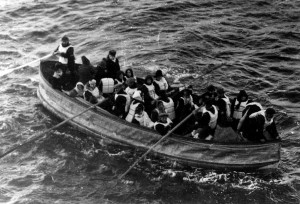
The assignment is very similar to another popular lesson that has popped up now and again in public schools across America the past few decades: The “lifeboat exercise.”

(more…)

Eric Metaxas on “Producing” Children from Skin Cells

[audio:http://www.breakpoint.org/images/content/breakpoint/audio/2013/100713_BP.mp3]

Nearly a year ago scientists in Japan developed a process by which mice offspring were “produced” in a lab using little more than skin cells obtained from the mice.

The discovery has many wondering if it is possible for scientists to “produce” biological children for human beings by a similar process, but it also carries troubling implications for bioethics.

Eric Metaxas comments on the ethical questions this discovery raises,

“Well, I think C. S. Lewis would have responded with another question: ‘Is there anything that should be forbidden?’ That’s precisely the challenge he issued in his famous essay, ‘The Abolition of Man,’ and to which academics of his day had no answer….As part of mankind’s conquest of nature, Lewis argued, we’ve conquered our own belief in moral absolutes. After all, the materialist would say, such beliefs are also part of nature. They’ve evolved to help us survive. But now that they’ve outlived their usefulness, we’re free to rise above them. The problem, as Lewis pointed out, is that we have no higher level to which we can rise. When we give up saying, ‘I ought,’ the only thing we can still say is, ‘I want.'”

You can read a full transcript of Metaxas’ comments at BreakPoint.