

Federal Court Clears Way for Ten Commandments in Louisiana Schools

A federal appeals court sided with Louisiana on Friday in a case over displaying the Ten Commandments in public schools.

In 2024, Louisiana passed a law allowing Ten Commandments displays in public school classrooms, but the measure drew immediate legal challenges from groups like the ACLU.

Fortunately, the Fifth U.S. Circuit Court of Appeals ruled that a lower court was wrong to block Louisiana’s Ten Commandments law. The appeals court said the legal challenge was “premature” because the displays had not actually been put up in schools yet.

The judges noted that deciding whether the displays are constitutional or not at this point would force the court “to hypothesize an open-ended range of possible classroom displays,” the court said. “[That] is not judging; it is guessing.”

This is good news — and it’s worth remembering Arkansas has made headlines in recent months for displaying copies of the Ten Commandments in public schools and buildings as well.

Act 573 of 2025 by Sen. Jim Dotson (R — Bentonville) and Rep. Alyssa Brown (R — Heber Springs) requires privately-funded copies of the Ten Commandments to be displayed in public schools and other public buildings in Arkansas. The measure received strong support in the Arkansas Legislature last year.

However, lawyers from the ACLU and a group of atheist organizations sued to block the law in Fayetteville, Springdale, Bentonville, and Siloam Springs. In response, the judge in the case issued decisions against Act 573, claiming the Ten Commandments posters would pressure children “to observe, meditate on, venerate, and follow the State’s favored religious text, and to suppress expression of their own religious beliefs and backgrounds at school.”

But nothing in Act 573 would “pressure” students. In 2017 Arkansas passed the National Motto Display Act allowing the national motto — “In God We Trust” — to be displayed in Arkansas’ classrooms along with the U.S. flag and the Arkansas flag. Act 573 amended the National Motto Display Act to add the Ten Commandments to the list of historical items displayed in school.

Over the years, the U.S. Supreme Court has ruled that states are free to honor and recognize documents or symbols that are important to our nation’s history — like the Ten Commandments or the national motto.

The Ten Commandments are one of the earliest examples of the rule of law, and they have had a profound impact in shaping our society and our government.

In his motion for summary judgment in Arkansas’ Ten Commandments case, Attorney General Tim Griffin wrote:

The Ten Commandments “have been the most influential law code in history.” … And displays and depictions of the decalogue and of Moses throughout government buildings and property reflect the significance of the Ten Commandments to our Nation’s history and heritage. … Act 573 does not violate the Establishment Clause because it is consistent with historical practices and understandings and does not bear any of the hallmarks of religious establishment.

During her testimony in support of Act 573 last year, Rep. Alyssa Brown noted that the U.S. Supreme Court now uses a “longstanding history and tradition test” to decide if it is constitutional to display something like a copy of the Ten Commandments. Rep. Brown said, “The Ten Commandments without a doubt will pass this longstanding history and tradition test.”

We believe our federal courts ultimately will agree and uphold Act 573 as constitutional.

Articles appearing on this website are written with the aid of Family Council’s researchers and writers.


Arkansas’ Tax Revenue from Sports Betting Likely Comes at a High Cost

Arkansas collected over $7 million in sports betting tax revenue in 2025, but the real cost to Arkansas families may be much higher.

Arkansas sports betting revenue is growing rapidly. According to the Arkansas Department of Finance and Administration, the state collected $7.229 million in tax revenue from sports betting between January and October of 2025 — up 28.1% from the same period in 2024. The Arkansas Democrat-Gazette reports Arkansans wagered $655 million on sports betting last year.

But the tax revenue comes at a devastating cost to Arkansas families. The Arkansas Problem Gambling Council announced a 22% increase in calls for help with problem gambling in 2024, driven largely by sports betting.

The National Council on Problem Gambling reports that “the rate of gambling problems among sports bettors is at least twice as high as among gamblers in general.” When sports gambling is conducted online, the rate is even higher.

Research shows the hidden costs far exceed the tax benefits. The Northwestern University study found that for every dollar spent on sports betting, household investing falls by an average of $2. A UCLA study estimated that online sportsbooks are linked to an increase of roughly 30,000 more bankruptcies per year nationwide.

Arkansas families deserve better than trading their financial security for state tax revenue. The $7 million Arkansas collected in 2025 pales in comparison to the financial devastation that sports betting brings.

Sports betting is not a harmless pastime. As powerful corporations try to make gambling part of everyday life, it’s important for Arkansas to protect citizens and families from predatory gambling. Otherwise, problem gambling will simply hurt more and more people in our state.

Articles appearing on this website are written with the aid of Family Council’s researchers and writers.
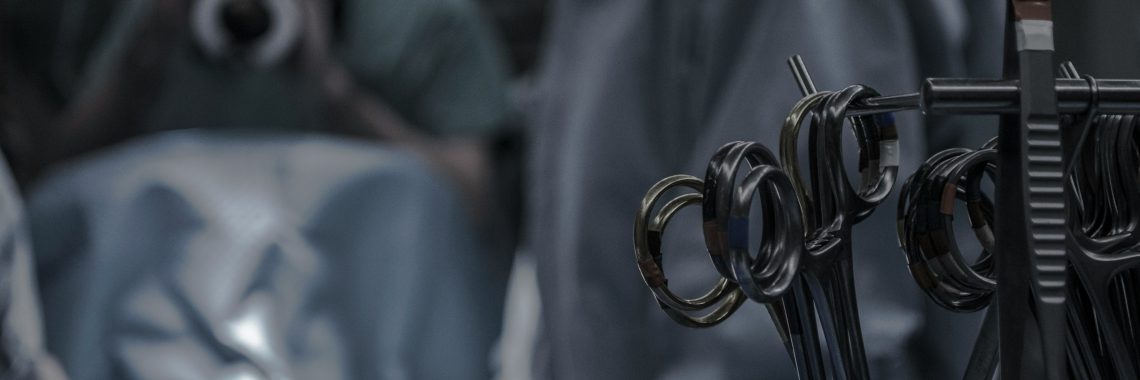
New York Hospital Stops Performing Sex-Change Surgeries on Kids

A major New York City hospital announced last week it will stop performing sex-change surgeries on children.

In a statement, NYU Langone Health’s senior director said, “Given the recent departure of our medical director, coupled with the current regulatory environment, we made the difficult decision to discontinue our Transgender Youth Health Program.”

This is really good news. Public health experts and policymakers in the U.S.the U.K.SwedenFinland, and other nations have found that science simply does not support giving puberty blockers and cross-sex hormones to kids.

These drugs and procedures carry serious risks — including infertility, sexual dysfunction, impaired bone density, and cardiovascular problems.

Pro-LGBT activists and medical organizations spent years citing each other’s work in a circular pattern to manufacture a fake consensus about performing sex-change procedures on kids.

Whistleblowers have testified about how they were rushed through gender transitions as children without understanding the procedures’ risks, consequences, or alternatives.

For the past 12 months, federal officials have worked to reverse course and protect children from these dangerous procedures.

Last year, President Trump issued an executive order prohibiting federal funding from being used for sex-change procedures on kids.

Over the summer, the Federal Trade Commission (FTC) announced a public inquiry into whether U.S. doctors and clinics may have deceived parents and children about the risks of these procedures. The U.S. Department of Justice also subpoenaed doctors and medical facilities involved in performing sex-change procedures on minors.

The U.S. Department of Health and Human Services has discussed a series of regulatory actions to protect children from these procedures.

In September, the U.S. Department of Justice sent Congress the federal Victims of Chemical or Surgical Mutilation Act. The proposed federal law would generally prevent doctors, hospitals, and clinics from performing sex-change surgeries on children or giving them puberty blockers or cross-sex hormones.

In 2021, lawmakers in Arkansas passed the Save Adolescents from Experimentation (SAFE) Act. This good law generally prohibits doctors from performing sex-change procedures on children or giving them puberty blockers and cross-sex hormones.

The SAFE Act was upheld in federal court last year and is protecting children in Arkansas right now.

It’s good to see medical professionals finally taking steps to protect children from dangerous sex-change procedures. It represents what some have called “a refreshing return to sanity” when it comes to how we help children with gender dysphoria.

Articles appearing on this website are written with the aid of Family Council’s researchers and writers.