
Court Says Pro-Life Law Will Remain Blocked During Appeal
According to news reports, the Eighth Circuit Court of Appeals denied a motion this week to unblock a state pro-life law while a court case over the law progresses.

In 2015 the Arkansas Legislature passed Act 577, the Abortion-Inducing Drugs Safety Act. The law requires abortion drugs like RU-486 to be administered according to FDA protocols, and it says abortion clinics that offer drug-induced abortions must contract with a physician who has hospital admitting privileges.

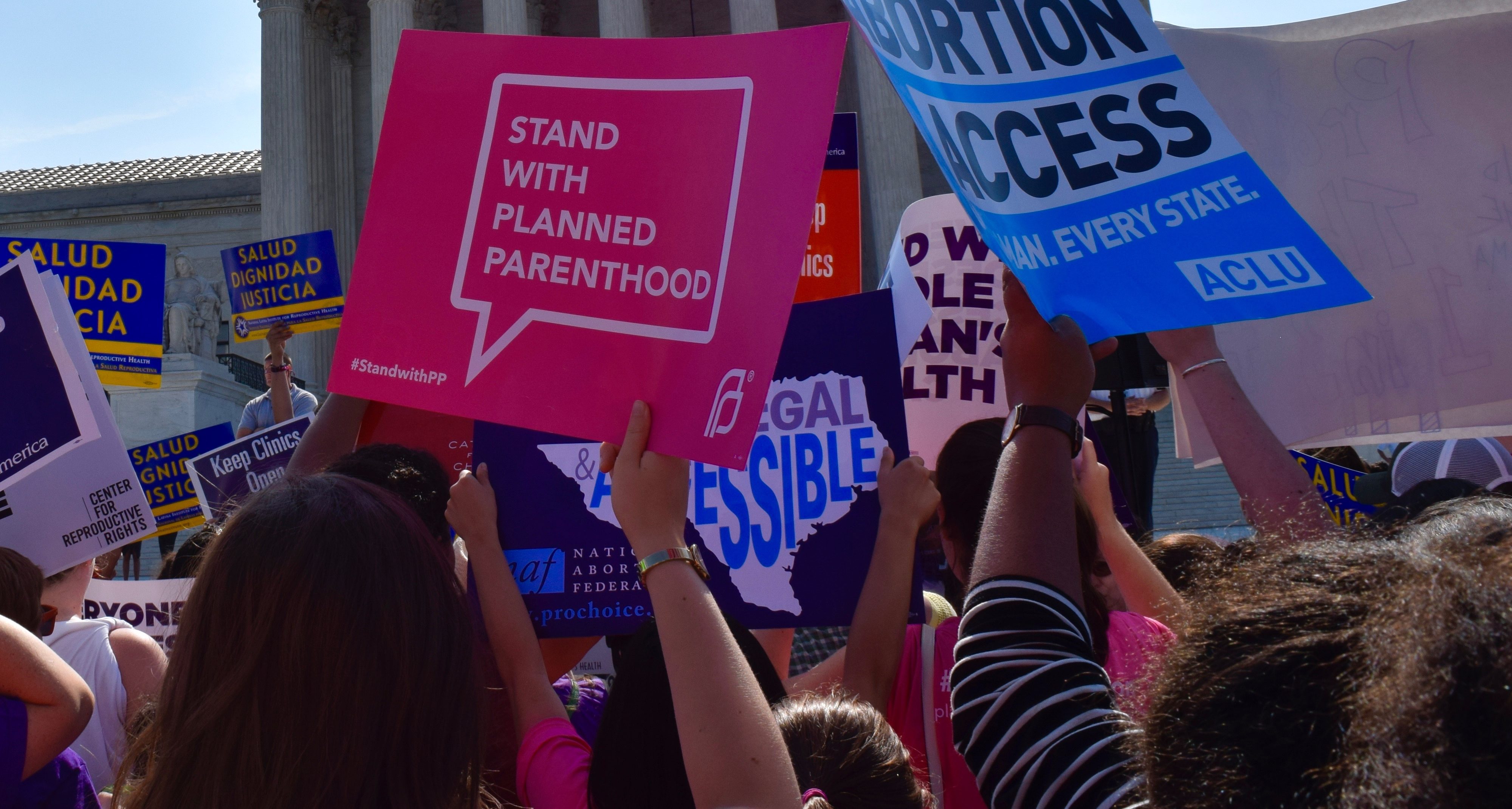
Planned Parenthood filed a lawsuit against the state to have the law struck down. In 2016 U.S. District Judge Kristine Baker in Little Rock ruled the law was an undue burden on women seeking an abortion. However, the Eighth Circuit Court of Appeals disagreed, and vacated Judge Baker’s bad decision.

That decision ultimately prompted Planned Parenthood to stop doing abortions in Arkansas for about three weeks earlier this year.

Nevertheless, the legal tug-of-war over this pro-life law has continued. Last month Judge Baker once again blocked the state from enforcing the law.

Attorney General Leslie Rutledge appealed to the Eighth Circuit Court of Appeals to once again let the state enforce the law. However, it could be several months before the appeals court issues a decision in the case, so the A.G. also asked the court to unblock the law while the lawsuit plays out.

This week the Eighth Circuit declined to unblock the law.

However, the lawsuit is still ongoing, and the Eighth Circuit Court of Appeals has handed down some pro-life victories in recent months.

With that in mind, we believe there is a very good possibility the Abortion-Inducing Drugs Safety Act will survive this legal challenge.

The Abortion-Inducing Drugs Safety Act protects the public health and safety of women in Arkansas. Arkansas has about 6,000 licensed physicians, and a majority of them have admitting privileges with one or more hospitals. It is not unreasonable for the State to require abortion clinics to contract with a doctor who has hospital admitting privileges.

If you are having trouble keeping track of all the twists and turns in this lawsuit, you aren’t alone. Below is a full timeline of this lawsuit over the past three and a half years.

  • March 20, 2015: The Arkansas Legislature passed Act 577, the Abortion-Inducing Drugs Safety Act. The law was set to go into effect January 1, 2016.
  • December 30, 2015: Planned Parenthood of the Heartland, which has two clinics in Arkansas, filed a lawsuit saying it had been unable to find a doctor with admitting privileges at a local hospital to handle emergencies resulting from these chemical abortions, and that Planned Parenthood would no longer may be able to perform drug-induced abortions in Arkansas if Act 577 were enforced.
  • December 31, 2015: U.S. District Judge Kristine Baker issued a temporary restraining order blocking the law just hours before it was set to go into effect. A few weeks later Judge baker followed up by issuing a preliminary injunction blocking the law from being enforced.
  • August 28, 2016: Attorney General Leslie Rutledge filed a brief asking the Eighth Circuit Court of Appeals to reverse Judge Baker’s preliminary injunction against the law.
  • September 21, 2016: A three-judge panel from the Eighth Circuit Court of Appeals heard Attorney General Rutledge’s arguments in court.
  • July 28, 2017: The Eighth Circuit Court of Appeals panel overturned Judge Baker’s preliminary injunction and sent the issue back down to her court. The panel noted that the judge failed to estimate the number of women who would be burdened by Act 577 before blocking the law. Among other things, the panel wrote, “In the present case, the district court abused its discretion because it failed to consider whether Planned Parenthood satisfied the requirements necessary to sustain a facial challenge to an abortion regulation.”
  • September 27, 2017: The Eight Circuit Court of Appeals declined to reconsider the three-judge panel’s decision allowing the State of Arkansas to enforce the Act 577 of 2015.
  • December 21, 2017: Planned Parenthood appealed the Eighth Circuit’s decision to the U.S. Supreme Court.
  • May 29, 2018: The U.S. Supreme Court declined to hear Planned Parenthood’s appeal. As a result, the law went into effect, and Planned Parenthood stopped doing chemical abortions in Arkansas for about 3 weeks while the case went back down to U.S. District Judge Kristine Baker’s court.
  • June 18, 2018: U.S. District Judge Kristine Baker issued a temporary restraining order preventing Act 577 of 2015 from being enforced.
  • July 3, 2018: U.S. District Judge Kristine Baker enjoined the law from being enforced. Attorney General Leslie Rutledge’s office appealed that decision to the Eighth Circuit Court of Appeals and asked the Eighth Circuit to unblock the law while the lawsuit progresses.
  • August 22, 2018: The Eighth Circuit Court of Appeals declined to unblock the law while the lawsuit progresses through the federal court system.

Photo Credit: By jordanuhl7 [CC BY 2.0 (http://creativecommons.org/licenses/by/2.0)], via Wikimedia Commons

MO Democrats Remove Platform Plank Welcoming Pro-Life Candidates

Last June the Missouri Democratic Party created controversy when it added a simple plank to its proposed platform reading,


We respect the conscience of each Missourian and recognize that members of our party have deeply held and sometimes differing positions on issues of personal conscience, such as abortion. We recognize the diversity of views as a source of strength, and welcome into our ranks all Missourians who may hold differing positions on this issue.

The language reportedly was proposed to court pro-life candidates who feel at odds with the Democratic Party’s increasingly pro-abortion rhetoric.

In a nutshell, placing this provision in the platform would have made it possible for Missouri Democrats to respectfully disagree on abortion; some would be free to support it while others would be free to oppose it.

However, on Saturday the party removed the plank from its final platform, substituting a pro-abortion statement, reading,

We support: . . . A woman’s right to choose and the right of every person to their own bodily autonomy and to be free from government intrusion in medical decisions, including a decision to carry a pregnancy to term, and oppose any efforts to limit access to reproductive healthcare.

The very next statement in the platform says the party supports “a requirement that all Crisis Pregnancy Centers be obligated to provide medically accurate information and be ineligible for state funding if medical professionals are not employed.” The language presumably was prompted by the U.S. Supreme Court’s recent decision in favor of pro-life pregnancy resource centers that offer pregnancy tests, ultrasounds, adoption referrals, and other services free of charge.

In Arkansas, the Democratic Party’s draft platform for 2018-2020 reads,

We reaffirm the constitutionally established right of privacy and choice. We pledge to defend the rights laid out in Roe v. Wade. We trust women to make their own decisions about their bodies and their health care.

If adopted, this would expand the party’s current platform regarding abortion, which says, “We reaffirm the constitutionally established right of privacy and choice.” The U.S. Supreme Court’s 1973 Roe v. Wade abortion decision hinged on the court finding an unwritten right to privacy and choice in the U.S. Constitution, so reaffirming the “right of privacy and choice” indirectly reaffirms Roe v. Wade.

It’s odd that these groups seem to be doubling down in support of abortion and flawed supreme court decisions like Roe v. Wade. Recent public opinion polling shows most Americans think abortion ought to be illegal in some or all cases, and the majority (62%) oppose paying for abortions with taxpayer dollars.

In Arkansas, 79% of those surveyed last year said abortion ought to be completely illegal or legal only under certain circumstances.

Abortion is a national tragedy that has claimed the lives of more than 60 million unborn children in the U.S. since 1973 — including 225,000 Arkansans. It’s high time our nation defended the sanctity of innocent human life from conception until natural death.

Photo Credit: Bev Sykes from Davis, CA, USA (Flickr) [CC BY 2.0 (https://creativecommons.org/licenses/by/2.0)], via Wikimedia Commons.

FDA Contracts With Company to Use Aborted Fetal Remains in Research

In August of 2016 the National Institutes of Health announced it wanted to use public funds for research to create human-animal hybrids or “chimeras.” The goal was to inject human stem cells into modified animal embryos in hopes of discovering new cures or “growing” human organs for transplant patients.

At the time the news sounded like nothing less than something out of a supermarket tabloid. Two years later, however, we’ve learned the Food and Drug Administration is apparently contracting with a group in California to inject mice with tissue obtained from aborted babies.

In June the FDA announced it was awarding a contract to Advanced Bioscience Resources, Inc., “to acquire Tissue for Humanized Mice.”

The announcement went on to say “[Advanced Bioscience Resources, Inc.] is the only company that can provide the human fetal tissue needed to continue the ongoing research being led by the FDA. Fresh human tissues are required for implantation into severely immune-compromised mice to create chimeric animals that have a human immune system.”

In other words, Advanced Bioscience Resources will be providing the FDA with fetal tissue that it can use in research — and the fetal tissue almost certainly is being harvested from aborted babies.

The Congressional Research Office writes,

Fetal tissue used in research is obtained from elective abortions. Under certain rare circumstances, fetal tissue may also be obtained from a  miscarriage, also called a spontaneous abortion, or following the removal of an ectopic pregnancy, which occurs when an embryo has implanted outside the uterus. Because the timing or recognition of a spontaneous abortion or ectopic pregnancy is unpredictable, and both conditions may result in a serious health emergency for the woman, the fetal tissue collected under these circumstances is often not suitable for research purposes.

This is not the first time researchers have used organs and tissue harvested from aborted babies. For example:

  • In 2012 PepsiCo came under fire for contracting with a company that used cell lines obtained from aborted babies in order to test food flavors.
  • In 2015 undercover videos showed Planned Parenthood officials negotiating the sale of aborted fetal remains with investigators.
  • Many common vaccines are manufactured using cell lines obtained from aborted babies.
  • Some medical treatments involving “adult” stem cells actually use stem cells harvested from aborted children.

Not surprisingly, pro-life groups are calling on the FDA to terminate this latest contract for aborted fetal remains.

Cathy Ruse, Family Research Council’s Senior Fellow for Legal Studies, issued a statement saying,

“It is difficult to imagine anything more shocking or upsetting than the U.S. government soliciting bids from traffickers in the remains of infant victims of abortion. Every part of this transaction is a tragedy. A woman is driven to abort her baby, too often by coercion or abandonment, and there in the shadows is a government contractor waiting to tear apart the baby’s body to deliver pieces in exchange for payment.

“The House Appropriations Committee recently approved a Labor/HHS bill with a provision that restricts HHS from funding fetal tissue research using aborted babies. We agree with that restriction, and do not believe that HHS and the FDA should approve research of this kind. The FDA owes the American people an explanation as to how such a contract could have been approved. Americans demand to have a more ethical government—one that does not traffic in the remains of human beings,” concluded Ruse.

In a statement to LifeNews, Susan B. Anthony List President Marjorie Dannenfelser said the “use of aborted babies’ body parts for gratuitous, unethical experiments is simply horrifying.”

Live Action Founder and President, Lila Rose, wrote,

The FDA’s purchasing of fetal tissue from aborted babies is immoral and horrific, violating human dignity and implicating the American taxpayer in the gruesome trade of human body parts. By issuing a contract to acquire human fetal tissue, the FDA is using American tax dollars to pay for human body parts that can only be acquired from aborted babies. These children deserved care and protection, but instead were violently stripped of their fundamental rights and are now being sold piecemeal. The company that the FDA is doing business with, Advanced Bio Resources (ABR), is currently under federal investigation for colluding with Planned Parenthood to sell aborted baby body parts for profit. We call on the FDA to terminate its contract with ABR immediately and cease the experimentation on the bodies of aborted children.

We agree. Buying and selling aborted fetal remains turns babies into commodities, and scientific research that costs unborn children their lives is simply unthinkable. Taxpayers should not have to subsidize such unethical research. The federal government needs to end this project right away.