
N.J. Attorney General Announces Illegal Gambling Charges Against Organized Crime Members, Former College Student-Athletes
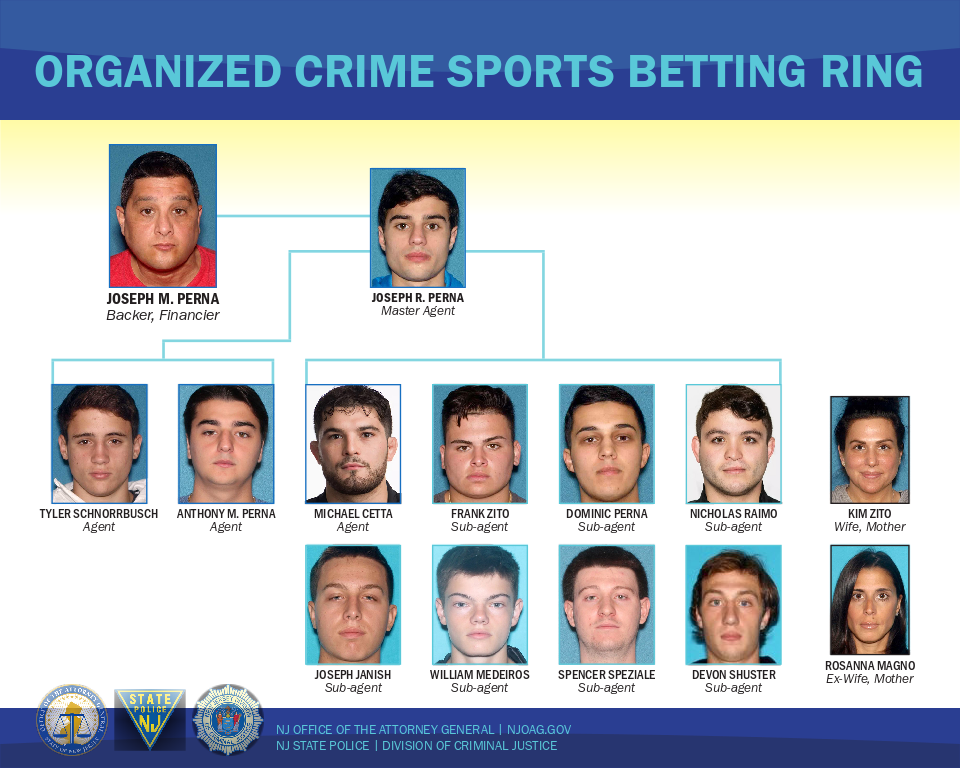
Above: A chart from the New Jersey Attorney General’s Office shows how an illicit sports betting ring allegedly was structured by members of organized crime.

Last week, New Jersey Attorney General Matthew J. Platkin announced charges of racketeering and illegal gambling against 14 individuals — included suspects with alleged ties to organized crime — for allegedly running a multimillion dollar gambling ring that involved student athletes.

In a statement, the attorney general said, “Despite the proliferation of legal betting of all kinds, gambling remains a mainstay of members and associates of organized crime. The locations and methods may have evolved, but illegal gambling – in this case, sports betting – remains a problem, and we will charge those who seek to profit from it.”

While illegal sports betting is still a serious problem, legal sports betting has been a disaster nationwide.

Sports betting is now legal in 39 states — including Arkansas — and it has hurt individuals and families.

The NCAA, Major League Baseballthe NFLthe NBA, and other sports leagues have all dealt with serious corruption in the wake of sports betting’s legalization.

As powerful corporations try to make gambling part of everyday life, it’s important for Arkansas to protect citizens and families from predatory gambling. Otherwise, gambling addiction and corruption will simply continue to spread.

Articles appearing on this website are written with the aid of Family Council’s researchers and writers.


Sports Betting Problems Continue to Plague the NCAA

Problems related to sports betting continue to plague the NCAA.

Last month the Division I Committee on Infractions announced three former Eastern Michigan men’s basketball student-athletes did not cooperate with an investigation into potential sports betting violations. The NCAA notes the players are no longer members of the school’s basketball program.

In a statement, the NCAA said the players refused to cooperate with investigators who were notified about suspicious bets placed during Eastern Michigan’s January 14 game. Failure to cooperate in an NCAA investigation violates NCAA rules. As a result, the NCAA says investigators could not determine whether sports betting violations occurred.

We have written repeatedly about how sports betting destroys public trust and corrupts athletic programs.

The NCAA has wrestled with gambling scandals since sports betting’s legalization. Major League Baseballthe NFLthe NBA, and other sports leagues have as well.

Sports betting is now legal in 39 states — including Arkansas — and it has been a disaster for individuals and families

Arkansans wager more than a million dollars a day, on average. Last year the Arkansas Problem Gambling Council announced it has seen a 22% increase in calls for help with problem gambling — driven largely by sports betting.

Studies indicate people who gamble on sports may be twice as likely to suffer from gambling problems.

Young men are particularly hurt by sports gambling. Twenty-year-old males account for approximately 40% of calls to gambling addiction hotlines, and upwards of 20 million men are in debt or have been in debt as a result of sports betting.

And research now shows that the legalization of sports betting may be linked to serious financial problems in America — such as credit card debt, overdrafts, late payments on loans, lower credit scores, and higher bankruptcy rates.

As powerful corporations try to make gambling part of everyday life, it’s important for Arkansas to protect citizens and families from predatory gambling. Otherwise, gambling addiction will simply continue hurting innocent people in our state.

Articles appearing on this website are written with the aid of Family Council’s researchers and writers.

High Stakes, Higher Costs: The Toll of Sports Betting

Sports betting is now legal in 39 states — including Arkansas, where people wager more than a million dollars a day, on average.

Sports betting often relies on mobile gambling, which is closely associated with problem gambling. Experts now warn that gambling addiction has surged in the wake of sports betting’s legalization.

Below are a few of the ways sports betting — and the gambling problems tied to it — takes a toll on individuals, families, and communities.

The Financial Toll

Sports betting and internet gambling are connected to serious financial problems — including deep debt, missed bills, and bankruptcy.

Mobile sports betting makes it possible for people to place bets during sporting events from practically anywhere. The average sports betting addict using mobile apps accumulates nearly $28,000 in gambling-related debt before seeking help.

These financial strains affect more than just individuals. They hurt families and communities as a whole.

The Mental and Emotional Toll

Sports betting is linked to anxiety, depression, and other mental health problems — especially among teens and young adults. Twenty-year-old males account for approximately 40% of calls to gambling addiction hotlines.

One in four sports bettors worry that they cannot control their gambling.

Research also shows that individuals with gambling disorders experience impaired decision-making and impulsivity — all of which contribute to poor mental health.

The Toll on Athletic Programs

Sports betting undermines the integrity of sports. The NCAA has wrestled with gambling scandals since sports betting’s legalization. Major League Baseball, the NFL, the NBA, and other sports leagues have as well.

The Toll on Families

All of this takes a toll on families.

Sports betting and problem gambling place serious strains on families and have been linked to increased risk of divorce and domestic violence.

Conclusion

Legalized gambling has become a blight in Arkansas. Tax revenue from casinos and sports betting has not improved Arkansas’ roads or boosted the economy. And unless Arkansas’ lawmakers and its people take a stand, gambling addiction is simply going to continue wrecking lives and hurting families in our state.

Articles appearing on this website are written with the aid of Family Council’s researchers and writers.