40 Days of Prayer is an effort that calls on local churches and ministers to pray for the community. It has been led in part by aldermen on El Dorado’s city council.
Last year the Wisconsin-based Freedom From Religion Foundation complained about the prayer campaign; this year Americans United For the Separation of Church and State in Washington, D.C. complained.
Both groups allege that publicly calling for prayer as a city violates the U.S. Constitution.
In it Jefferson encouraged people to pray that, among other things, God would “pour out his holy spirit on all Ministers of the gospel; that he would bless and prosper the means of education, and spread the light of christian knowledge through the remotest corners of the earth.”
If it’s alright for Thomas Jefferson to issue a proclamation like that, then surely it’s alright for the City of El Dorado to post messages on its Facebook page encouraging people to pray for the community.
You can read Jefferson’s entire prayer proclamation below.
Proclamation Appointing a Day of Thanksgiving and Prayer
Whereas the Honourable the General Congress, impressed with a grateful sense of the goodness of Almighty God, in blessing the greater part of this extensive continent with plentiful harvests, crowning our arms with repeated successes, conducting us hitherto safely through the perils with which we have been encompassed and manifesting in multiplied instances his divine care of these infant states, hath thought proper by their act of the 20th day of October last, to recommend to the several states that Thursday the 9th of December next be appointed a day of publick and solemn thanksgiving and prayer, which act is in these words, to wit.
“Whereas it becomes us humbly to approach the throne of Almighty God, with gratitude and praise, for the wonders which his goodness has wrought in conducting our forefathers to this western world; for his protection to them and to their posterity, amidst difficulties and dangers; for raising us their children from deep distress, to be numbered among the nations of the earth; and for arming the hands of just and mighty Princes in our deliverance; and especially for that he hath been pleased to grant us the enjoyment of health and so to order the revolving seasons, that the earth hath produced her increase in abundance, blessing the labours of the husbandman, and spreading plenty through the land; that he hath prospered our arms and those of our ally, been a shield to our troops in the hour of danger, pointed their swords to victory, and led them in triumph over the bulwarks of the foe; that he hath gone with those who went out into the wilderness against the savage tribes; that he hath stayed the hand of the spoiler, and turned back his meditated destruction; that he hath prospered our commerce, and given success to those who sought the enemy on the face of the deep; and above all, that he hath diffused the glorious light of the gospel, whereby, through the merits of our gracious Redeemer, we may become the heirs of his eternal glory. Therefore,
Resolved, that it be recommended to the several states to appoint THURSDAY the 9th of December next, to be a day of publick and solemn THANKSGIVING to Almighty God, for his mercies, and of PRAYER, for the continuance of his favour and protection to these United States; to beseech him that he would be graciously pleased to influence our publick Councils, and bless them with wisdom from on high, with unanimity, firmness and success; that he would go forth with our hosts and crown our arms with victory; that he would grant to his church, the plentiful effusions of divine grace, and pour out his holy spirit on all Ministers of the gospel; that he would bless and prosper the means of education, and spread the light of christian knowledge through the remotest corners of the earth; that he would smile upon the labours of his people, and cause the earth to bring forth her fruits in abundance, that we may with gratitude and gladness enjoy them; that he would take into his holy protection, our illustrious ally, give him victory over his enemies, and render him finally great, as the father of his people, and the protector of the rights of mankind; that he would graciously be pleased to turn the hearts of our enemies, and to dispence the blessings of peace to contending nations.
That he would in mercy look down upon us, pardon all our sins, and receive us into his favour; and finally, that he would establish the independance of these United States upon the basis of religion and virtue, and support and protect them in the enjoyment of peace, liberty and safety.”
I do therefore by authority from the General Assembly issue this my proclamation, hereby appointing Thursday the 9th day of December next, a day of publick and solemn thanksgiving and prayer to Almighty God, earnestly recommending to all the good people of this commonwealth, to set apart the said day for those purposes, and to the several Ministers of religion to meet their respective societies thereon, to assist them in their prayers, edify them with their discourses, and generally to perform the sacred duties of their function, proper for the occasion.
Given under my hand and the seal of the commonwealth, at Williamsburg, this 11th day of November, in the year of our Lord, 1779, and in the fourth of the commonwealth.
And if Jefferson’s proclamation isn’t enough, here are prayer proclamations issued by other Founding Fathers:
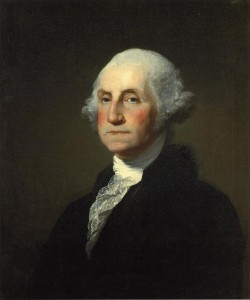 George Washington (1789):
WHEREAS it is the duty of all nations to acknowledge the providence of Almighty God, to obey His will, to be grateful for His benefits, and humbly to implore His protection and favor; and whereas both Houses of Congress have, by their joint committee, requested me “to recommend to the people of the United States a day of public thanksgiving and prayer, to be observed by acknowledging with grateful hearts the many and signal favors of Almighty God, especially by affording them an opportunity peaceably to establish a form of government for their safety and happiness.”
Now, therefore, I do recommend and assign Thursday, the 26th day of November next, to be devoted by the people of these States to the service of that great and glorious Being who is the beneficent author of all the good that was, that is, or that will be; that we may then all unite in rendering unto Him our sincere and humble thanks for His kind care and protection of the people of this country previous to their becoming a nation; for the signal and manifold mercies and the favorable interpositions of His providence in the course and conclusion of the late war; for the great degree of tranquility, union, and plenty which we have since enjoyed; for the peaceable and rational manner in which we have been enabled to establish constitutions of government for our safety and happiness, and particularly the national one now lately instituted; for the civil and religious liberty with which we are blessed, and the means we have of acquiring and diffusing useful knowledge; and, in general, for all the great and various favors which He has been pleased to confer upon us.
And also that we may then unite in most humbly offering our prayers and supplications to the great Lord and Ruler of Nations, and beseech Him to pardon our national and other transgressions; to enable us all, whether in public or private stations, to perform our several and relative duties properly and punctually; to render our National Government a blessing to all the people by constantly being a Government of wise, just, and constitutional laws, discreetly and faithfully executed and obeyed; to protect and guide all sovereigns and nations (especially such as have shown kindness to us), and to bless them with good governments, peace, and concord; to promote the knowledge and practice of true religion and virtue, and the increase of science among them and us; and, generally, to grant unto all mankind such a degree of temporal prosperity as He alone knows to be best.
Given under my hand, at the city of New York, the third day of October, in the year of our Lord one thousand seven hundred and eighty-nine.
G. Washington.
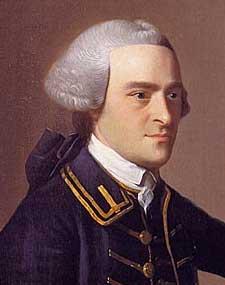 John Hancock (1791):
In consideration of the many undeserved Blessings conferred upon us by GOD, the Father of all Mercies; it becomes us not only in our private and usual devotion, to express our obligations to Him, as well as our dependence upon Him; but also specially to set a part a Day to be employed for this great and important Purpose:
I HAVE therefore thought fit to appoint, and by the advice and consent of the Council, do hereby accordingly appoint, THURSDAY, the seventeenth of November next, to be observed as a Day of Public THANKSGIVING and PRAISE, throughout this Commonwealth:—Hereby calling upon Ministers and People of every denomination, to assemble on the said Day—and in the name of the Great Mediator, devoutly and sincerely offer to Almighty God, the gratitude of our Hearts, for all his goodness towards us; more especially in that HE has been pleased to continue to us so a great a measure of Health—to cause the Earth plentifully to yield her increase, so that we are supplied with the Necessaries, and the Comforts of Life—to prosper our Merchandise and Fishery—And above all, not only to continue to us the enjoyment of our civil Rights and Liberties; but the great and most important Blessing, the Gospel of Jesus Christ: And together with our cordial acknowledgments, I do earnestly recommend, that we may join the penitent confession of our Sins, and implore the further continuance of the Divine Protection, and Blessings of Heaven upon this People; especially that He would be graciously pleased to direct, and prosper the Administration of the Federal Government, and of this, and the other States in the Union—to afford Him further Smiles on our Agriculture and Fisheries, Commerce and Manufactures—To prosper our University and all Seminaries of Learning—To bless the Allies of the United States, and to afford his Almighty Aid to all People, who are virtuously struggling for the Rights of Men—so that universal Happiness may be established in the World; that all may bow to the Scepter of our LORD JESUS CHRIST, and the whole Earth be filled with his Glory.
And I do also earnestly recommend to the good People of this Commonwealth, to abstain from all servile Labor and Recreation, inconsistent with the solemnity of the said Day.
Given at the Council-Chamber, in Boston, the fifth Day of October, in the Year of our Lord, One Thousand Seven Hundred and Ninety-One, and in the sixteenth Year of the Independence of the United States of America.
JOHN HANCOCK.
By his Excellency’s Command,
JOHN AVERY, jun. Sec’y
GOD save the Commonwealth of MASSACHUSETTS!!
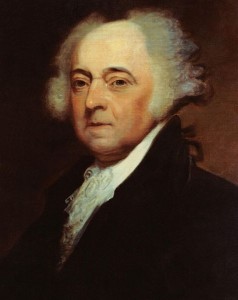 John Adams (1799):
As no truth is more clearly taught in the Volume of Inspiration, nor any more fully demonstrated by the experience of all ages, than that a deep sense and a due acknowledgment of the governing providence of a Supreme Being, and of the accountableness of men to Him as the searcher of hearts and righteous distributor of rewards and punishments, are conducive, equally, to the happiness and rectitude of individuals, and to the well-being of communities; as it is, also, most reasonable, in itself, that men who are made capable of social acts and relations, who owe their improvements to the social state, and who derive their enjoyments from it, should, as a society, make their acknowledgments of dependence and obligation to Him who hath endowed them with these capacities and elevated them in the scale of existence by these distinctions; as it is, likewise, a plain dictate of duty, and a strong sentiment of nature, that in circumstances of great urgency and seasons of imminent danger, earnest and particular supplications should be made to Him who is able to defend or to destroy; as, moreover, the most precious interests of the people of the United States are still held in jeopardy, by the hostile designs and insidious acts of a foreign nation, as well as by the dissemination among them of those principles subversive of the foundations of all religious, moral, and social obligations, that have produced incalculable mischief and misery in other countries; and as, in fine, the observance of special seasons for public religious solemnities, is happily calculated to avert the evils which we ought to deprecate, and to excite to the performance of the duties which we ought to discharge, – by calling and fixing the attention of the people at large to the momentous truths already recited, by affording opportunity to teach and inculcate them, by animating devotion and giving to it the character of a national act:
For these reasons I have thought proper to recommend, and I do hereby recommend accordingly, that Thursday, the Twenty-fifth day of April next, be observed throughout the United States of America as a day of solemn humiliation, fasting, and prayer. – That the citizens on that day abstain as far as may be from their secular occupations, devote the time to the sacred duties of religion in public and in private: That they call to mind our numerous offenses against the most High God, confess them before Him with the sincerest penitence, implore His pardoning mercy, through the great Mediator and Redeemer, for our past transgressions, and that, through the grace of His Holy Spirit, we may be disposed and enabled to yield a more suitable obedience to His righteous requisitions in time to come: That He would interpose to arrest the progress of that impiety and licentiousness in principle and practice, so offensive to Himself and so ruinous to mankind: That He would make us deeply sensible that “righteousness exalteth a nation, but sin is a reproach to any people”: That He would turn us from our transgressions and turn His displeasure from us: That He would withhold us from unreasonable discontent, – from disunion, faction, sedition, and insurrection: That He would preserve our country from the desolating sword: That He would save our cities and towns from a repetition of those awful pestilential visitations under which they have lately suffered so severely, and that the health of our inhabitants, generally, may be precious in His sight: That He would favor us with fruitful seasons, and so bless the labors of the husbandman as that there may be food in abundance for man and beast: That He would prosper our commerce, manufactures, and fisheries, and give success to the people in all their lawful industry and enterprise: That He would smile on our colleges, academies, schools, and seminaries of learning, and make them nurseries of sound science, morals, and religion: That He would bless all magistrates, from the highest to the lowest, give them the true spirit of their station, make them a terror to evil doers and a praise to them that do well: That He would preside over the councils of the nation at this critical period, enlighten them to a just discernment of the public interest, and save them from mistake, division, and discord: That He would succeed our preparations for defense, and bless our armaments by land and by sea: That He would put an end to the effusion of human blood, and the accumulation of human misery, among the contending nations of the earth, by disposing them to justice, to equity, to benevolence, and to peace: And that He would extend the blessings of knowledge, of true liberty, and of pure and undefiled religion, throughout the world.
And I do, also, recommend that with these acts of humiliation, penitence, and prayer, fervent thanksgiving to the Author of all good be united, for the countless favors which He is still continuing to the people of the United States, and which render their condition as a nation eminently happy, when compared with the lot of others.
[Signed] John Adams.
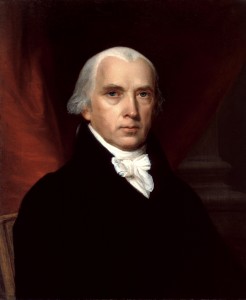 James Madison (1813):
Whereas the Congress of the United States, by a joint resolution of the two Houses, have signified a request that a day may be recommended to be observed by the people of the United States with religious solemnity as a day of public humiliation and prayer; and
Whereas in times of public calamity such as that of the war brought on the United States by the injustice of a foreign government it is especially becoming that the hearts of all should be touched with the same and the eyes of all be turned to that Almighty Power in whose hand are the welfare and the destiny of nations:
I do therefore issue this my proclamation, recommending to all who shall be piously disposed to unite their hearts and voices in addressing at one and the same time their vows and adorations to the Great Parent and Sovereign of the Universe that they assemble on the second Thursday of September next in their respective religious congregations to render Him thanks for the many blessings He has bestowed on the people of the United States; that He has blessed them with a land capable of yielding all the necessaries and requisites of human life, with ample means for convenient exchanges with foreign countries; that He has blessed the labors employed in its cultivation and improvement; that He is now blessing the exertions to extend and establish the arts and manufactures which will secure within ourselves supplies too important to remain dependent on the precarious policy or the peaceable dispositions of other nations, and particularly that He has blessed the United States with a political Constitution rounded on the will and authority of the whole people and guaranteeing to each individual security, not only of his person and his property, but of those sacred rights of conscience so essential to his present happiness and so dear to his future hopes; that with those expressions of devout thankfulness be joined supplications to the same Almighty Power that He would look down with compassion on our infirmities; that He would pardon our manifold transgressions and awaken and strengthen in all the wholesome purposes of repentance and amendment; that in this season of trial and calamity He would preside in a particular manner over our public councils and inspire all citizens with a love of their country and with those fraternal affections and that mutual confidence which have so happy a tendency to make us safe at home and respected abroad; and that as He was graciously pleased heretofore to smile on our struggles against the attempts of the Government of the Empire of which these States then made a part to wrest from them the rights and privileges to which they were entitled in common with every other part and to raise them to the station of an independent and sovereign people, so He would now be pleased in like manner to bestow His blessing on our arms in resisting the hostile and persevering efforts of the same power to degrade us on the ocean, the common inheritance of all, from rights and immunities belonging and essential to the American people as a coequal member of the great community of independent nations; and that, inspiring our enemies with moderation, with justice, and with that spirit of reasonable accommodation which our country has continued to manifest, we may be enabled to beat our swords into plowshares and to enjoy in peace every man the fruits of his honest industry and the rewards of his lawful enterprise.
If the public homage of a people can ever be worthy the favorable regard of the Holy and Omniscient Being to whom it is addressed, it must be that in which those who join in it are guided only by their free choice, by the impulse of their hearts and the dictates of their consciences; and such a spectacle must be interesting to all Christian nations as proving that religion, that gift of Heaven for the good of man, freed from all coercive edicts, from that unhallowed connection with the powers of this world which corrupts religion into an instrument or an usurper of the policy of the state, and making no appeal but to reason, to the heart, and to the conscience, can spread its benign influence everywhere and can attract to the divine altar those freewill offerings of humble supplication, thanksgiving, and praise which alone can be acceptable to Him whom no hypocrisy can deceive and no forced sacrifices propitiate.
Upon these principles and with these views the good people of the United States are invited, in conformity with the resolution aforesaid, to dedicate the day above named to the religious solemnities therein recommended.
Given at Washington, this 23d day of July, A. D. 1813.
JAMES MADISON.
Simply put, there just doesn’t seem to be much basis for arguing public officials cannot call on citizens to unite in prayer.

 I want to tell you about a bill that has been filed at the Arkansas Legislature dealing with churches and the issues of gender and gender-identity. The bill does not immediately force churches to employ transgender individuals or ordain female ministers, but I am concerned that is what it could lead to in the long run, depending on how our courts interpret the law.
 Two atheist groups have
 We have