Revisiting Marijuana’s Mental Health Crisis

Marijuana legalization is creating a mental health emergency among America’s most vulnerable populations.

A troubling study published in JAMA Psychiatry found that cannabis use among people with a history of psychosis “sharply increased” in states where recreational marijuana was legalized. The increase in prior 30-day use was three times higher than in the general population.

This is especially alarming because high-potency marijuana can trigger serious mental health problems.

Another study from Massachusetts General Hospital showed teen psychiatric emergencies spiked after marijuana commercialization began in the state. Teen marijuana use jumped from 5% to 17.3% in psychiatric emergency cases, while cannabis-related disorders among teens increased from 3.2% to 12.1%.

Today’s marijuana is not the same drug from decades past. Modern marijuana — and the drugs and extracts made from it — is far more dangerous. High-potency marijuana can contain 15% to 30% THC, sometimes even 60% THC, compared to just 3% THC in marijuana from the 1960s.

Arkansans should learn from experiences in other states when it comes to marijuana’s legalization and expansion.

All of this simply underscores what we have said for years: Marijuana may be many things, but “harmless” simply is not one of them.

Articles appearing on this website are written with the aid of Family Council’s researchers and writers.


How Sports Betting Corrupts College Athletics and Exploits Student-Athletes

Sports betting is corrupting college athletics and putting student-athletes at risk of harassment, bribery, and exploitation.

Federal prosecutors recently announced major indictments in college sports betting corruption. On January 15, the U.S. Department of Justice and FBI unsealed indictments against 26 people in connection with an alleged bribery and point-shaving scheme to fix NCAA basketball games.

The scheme involved “fixers” who recruited NCAA players to help ensure their teams failed to cover the spread. Players were offered bribe payments ranging from $10,000 to $30,000 per game to participate in the scheme.

The NCAA has opened investigations into dozens of student-athletes across 20 schools for sports betting violations over the past year. Twelve have already been permanently banned from competition. Many cases involve wagering on individual prop bets and first half under spread markets.

It’s now almost routine for the NCAA to announce player suspensions for student-athletes who colluded to bet on one another. Basketball players may scheme to help each other win bets by, for example, missing free throws or scoring fewer points than expected in some games.

Student-athletes face constant harassment from bettors. A recent NCAA study found that 36% of Division I men’s basketball players reported harassment from bettors on social media. When gamblers miss their bets, they often blame the athletes.

The NCAA is calling for immediate action to protect players. NCAA President Charlie Baker recently urged state gambling commissions to eliminate player prop bets and other high-risk bets that target student-athletes. “Player prop bets attach an individual student-athlete’s name to a bet and therefore increase the likelihood of betting harassment being targeted toward that student-athlete,” Baker wrote in a letter to state gambling commissions.

Besides the NCAA, recent news stories show that Major League Baseball, the NFL, and the NBA have all dealt with serious corruption in the wake of sports betting’s legalization.

Sports betting destroys what makes sports special. People play and watch sports for entertainment, athletic competition, and team spirit. When gambling is introduced, fans have a financial stake in the game, and athletes have an incentive to change how they play. Officials may be tempted to cheat, and fans forget why they enjoyed sports in the first place. All of that is a problem.

Sports betting is not a harmless pastime. As powerful corporations try to make gambling part of everyday life, it’s important for Arkansas to protect citizens and families from predatory gambling. Otherwise, problem gambling will simply hurt more and more people in our state.

Articles appearing on this website are written with the aid of Family Council’s researchers and writers.
Oklahoma Authorities Seize Illicit Marijuana in Raid

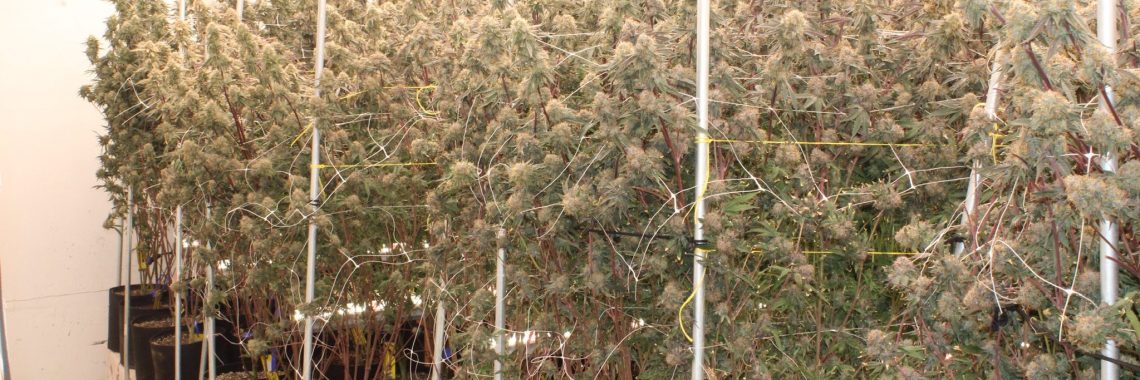
Above: Marijuana seized during a February 10 operation in Oklahoma. Photo Credit: Oklahoma Bureau of Narcotics.

Last week the Oklahoma Bureau of Narcotics’ Marijuana Enforcement Teams seized 10,656 illicit marijuana plants and 296 pounds of processed marijuana at an illegal grow site.

News outlets report that the operation involved joint efforts from several local, state, and federal agencies — including the DEA and ICE.

There is evidence that Oklahoma’s lax marijuana laws have actually emboldened drug cartels and contributed to the spread of illegal marijuana on the black market.

Authorities have raided illicit grow sites in Oklahoma in the past, and Arkansas State Police routinely confiscate illegal marijuana from Oklahoma.

There is also evidence that legal marijuana in Oklahoma is often diverted to the black market. Law enforcement around the country alleges 40% of America’s black market marijuana has come from legal grow sites in Oklahoma. Over a twelve-month period, authorities say more than 85 million pounds of marijuana in Oklahoma went unaccounted for—meaning tens of millions of pounds of marijuana grown legally may have been sold illegally on the black market in just one year.

Oklahoma isn’t the only state dealing with unintended consequences from legalization. California has seized more than $1.2 billion in illegal cannabis since 2022. In Maine, authorities have said there are hundreds of illegal growing operations connected to Chinese organized crime groups. These operations often involve serious crimes like labor trafficking and wage theft.

All of this underscores what we have said for years: Marijuana may be many things, but “harmless” simply is not one of them.

Articles appearing on this website are written with the aid of Family Council’s researchers and writers.