Nike Loses $200 Billion in “Woke Wipeout”
Yahoo Finance reports the iconic sportswear brand Nike has lost $200 billion in market value since 2021. Financial experts point to poor sales performance domestically and internationally, but our friends at The Washington Stand ultimately trace it back to Nike’s political activism, calling the company’s financial turn a “$200 billion woke wipeout.”

Suzanne Bowdey at The Washington Stand writes:

“Millions of customers called it quits on Nike after its endorsement of anti-American Colin Kaepernick, who, along with disrespecting our national anthem, persuaded the company to shelve its idea of patriotic shoes.

“Since then, Nike’s far-left agenda has taken different forms — from a doomed Dylan Mulvaney partnership to its defense of China’s slave labor program. Now, the company seems intent on being the official sponsor of team transgenderism, refusing to back away from radical LGBT advocacy that’s at odds with 80% of America.

“And its roots in the movement run deep. In a conscious decision to trade their brand’s popularity for toxic activism, executives started sticking their necks out years ago in areas that were racing to put the brakes on gender mutilation procedures for children. In places like Alabama, where lawmakers tried to stop kids from rushing into transgender hormones and surgery, Nike led the corporate march to put the scalpel back in doctors’ hands. Fortunately, they failed.”

Nike is not the only company that has suffered financially because of its social and political activism.

In 2023, Anheuser-Busch sent transgender social media influencer Dylan Mulvaney a novelty can of Bud Light with Mulvaney’s picture on it. Mulvaney posted a video of himself dressed like Audrey Hepburn showcasing the Bud Light can — which led to backlash and boycotts from Bud Light drinkers nationwide. That novelty can of Bud Light ended up costing the company more than $1 billion in lost sales, and the brand has never fully recovered.

Seeing a brand like Bud Light singlehandedly overthrow itself as America’s bestselling beer caught the corporate world’s attention. Since then, many major corporations have reduced their LGBT themed marketing, rolled back pro-LGBT policies, and stopped participating in HRC’s Corporate Equality Index.

However, unlike most major companies, Nike doesn’t just participate in the Human Rights Campaign’s Equality Index. This year the company earned a perfect score.

It’s worth pointing out that HRC’s Corporate Equality Index puts some heavy requirements on businesses that participate. Getting a perfect score like Nike’s means companies must agree to demands like covering the cost of gender-transition procedures for employees and their families, forcing workers to undergo ideological training, opening restrooms to both sexes, and so forth.

Corporate DEI polices and pro-LGBT pandering are deeply out-of-step with everyday Americans. These are flawed ideologies that do not ensure individuals are valued, heard, or included. Employees who hold biblical views of marriage or gender risk losing their jobs in workplaces that have adopted DEI policies. None of that is good for our economy or our country.

Articles appearing on this website are written with the aid of Family Council’s researchers and writers.

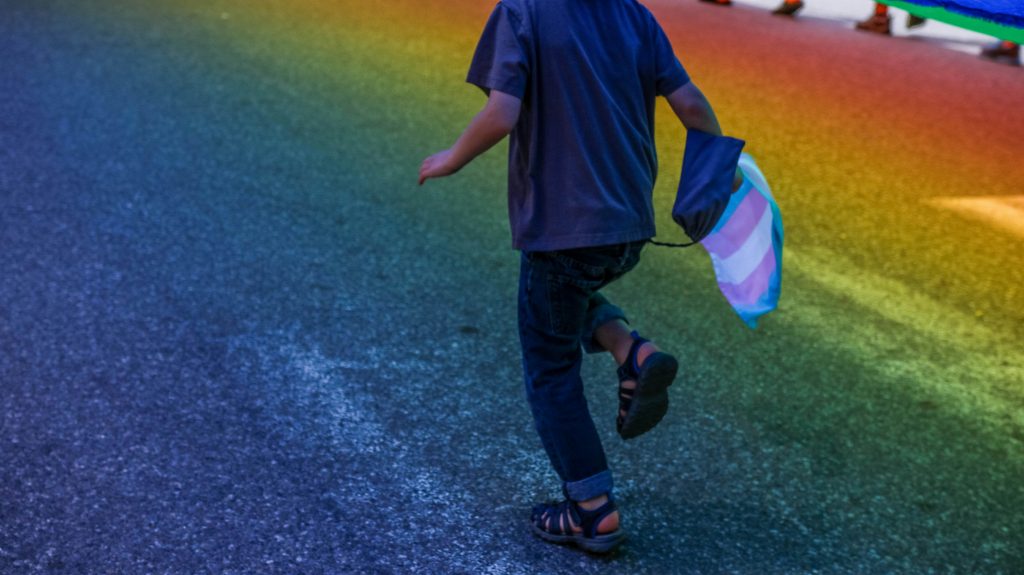
How HRC’s Corporate “Equality” Index Harms Children: Guest Column

One of the most effective tools to shape culture in recent years has been the Corporate Equality Index from the Human Rights Campaign. Today on Breakpoint, Katy Faust of Them Before Us explains: 

You may be surprised to learn that when you picked up that matte red lipstick at Ulta, you were helping fund cross-sex hormones for gender-confused kids. Or that when you ordered that chicken al pastor with extra guac at Chipotle, you were subsidizing IVF and surrogacy, which is intentionally creating children who will be separated from their mother or father. 

That may sound extreme, but according to a new report published by my non-profit Them Before Us, there’s often a pipeline between our daily purchases and child harm. This harm is thanks to The Human Rights Campaign’s Corporate Equality Index. 

Launched in 2002, the CEI presents itself as a benchmarking tool, rating companies on how well they implement “LGBTQ inclusion” policies in the workplace. It promises to help businesses create fair, equitable environments for employees. But far more than shaping office culture, it has quietly reshaped how corporations think about children, families, and even the human body itself. And whether we realize it or not, most of us are participating. 

Companies don’t just earn points for preventing workplace discrimination. They’re rewarded for adopting a slate of policies that reach far beyond the office into medicine, reproduction, and family structure. That includes offering “family formation” benefits like IVF, surrogacy, and gamete donation. It includes covering gender-transition procedures. And it includes financially supporting organizations that promote these practices, even among minors.  

In other words, a high score isn’t just about tolerance. It’s about aligning with a specific vision of what it means to be human. And that vision has consequences, especially for children. This isn’t just about corporate policy. It’s about anthropology. What does it mean to be human? What is a child? Where do children come from? And what do they need? 

For most of human history, these answers were obvious. Children come from a man and a woman. Those two adults are their literal biological origins. And children are most likely to flourish when raised, whenever possible, by the mother and father who brought them into the world. 

But our culture is replacing that reality with something else. Children are redefined—not as persons with origins, but as products of intention. Not as gifts to be received, but as outcomes to be achieved. And when that happens, the logic of the marketplace begins to take over. 

Think about what it means when companies are incentivized to subsidize IVF and surrogacy. IVF encourages the mass production of embryos so they can be eugenically screened for fitness or sex or other characteristics. It also allows for the use of third parties severing children from one or both biological parents. Surrogacy adds an additional layer of child loss and risk, substituting contracts for relationships. 

Or consider the push for “inclusive” health coverage that covers irreversible medical interventions. On minors, it harms their physical bodies. On adults, it often steals a child’s father by facilitating his presentation as a “mother.” These corporate policies aren’t neutral. They reflect a belief that the body itself—a child’s own or those of his or her parents—is optional. It’s something to be reshaped according to identity rather than received as a given. And the kids are the constant losers. 

A Christian worldview offers the kind of clarity people need right now. Human beings are creatures, not the Creator. We are embodied souls, male and female, designed for relationship—with God, and with one another. Children are not lifestyle accessories or subjects of irreversible medical experimentation. They are image-bearers and unable to protect themselves from corporations like Coca-Cola or Procter & Gamble. 

Throughout history, the Church has defended children against a variety of cultural threats. Whether female genital mutilation, abortion, infanticide, or Chinese foot binding, God’s people have stood athwart all manner of child victimization. Now we have a chance to join that great cloud of witnesses by doing something as simple as purchasing mulch from Lowe’s rather than Home Depot. 

To be clear, none of this means that all employees or executives are acting with malicious intent. Many are unaware of what their “perfect score” produces and are motivated by compassion, inclusion, or a desire to do what’s right. But good intentions aren’t enough.  

So, what should we do? First, see clearly. Systems like the CEI aren’t neutral. Christians should critique their comprehensive moral vision, not accept it. Second, we should think carefully about where we shop, the companies we support, and how we engage as employees or shareholders. Finally, we need to speak truthfully and compassionately. Not with outrage for its own sake, but with a commitment to defend those who cannot defend themselves. 

In the end, the question is not whether we value equality. It’s whether our vision of equality still has room for children.

Copyright 2026 by the Colson Center for Christian Worldview. Reprinted from BreakPoint.org with permission.

Burger King Pledges Donations to Pro-LGBT Human Rights Campaign

Earlier this month fast food giant Burger King announced that for every chicken sandwich it sold it would donate 42 cents to pro-LGBT organization the Human Rights Campaign, up to $250,000 total.

https://twitter.com/BurgerKing/status/1400618810571362305

The Human Rights Campaign is one of the nation’s most radically pro-LGBT organizations.

Last fall the group outlined public policies that would strip many Christian schools of their accreditation.

The Human Rights Campaign has promoted pro-abortion events in Arkansas. In 2014 the group spent more than $160,000 supporting Fayetteville’s controversial, pro-LGBT ordinance; the group also opposed religious exemptions to Fayetteville’s ordinance.

Burger King is just one of the latest companies to jump on the pro-LGBT bandwagon this year.

In the meantime, it’s probably safe to say many conservatives will go elsewhere this month for chicken sandwiches.

Photo Credit: Michael Rivera, CC BY-SA 3.0 https://creativecommons.org/licenses/by-sa/3.0, via Wikimedia Commons