
What Americans Really Believe about What’s Best for Children: Guest Column

As a recent Substack post from children’s rights advocacy group Them Before Us accurately summarized, the decision issued eleven years ago in Obergefell v. Hodges “did more than mandate marriage licenses for same-sex couples.”
It redefined marriage in law, and redefining marriage redefines parenthood. Once husbands and wives became optional in marriage, mothers and fathers became optional in parenthood, eroding the right every child has to their own mother and father.
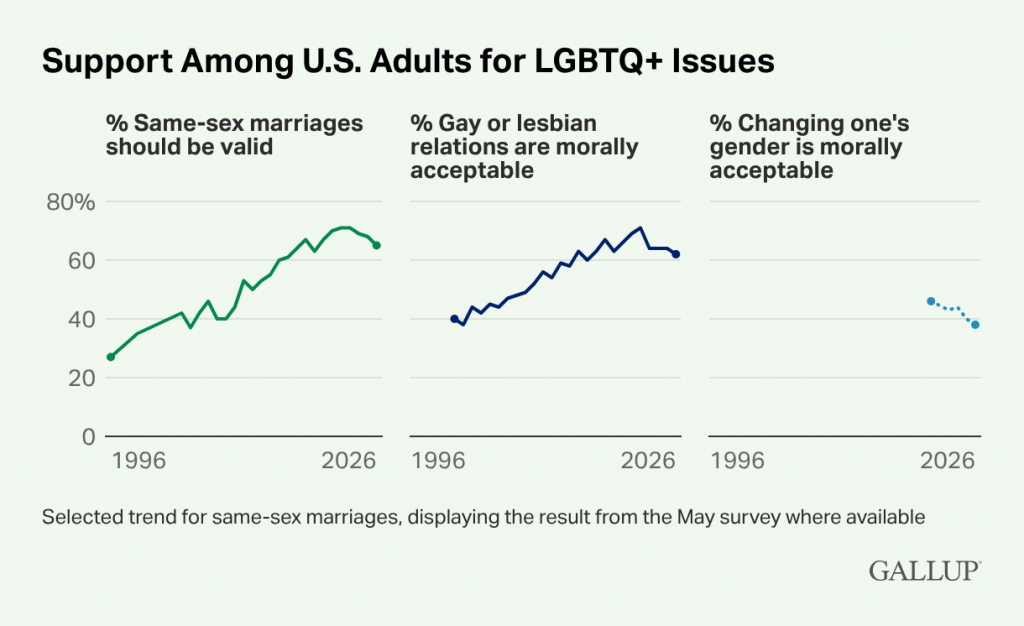
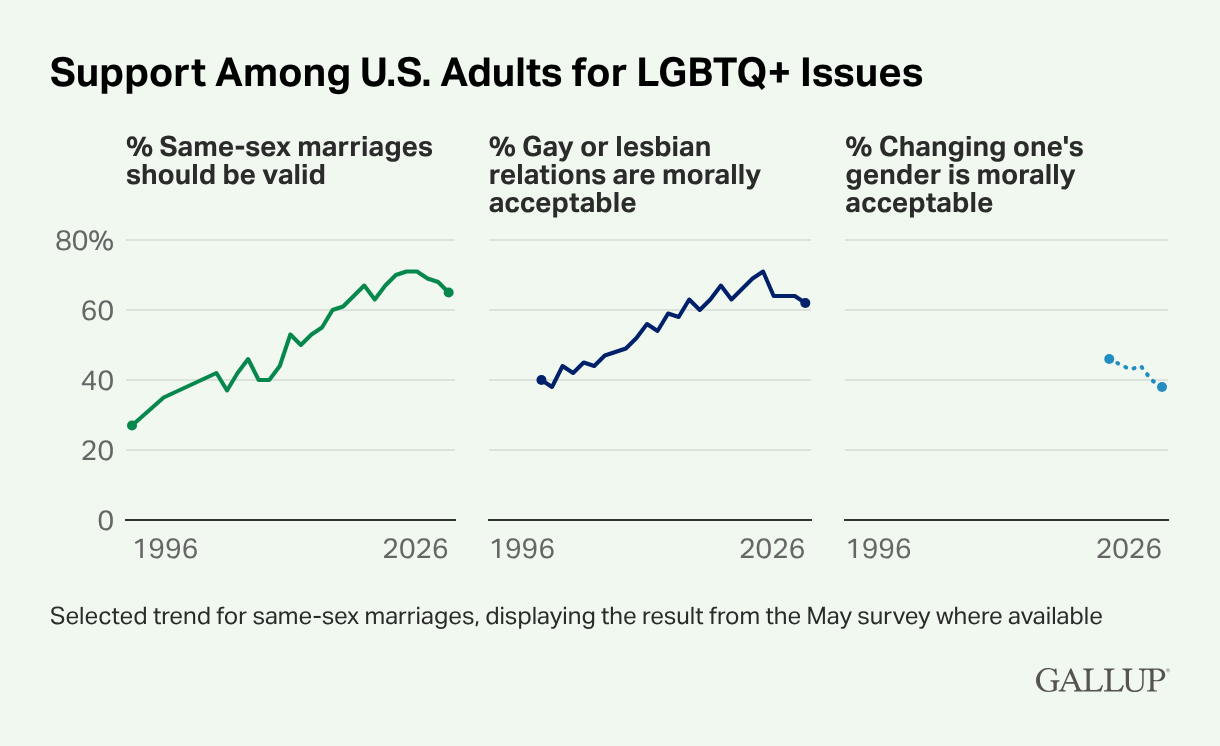
Thus, the Obergefell decision marked a further stage in the evolution of one of the core ideas of the sexual revolution: that men and women are interchangeable, not only in rights but also in social roles and even in reality itself. A legal decision of this magnitude inevitably shapes the cultural imagination, defining down the essential differences between men and women, husbands and wives, and mothers and fathers as mere cultural constructs. And ever since, we’ve been served the narrative that the social innovation of same-sex “marriage” is settled, both in culture and in law.
But what if it isn’t?
A new poll conducted by The Decision Co., of 1200 conservative and moderate likely voters, found that a significant majority believe, “children matter, mothers matter, fathers matter, and children’s needs should come before adult desires.” According to the data, the narrative that even social and political conservatives want same-sex “marriage” and consider it “settled law” is unsubstantiated conjecture.
As Josh Hammer, Senior Editor-at-Large at Newsweek and host of The Josh Hammer Show, said:
“This poll exposes the growing disconnect between elite cultural narratives and the convictions of conservative and moderate voters. Despite years of messaging from the media, academia, and corporate America, these voters continue to affirm a fundamental belief: whenever possible, children should be raised by and connected to both their mother and father. At a time when the center-right is often portrayed as fractured, this survey reveals remarkable unity around a principle that should never have become controversial: the rights and needs of children deserve to come before adult desires.”
Among the findings from this survey,
- 96% of these voters say it is important for a child to be raised with both an involved mother and an involved father.
- 82% of those surveyed agree that no child should be deliberately denied a mother or a father.
- 78% agree that when a child’s needs conflict with an adult’s desires, the child’s needs should come first.
- 66% reject the claim that being raised by same-sex parents is no different for a child than being raised by an adoptive mother and father.
- 63% of those surveyed agree that children are harmed when they lose their mother or father to be raised in a same-sex household.
For the record, the best social science data supports the views that these voters have. While direct comparison studies between children raised by married mothers and fathers and those acquired by same-sex couples are often plagued by poor methodology, self-selective sample groups, and ideological bias, two social science findings are overwhelmingly clear. First, children raised in homes by biological, married mothers and fathers have a distinct advantage. And second, mothers and fathers parent differently, and those differences matter greatly.
Interestingly, church attendance is a major differentiator for what people believe about marriage, children, and parenting. “Among voters who attend church regularly, 72% agree that every child should be legally recognized as having a mother and father, but so do 43% of those who never attend church at all.” On one hand, the gap is sizeable. On the other hand, a significant portion of the population currently holds a counter-cultural view about children.
Of course, a lesson to be learned from over 50 years of pro-life activism, is that people do not always connect their beliefs with the implications of those beliefs. Often, consistency is disrupted by a population taught that moral beliefs must be kept personal and private and should be outweighed by a commitment to “tolerance” and “accepting everyone.” Here too, the heaviest work to be done by those of us hoping to protect children is worldview work.
But there’s another lesson to be learned from those who have fought so hard for so long to make abortion not merely illegal but also unthinkable. The Supreme Court cannot settle an issue that is so far upstream of its jurisdiction. Obergefell is not the first or only time the Court has gotten an important decision wrong.
Like in the past, the moral failure of Obergefell is an expression of bad anthropology. And, like the past, this is no theoretical mess we are in. For children everywhere, it’s personal. We owe it to them to tell the truth, oppose the lies, and convince as many people as we can.
Learn more about the study and how you can join the Greater Than Campaign at greaterthancampaign.com.
Copyright 2026 by the Colson Center for Christian Worldview. Reprinted from BreakPoint.org with permission.