Governor Invites Churches, Faith Leaders to Participate in Pilot Program to Address Poverty in Arkansas
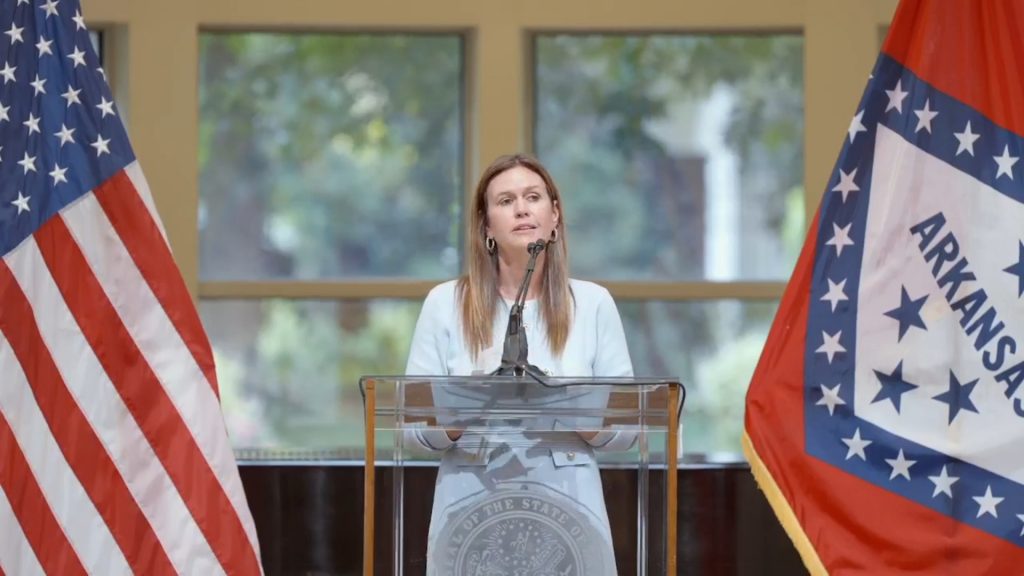
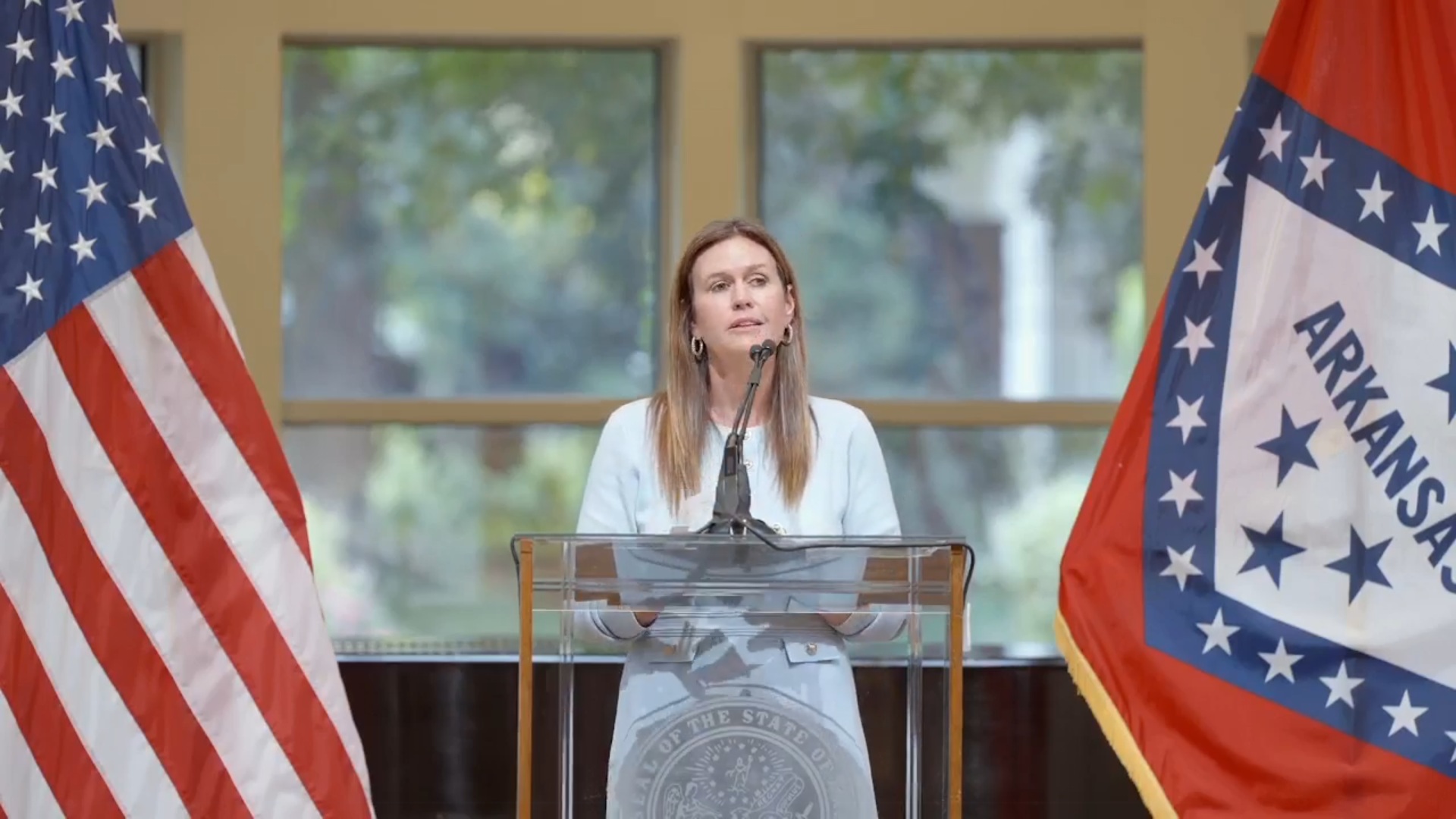
On Monday, Governor Sanders announced a pilot program that will partner with Arkansas’ faith and business communities to address poverty and other challenges in Arkansas.

The 10:33 Initiative by Governor Sanders’ Office of Faith-Based Initiatives is designed to “lift Arkansans out of poverty and improve their long-term self-sufficiency by connecting them with faith and community partners who can meet their immediate needs and help guide them toward a prosperous future.”

The name is taken from Jesus’ parable of the Good Samaritan in Luke 10:33.

The 10:33 Initiative will start with a 12-month pilot program in Pulaski, Union, and Pope counties.

The initiative will utilize Restore Hope’s HopeHub, which is a data-sharing platform that connects people in need of assistance with faith and community partners who can help meet those needs. The program will also help meet long-term goals like connecting people with job opportunities, training, and career guidance.

In a statement, Governor Sanders called the 10:33 Initiative “a groundbreaking project carefully curated to give Arkansans a hand up, not a handout.”

We have written many times how Americans often do not fully appreciate how much churches do for their communities. Nationwide, researchers estimate that churches, ministries, and religious charities provide hundreds of billions of dollars worth of services every year. We are glad Governor Sanders recognizes that churches and faith leaders are a resource that can help address many of the problems our communities face.

Arkansans interested in knowing more about the 10:33 Initiative can contact Morgan Warbington at the Governor’s Office of Faith-Based Initiatives by emailing morgan.warbington@governor.arkansas.gov.

A one-page informational flyer about the 10:33 Initiative is also available here.

Articles appearing on this website are written with the aid of Family Council’s researchers and writers.
Arkansas Students Are Protected Against Compelled Pronoun Use by Good State Laws

A student in northwest Arkansas recently faced pressure at school to use “they/them” pronouns for classmates who claimed not to be male or female. When she declined, she was pressured to do so by other students.  She was concerned that the school administration might punish her for refusing to comply.  

Stephanie Nichols, director of our Arkansas Justice Institute, was able to help. Stephanie explained that three laws safeguard the student’s right to stand firm in her faith and refuse to use pronouns that recognize any gender that is different from the person’s sex at birth.  These laws are:  

  • The First Amendment to the U.S. Constitution 
  • The Arkansas Religious Freedom Restoration Act 
  • The Arkansas Given Name Act (Act 542 of 2023)

The Given Name Act, sponsored by Rep. Wayne Long and Sen. Mark Johnson, directly addresses this issue. It states: “A student shall not be subject to any disciplinary action for declining to address a person using a name other than the name listed on the person’s birth certificate; or pronoun or title that is inconsistent with the person’s biological sex.”

Thanks to these laws, this student was on solid legal ground. This case is a clear example of why the Religious Freedom Restoration Act and the Arkansas Given Name Act—laws that Family Council worked hard to pass—are producing such good results today. And now, through the Arkansas Justice Institute, our attorney Stephanie Nichols is able to show families exactly how to use these protections to defend their rights and freedoms. 

Thankfully, through the good work of the Arkansas legislature and the generous gifts of our supporters, students in Arkansas are on solid footing with regard to their free speech rights and freedom of religion rights in our public schools.

How Adults are Rediscovering Christianity Through Baptism: CBS Reports

CBS Mornings recently reported that since the COVID-19 pandemic, a large number of adults — particularly Gen Z men — have been baptized into the Christian faith.

During its news segment, CBS highlighted a massive baptism service recently held on the California coast.

We have shared before about the “quiet revival” taking place in America and the U.K.

Bible sales in America skyrocketed in 2024, and this year the American Bible Society released its annual “State of the Bible” report that examines Bible use and scripture engagement. The report found, “Millennials are leading the way in this move toward greater Bible Use, and in every generation men are using the Bible more.” The report also found a little more than one in three Gen Z adults (36%) qualify as Bible Users.

While pollsters have reported for years about the decline of weekly church attendance, Gallup announced in June that a growing share of Americans actually see religion’s influence increasing.

It’s good to see more Americans coming to faith in Jesus and engaging with scripture. As President Reagan said during a speech in 1984:

The truth is, politics and morality are inseparable. And as morality’s foundation is religion, religion and politics are necessarily related. We need religion as a guide. We need it because we are imperfect, and our government needs the church, because only those humble enough to admit they’re sinners can bring to democracy the tolerance it requires in order to survive. . . .

Without God, there is no virtue, because there’s no prompting of the conscience. Without God, we’re mired in the material, that flat world that tells us only what the senses perceive. Without God, there is a coarsening of the society. And without God, democracy will not and cannot long endure. If we ever forget that we’re one nation under God, then we will be a nation gone under.

Hopefully this “quiet revival” is one that will continue to spread.

Articles appearing on this website are written with the aid of Family Council’s researchers and writers.