A Reminder to “Live Not by Lies”

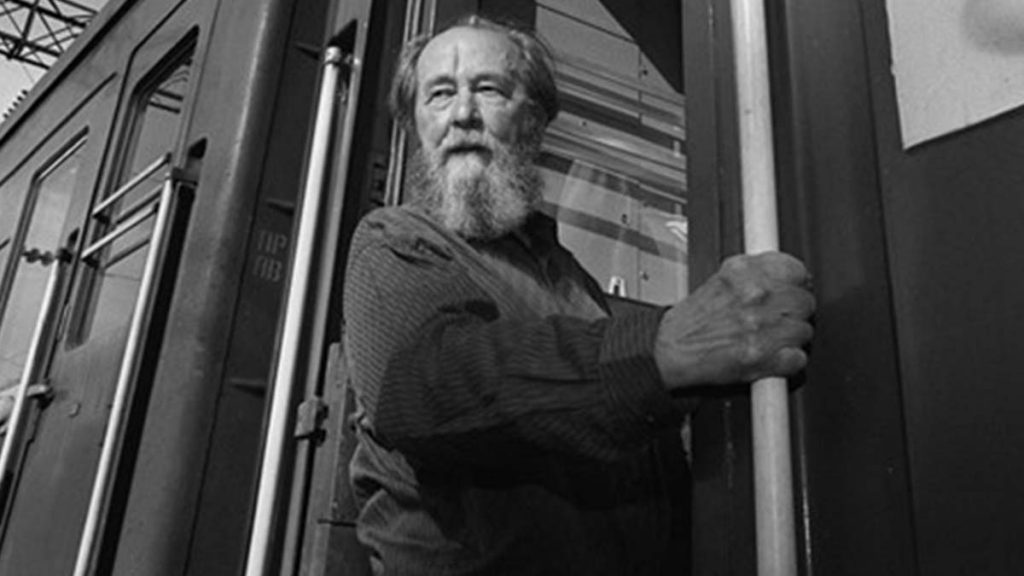
On February 12, 1974, Soviet dissident Aleksandr Solzhenitsyn was arrested. That same day, he released a short essay titled, “Live Not by Lies.”

Besides being a political dissident, Solzhenitsyn was a Christian, a teacher, a thought-provoking intellectual, an author, a Nobel laureate, and a survivor of the gulag.

The day after his arrest, Solzhenitsyn was exiled to the West. In the following years, he received the prestigious Templeton Prize and delivered the commencement address at Harvard.

In 1983 Solzhenitsyn famously wrote that Russia’s trouble stemmed from the fact that “men have forgotten God.”

In an era when it’s difficult to know what’s true and what’s false, Solzhenitsyn’s 1974 essay “Live Not by Lies” is still a timeless reminder that free men and women should not participate lies.

In it, Solzhenitsyn writes that a man who does not live by lies is one who:

Will not write, sign, nor publish in any way, a single line distorting, so far as he can see, the truth;

Will not utter such a line in private or in public conversation, nor read it from a crib sheet, nor speak it in the role of educator, canvasser, teacher, actor;

Will not in painting, sculpture, photograph, technology, or music depict, support, or broadcast a single false thought, a single distortion of the truth as he discerns it;

Will not cite in writing or in speech a single “guiding” quote for gratification, insurance, for his success at work, unless he fully shares the cited thought and believes that it fits the context precisely;

Will not be forced to a demonstration or a rally if it runs counter to his desire and his will; will not take up and raise a banner or slogan in which he does not fully believe;

Will not raise a hand in vote for a proposal which he does not sincerely support; will not vote openly or in secret ballot for a candidate whom he deems dubious or unworthy;

Will not be impelled to a meeting where a forced and distorted discussion is expected to take place;

Will at once walk out from a session, meeting, lecture, play, or film as soon as he hears the speaker utter a lie, ideological drivel, or shameless propaganda;

Will not subscribe to, nor buy in retail, a newspaper or journal that distorts or hides the underlying facts.

You can read the entire essay “Live Not by Lies” SolzhenitsynCenter.org and you can hear it read below.
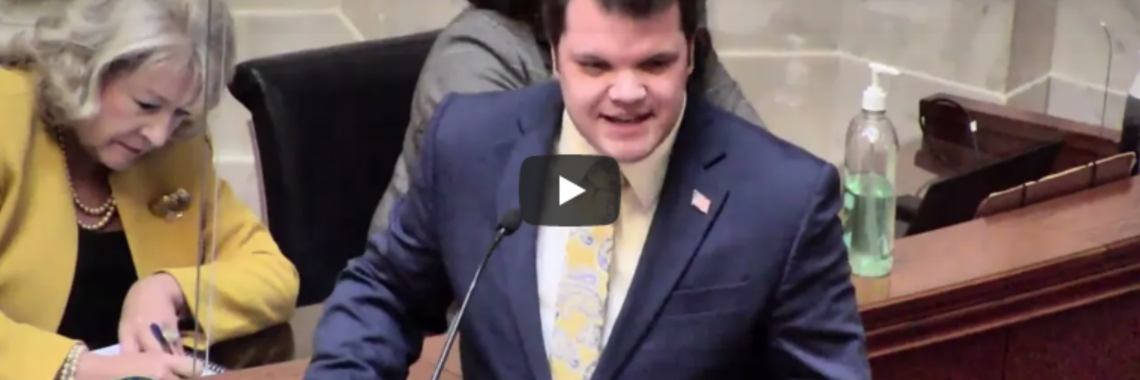

This May Be One of The Finest Speeches Ever Delivered in the Arkansas Senate

Elected officials have always disagreed and leveled personal attacks. While disagreements have been commonplace, personal attacks used to be rare and short-lived, but not anymore.

There is a big difference between fighting to defeat a bill and fighting to destroy the person sponsoring it.

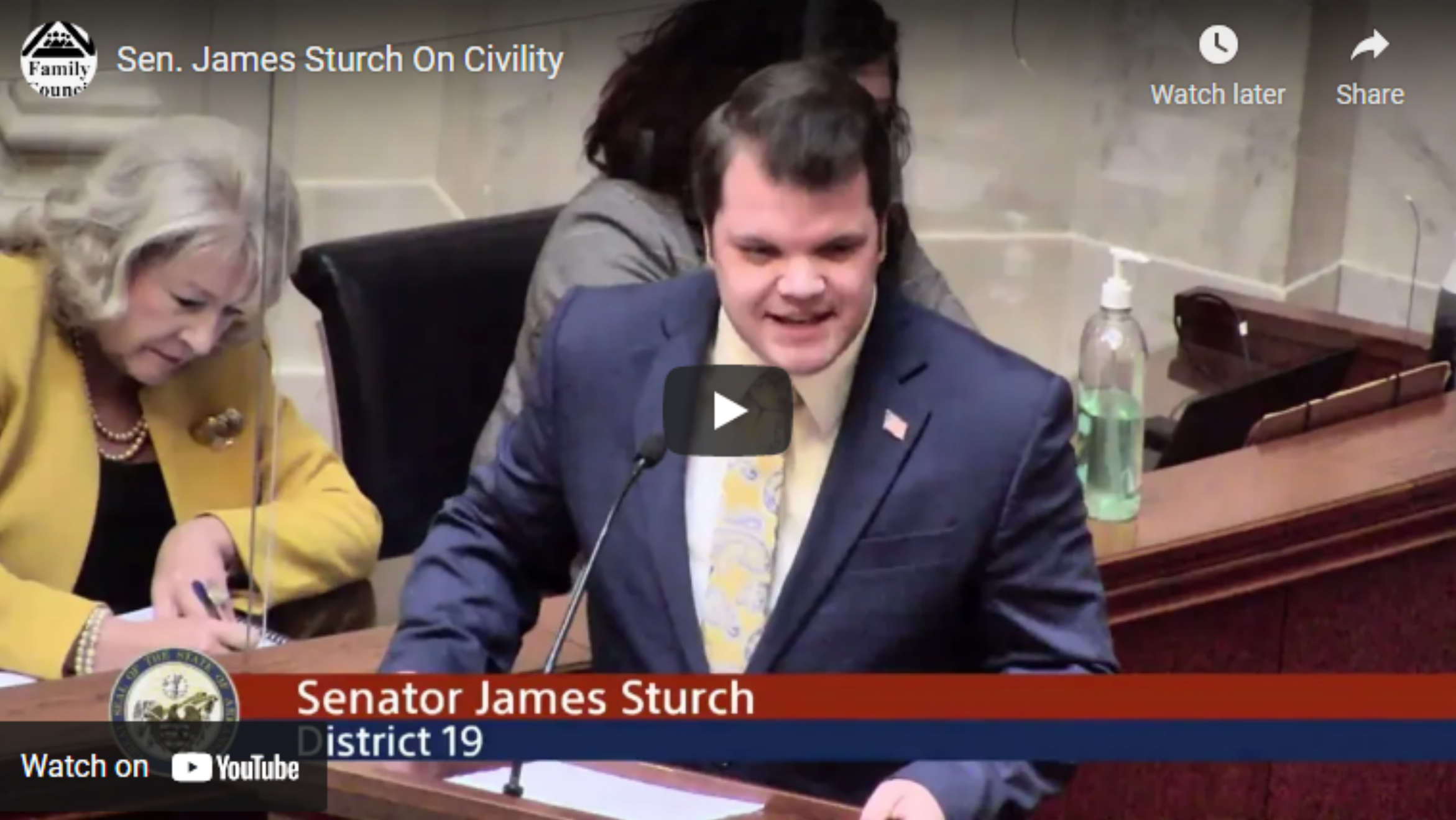
After the Arkansas Senate convened on Wednesday, Sen. James Sturch (R – Batesville) addressed the growing hostility in Arkansas politics and the breakdown in civility.

It may be one of the finest speeches ever delivered in the Arkansas Senate. Watch it below.

Why Does Arkansas Law Let Librarians Distribute Obscene Material to Children?

Over the past several months the public library in Jonesboro has made headlines for pro-LGBT and graphic, sexually-explicit material in the library’s children’s section.

Last week someone asked Family Council, point-blank: How is it that public libraries can give this kind of material to children? Doesn’t that violate the state’s obscenity and pornography laws?

Here’s the answer:

Arkansas’ obscenity law contains an exception for public libraries.

In 1981 the Arkansas Legislature passed Act 28. The law makes it a crime to distribute obscene material in Arkansas.

However, the law also contains an exception for schools, museums, and public libraries. It isn’t against state law for one of these institutions to distribute obscene material.

Arkansas also has a state law against “selling, loaning, or displaying pornography to minors.” However, to our knowledge that law has never been used against public libraries like the one in Jonesboro.

So why does Arkansas law let librarians distribute obscene material to children?

The answer isn’t clear, but it seems to be a combination of different court rulings as well as successful lobbying by organizations that represent schools, libraries, and museums.

That said, there’s nothing to stop communities from taking steps to remove obscene or objectionable material from their libraries.

Library boards and librarians have leeway to establish selection criteria and make decisions about the kinds of material available on the library’s shelves.

Library patrons generally can use a Material Reconsideration Form to ask libraries to get rid of obscene or inappropriate material.

Either way, there are steps that communities can take to make sure children aren’t exposed to harmful material at their local libraries.