After Transgender Controversy, Most of SJSU Women’s Volleyball Team Ready to Change Schools

News outlets report that most of the San Jose State University (SJSU) women’s volleyball team has entered the transfer portal following the school’s controversial decision to let a biological male play volleyball as a female.

This year SJSU won eight games by forfeit after other college volleyball teams refused to play against the school out of concern for fairness and for players’ safety on the court.

SJSU volleyball coach Melissa Batie-Smoose filed a Title IX complaint alleging the university had shown the transgender player favoritism at the expense of the female athletes on the volleyball team. The school suspended Coach Batie-Smoose indefinitely shortly afterward.

Writing at The Washington Stand, Sarah Holliday notes,

The women on SJSU’s team expressed their outrage publicly. Team captain Brook Slusser told OutKick that “everyone on the team appreciated [what Batie-Smoose did], and a lot of the girls in the locker room said how happy they were that she finally was able to speak out [on a situation] that we all knew needed to be talked about.” She added, “Melissa was that person that we felt like as long as she was there, we had someone that would stand up for us. And now there’s no one there that will. … We aren’t happy, and we don’t feel safe anymore.”

In the weeks that followed, the fight turned into a legal battle. By mid-November, a dozen concerned women filed a lawsuit against the Mountain West for what they called “violations of Title IX and of their First Amendment rights.” In particular, the players and coaches took aim at the conference’s “Transgender Participation Policy” which they claimed was designed to “chill and suppress the free speech rights of women athletes.” As Macy Petty, the legislative strategist at Concerned Women for America (CWA), previously told TWS, “The dominos are falling, and they must answer for their actions.”

We have written time and again about how women’s athletics is at risk of being erased in America.

For example, female cyclists, swimmerspowerlifterssprinters, and others have seen their sports radically changed by men who identify and compete as women.

Letting men compete in women’s sports is unfair, and in some cases it can even be dangerous.

Fortunately, educators, policymakers, and athletic organizations are taking steps to protect women’s sports.

In 2023 the North American Grappling Association clarified its competition policy, saying biological males must compete against other men, regardless of their gender identity.

Last year the professional golf league NXXT Golf announced that only biological females would be eligible to participate in the NXXT Women’s Pro Tour.

And the NAIA college athletics association recently adopted a policy that should prevent male athletes from competing in women’s sports.

Many states — including Arkansas — have enacted laws that preserve fairness in women’s sports.

In 2021 Arkansas passed Act 461 by Sen. Missy Irvin (R — Mountain View) and Rep. Sonia Barker (R — Smackover) preventing male student athletes from competing against girls in women’s athletics at school. This good law protects fairness in women’s sports in Arkansas.

It’s worth point out that public opinion is shifting on this issue, with more Americans agreeing that athletes ought to compete according to their biological sex rather than their gender identity. 

Letting men compete in women’s sports reverses 50 years of advancements for women. In light of that, it really should not come as a shock that SJSU’s female athletes are ready to transfer to other schools.

It is essential for educators, coaches, athletes, policymakers, athletic associations, and others to stand up for fairness in women’s sports. That is something Family Council is committed to doing.

Articles appearing on this website are written with the aid of Family Council’s researchers and writers.

Women’s Volleyball Coach Suspended After Filing Complaint Over Transgender Player

A women’s volleyball coach at San Jose State University (SJSU) reportedly has been suspended after filing a Title IX discrimination complaint regarding a transgender player.

The SJSU women’s volleyball team reportedly includes a male athlete who identifies as female. As a result, several other college volleyball teams have forfeited their matches against SJSU to protect their players and promote fairness in women’s sports.

Focus On The Family’s Daily Citizen reports SJSU coach Melissa Batie-Smoose recently filed a complaint alleging SJSU has shown the transgender player favoritism at the expense of the female athletes on the volleyball team and that the school has created a toxic environment for the other players.

San Jose State University reportedly suspended Coach Batie-Smoose the weekend after she filed the complaint.

We have written time and again about how women’s athletics is at risk of being erased in America.

For example, female cyclists, swimmerspowerlifterssprinters, and others have seen their sports radically changed by men who identify and compete as women.

Letting men compete in women’s sports isn’t just unfair. In some cases, it can even be dangerous.

Fortunately, educators, policymakers, and athletic organizations are taking steps to protect women’s sports.

Last year the North American Grappling Association clarified its competition policy, saying biological males must compete against other men, regardless of their gender identity.

Earlier this year the professional golf league NXXT Golf announced that only biological females would be eligible to participate in the NXXT Women’s Pro Tour.

And the NAIA college athletics association has announced a policy that should prevent male athletes from competing in women’s sports.

Many states — including Arkansas — have enacted laws that preserve fairness in women’s sports.

In 2021 Arkansas passed Act 461 by Sen. Missy Irvin (R — Mountain View) and Rep. Sonia Barker (R — Smackover) preventing male student athletes from competing against girls in women’s athletics at school. This good law protects fairness in women’s sports in Arkansas.

It’s worth point out that public opinion is shifting on this issue, with more Americans agreeing that athletes ought to compete according to their biological sex rather than their gender identity. 

Letting men compete in women’s sports reverses 50 years of advancements for women. Family Council applauds coaches like Melissa Batie-Smoose, policymakers, athletic associations, and others who are willing to stand up for fairness in women’s sports.

Articles appearing on this website are written with the aid of Family Council’s researchers and writers.

Arkansas Welcomes First Victory in Federal Lawsuit Over Fairness in Women’s Sports

On Thursday a federal court blocked the Biden Administration from enforcing a new rule that would jeopardize girls’ privacy at school and undermine fairness in women’s sports.

Earlier this year the Biden Administration released more than 1,500 pages of new rules drastically reinterpreting “sex” under Title IX to include sexual orientation and gender identity. Title IX is a federal law that prohibits discrimination on the basis of sex in education and in activities that receive federal funding — like school athletic programs.

Under these new federal rules, public schools could be forced to let biological males compete in women’s sports and use girls’ locker rooms, showers, and changing areas at school.

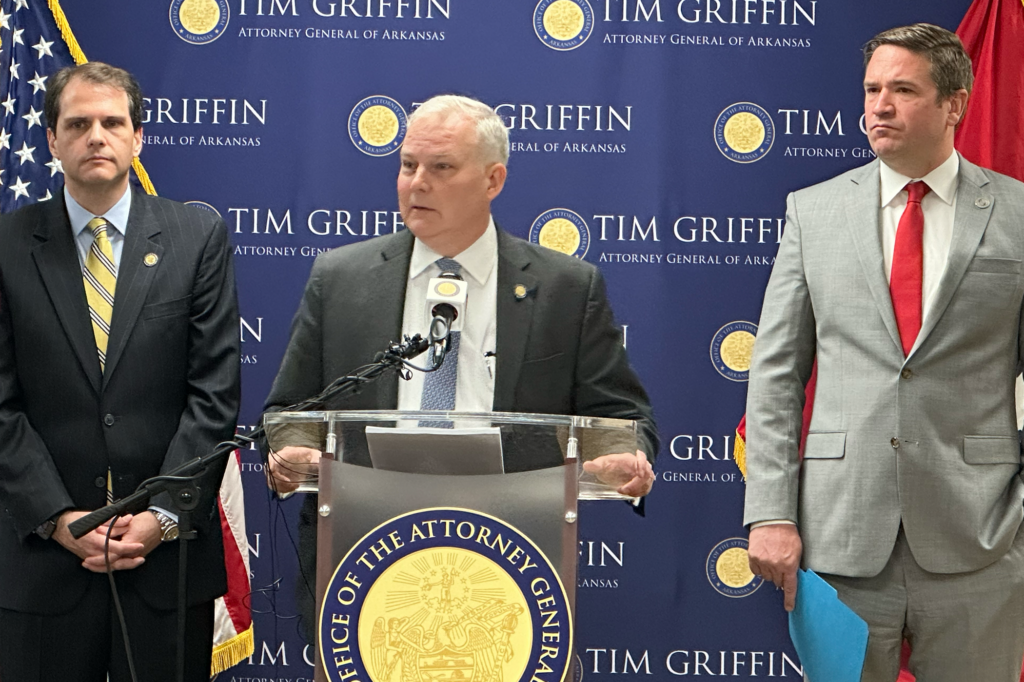
In May Arkansas Attorney General Tim Griffin announced his office and the Missouri Attorney General’s office were leading the legal challenge against the Biden administration’s new Title IX rules in federal court.

The A.G.’s lawsuit also included a high school student from Brookland, Arkansas, who argued the rule change would threaten her privacy in school locker rooms and on overnight trips.

On Thursday the judge presiding over the lawsuit issued a preliminary injunction blocking the federal government from enforcing the new Title IX rules in Arkansas, Missouri, Iowa, Nebraska, North Dakota, and South Dakota.

This is a good ruling that protects girls’ privacy at school and preserves fairness in women’s sports. This initial decision is likely to be appealed, but we believe higher courts ultimately will uphold it.

We have written time and again about how women’s athletics is at risk of being erased in America.

For example, female cyclists, swimmerspowerlifterssprinters, and others have seen their sports radically changed by biological males who identify and compete as women.

Letting men compete in women’s sports isn’t just unfair. In some sports, it can even be dangerous.

Fortunately, educators, policymakers, and athletic organizations are taking steps to protect women’s sports.

Last fall the North American Grappling Association clarified its competition policy, saying biological males must compete against other men, regardless of their gender identity.

Earlier this year the professional golf league NXXT Golf announced that only biological females would be eligible to participate in the NXXT Women’s Pro Tour.

And recently the NAIA announced a policy that should prevent male athletes from competing in women’s collegiate sports.

Many states — including Arkansas — have also enacted laws that preserve fairness in women’s sports.

In 2021 Arkansas passed Act 461 by Sen. Missy Irvin (R — Mountain View) and Rep. Sonia Barker (R — Smackover) preventing male student athletes from competing against girls in women’s athletics at school. This good law protects fairness in women’s sports in Arkansas.

It’s worth point out that public opinion is shifting on this issue, with more Americans agreeing that athletes ought to compete according to their biological sex rather than their gender identity. 

Family Council appreciates Attorney General Tim Griffin and Governor Sanders for standing up against the Biden Administration’s reinterpretation of Title IX. And we look forward to future victories as this lawsuit progresses through our federal court system.

Articles appearing on this website are written with the aid of Family Council’s researchers and writers.