
Montana Christmas Festival Goes on Despite Atheists’ Threats
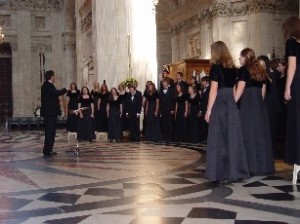 A Montana school recently received a letter from the Freedom From Religion Foundation and the ACLU threatening possible legal action if the school’s choir members were permitted to voluntarily participate in a community Christmas celebration at a local church.
The school has rightly decided to ignore the threat and let students join in the festivities.
From Alliance Defending Freedom:
“Schools should not have to think twice about whether they can allow choirs to participate in community Christmas events,” said Litigation Staff Counsel Rory Gray. “Courts have unanimously allowed students to sing Christmas carols at school. Nothing changes when they sing the same Christmas songs at a community festival instead. We commend the districts for rightly ignoring the baseless threats delivered by the American Civil Liberties Union and the Freedom From Religion Foundation.”
This latest action by the ACLU and the Freedom From Religion Foundation is yet another in a long series of anti-Christmas (and anti-religion) activities by the groups, including:
- Hanging a banner replacing Jesus with the Bill of Rights in a manger opposite a Nativity scene in the Florida State Capitol rotunda.
- Attempting to place an anti-Christmas sign next to a Nativity scene in Michigan.
- Challenging a Christmas Tree-Lighting Ceremony in Arizona.
- Advocating the removal of a Nativity scene from a county courthouse in Texas.
- Intimidating Arkansas’ Riverside School District into cancelling its sixth-grade graduation.
- Protesting a Pennsylvania proclamation calling for prayer and fasting.
- Targeting prayer at public meetings in California.
- Contesting a Mayor’s Prayer Breakfast in Mississippi.
- Trying to bar youth pastors from visiting their students at Conway’s public schools.
In addition to past actions by the Freedom from Religion Foundation, Arkansas has also seen its Christmas celebrations targeted by other atheist groups, including unwarranted controversy over a Nativity display at a school in Paragould and an anti-Christmas display sponsored by the Arkansas Society of Freethinkers on the Arkansas Capitol grounds.
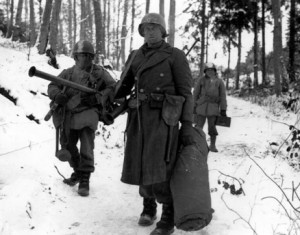 Last week we wrote about the Christmas Truce of 1914—an unofficial ceasefire in which Allied and German soldiers fighting in World War I joined together to celebrate Christmas. Another similar event occurred 30 years, on Christmas Eve, 1944.