Gov. Sanders Refuses to Rescind Christmas Proclamation

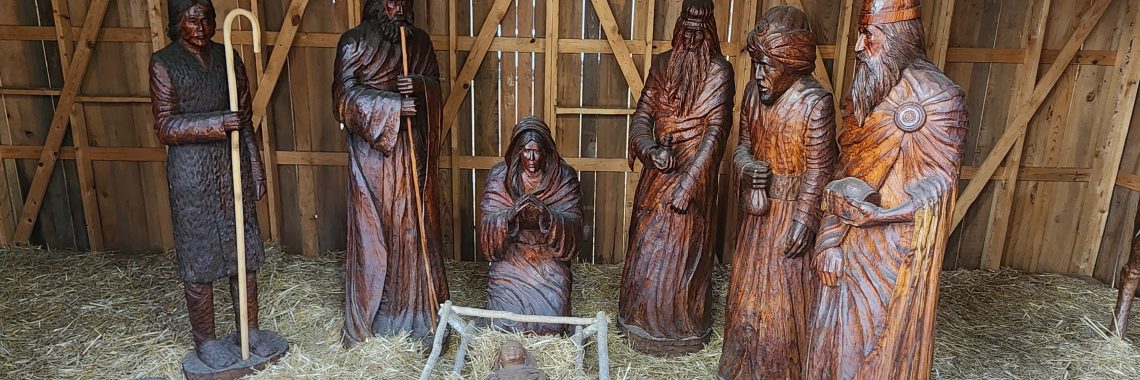
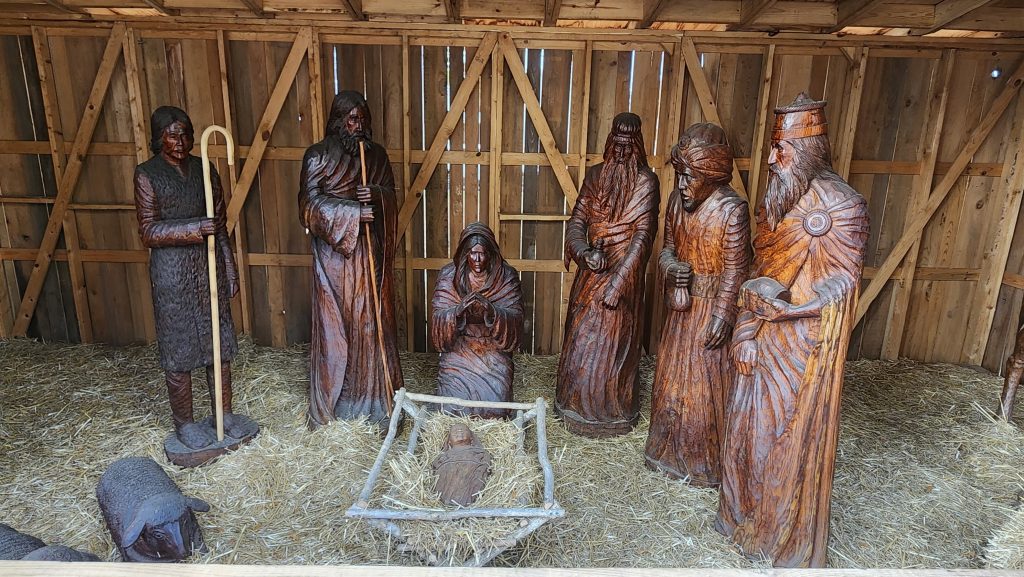
Above: The Nativity Scene the adorns Arkansas’ Capitol Lawn.

On Monday, Arkansas Governor Sarah Huckabee Sanders released a statement refusing to comply with a Freedom From Religion Foundation letter asking her to rescind her Christmas proclamation.

The governor’s proclamation tells the Christmas Story about the birth of Christ, and it ensures State offices will be closed December 25 and 26 in observance of Christmas.

In response, the Wisconsin-based atheist organization sent Gov. Sanders a letter claiming her proclamation violated the First Amendment by sharing the story of Christ’s birth. The group demanded she rescind the proclamation.

In her response, Gov. Sanders told the Freedom From Religion Foundation it would be “impossible” to keep religion out of Christmas.

“Christmas is not simply an ‘end-of-the-year holiday’ with ‘broadly observed secular cultural aspects,'” Sanders wrote. “Christmas is the celebration of the birth of Jesus Christ, and if we are to honor Him properly, we should tell His miraculous, world-changing story properly, too.”

This is not the first time the Freedom From Religion Foundation has targeted the free exercise of religion in Arkansas.

The Freedom From Religion Foundation is currently suing the State of Arkansas to remove a monument of the Ten Commandments from the Capitol lawn in Little Rock, and it recently joined a lawsuit to prevent public schools and buildings in Arkansas from displaying the Ten Commandments.

In 2022, the atheist group issued a statement celebrating the defeat of religious freedom amendment Issue 3, which narrowly failed at the ballot box in Arkansas.

The Freedom From Religion Foundation has opposed public prayer at meetings and gatherings in Arkansas.

In 2017 the group demanded that then-Gov. Asa Hutchinson stop sharing Bible verses on his Facebook page.

In 2016 the foundation went after Washington County election officials for using churches as polling places.

The Freedom From Religion Foundation has even complained about the fact that that Arkansas’ public school students can study the Bible academically — even though it is one of the oldest texts in existence and has had a profound influence on human history.

Gov. Sanders is right when she says Christmas is about Christ. There shouldn’t be anything controversial about acknowledging that.

Articles appearing on this website are written with the aid of Family Council’s researchers and writers.

Out-of-State Attorneys Join Ten Commandments Lawsuit

Out-of-state attorneys from atheist organizations have been given a green light to participate in a lawsuit  that would block the Ten Commandments in Arkansas’ schools and public buildings.

Arkansas law requires a copy of the national motto, “In God We Trust,” to be displayed in public schools and other public buildings. Act 573 of 2025 by Sen. Jim Dotson (R — Bentonville) and Rep. Alyssa Brown (R — Heber Springs) requires a historical copy of the Ten Commandments to be displayed as well. The measure received strong support in the Arkansas Legislature earlier this year, and the governor signed it into law on April 14. Act 573 is slated to take effect later this summer.

However, the ACLU filed a lawsuit on June 11 to block Act 573. On Monday, the federal court issued a series of procedural orders letting attorneys from the Freedom From Religion Foundation in Wisconsin and Americans United for Separation of Church and State in Washington, D.C., represent plaintiffs in the case as well.

This is not the first time these groups have opposed laws in Arkansas. The Freedom From Religion Foundation is currently part of a lawsuit to remove a monument of the Ten Commandments from the capitol lawn in Little Rock. And both organizations also have a history of complaining about religious expression in Arkansas.

Over the years, the U.S. Supreme Court has ruled that items that are important to our nation’s history — like the Ten Commandments or the national motto — may be honored and recognized publicly without running afoul of the First Amendment.

The Ten Commandments are one of the earliest examples of the rule of law in human history, and they have had a profound impact in shaping America’s concept of the rule of law as well.

Besides being culturally and historically significant, copies of the Ten Commandments have often appeared in artwork at courthouses and similar locations around the country.

During her testimony in support of Act 573 last April, Rep. Alyssa Brown noted that the U.S. Supreme Court uses a “longstanding history and tradition test” to decide if it is constitutional to display something like a copy of the Ten Commandments. Rep. Brown said, “The Ten Commandments without a doubt will pass this longstanding history and tradition test.”

We believe our federal courts ultimately will agree and uphold Act 573 as constitutional.

Articles appearing on this website are written with the aid of Family Council’s researchers and writers.

Freedom From Religion Foundation Celebrates Defeat of Issue 3 in Arkansas

Following last week’s election, the atheist Freedom From Religion Foundation issued a statement celebrating the defeat of Issue 3, the Arkansas Religious Freedom Amendment, calling the amendment “an attempt to insert religious privilege in the state Constitution.”

The Arkansas Legislature referred Issue 3 to voters last year, but the measure narrowly failed to pass on Election Day.

Ahead of the election, social media fueled a lot of confusion about Issue 3, with some conservatives incorrectly claiming that the measure would make it easier for the government to restrict the free exercise of religion.

Family Council supported Issue 3, because it would have helped restore protections for religious freedom — especially in our courts.

Focus On The Family, Alliance Defending Freedom, Liberty Counsel, American Family Association, Family Policy Alliance, Family Research Council Action, Family Council Action Committee, and the Arkansas Baptist State Convention all endorsed Issue 3.

The ACLU and the Freedom From Religion Foundation opposed the measure.

Below is the Freedom From Religion Foundation’s full statement celebrating the defeat of Issue 3 in Arkansas.

FFRF members help defeat toxic religious liberty Arkansas measure

The Freedom From Religion Foundation applauds a major victory for separation of state and church in Arkansas, where voters wisely rejected an attempt to insert religious privilege in the state Constitution.

Issue 3 on the Arkansas ballot, sponsored by Christian nationalist state Sen. Jason Rapert, would have placed the text of the Religious Freedom Reformation Act (RFRA) into the Arkansas Constitution. This would give churches and religious business owners an exemption to any law they didn’t like for religious reasons, forcing the government to overcome a tall legal hurdle to justify the religious “burden.”

In practice, state RFRAs, and their federal predecessor, have legalized discrimination and caused massive harm. Hobby Lobby notoriously denied its employees reproductive health care insurance because of its wealthy owners’ religious objections to contraception, and RFRA allowed them to do it. Women, LGBTQ individuals — and all secular Arkansans — can breathe a sigh of relief that Issue 3 has failed.

FFRF urged its members to show up and vote against Issue 3, and it’s no surprise that they did; a recent internal survey showed that more than 95 percent of FFRF members are registered to vote. Every one of those votes counted, as Issue 3 was rejected very narrowly, by only 7,500 votes.

This is part of a national trend, with a growing portion of the American voting population becoming less religious and more civically engaged. Elected officials would be well advised to heed this trend and listen to their secular constituents. FFRF recently launched a campaign to help educate the public about this quickly emerging voting bloc.

The defeat of Issue 3 in Arkansas is a testament to its growing power.

It’s important to point out that the Freedom From Religion Foundation inappropriately resorts to attacking people’s character in this statement, and the group is incorrect in its assessment of the federal Hobby Lobby ruling from 2014 concerning religious freedom laws.

That court decision centered on whether or not the federal government can require company insurance plans to include procedures and services that the company’s owners find morally objectionable.

In Hobby Lobby’s case, the U.S. Supreme Court ruled that the federal Religious Freedom Restoration Act prevents the federal government from infringing religious liberty that way.

Issue 3 would have provided similar protections for Arkansans under the State Constitution.

The Freedom From Religion Foundation has a history of opposing religious liberty in Arkansas.

Besides fighting against Issue 3, the group has opposed public prayer at meetings and gatherings in Arkansas.

The Freedom From Religion Foundation has filed a lawsuit to have a monument of the Ten Commandments removed from the Arkansas Capitol grounds.

In 2017 the group demanded that Governor Hutchinson stop sharing Bible verses on his Facebook page.

In 2016 the foundation went after Washington County election officials for using churches as polling places.

The Freedom From Religion Foundation has complained about the fact that that Arkansas’ public school students can study the Bible academically — even though it is one of the oldest texts in existence and has had a profound influence on human history.

Many voters don’t realize how tenuous our protections for religious freedom have become. That likely is part of the reason Issue 3 narrowly failed last week.

Family Council remains committed to protecting religious liberty in Arkansas. We hope to do exactly that in the coming year.

Articles appearing on this website are written with the aid of Family Council’s researchers and writers.