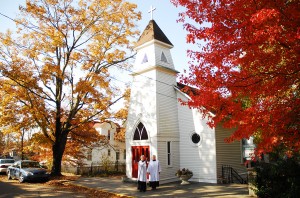
 Last night the City Council of Eureka Springs rushed a so-called “anti-discrimination” ordinance through a single city council meeting.
Under the rules for local government meetings, an ordinance must be read three times before the city council may take a vote to pass the ordinance. This is intended to break the reading and discussion of an ordinance up over multiple meetings, giving council members an opportunity to hear from members of the public and devise amendments to the ordinance. However, council members may move to “suspend the rules” and read an ordinance three times in one meeting before taking a final vote.
Traditionally, city councils and quorum courts suspend the rules when an ordinance is noncontroversial or is addressing some sort of emergency situation. It’s a way to expedite the process under special circumstances. However, the City of Eureka Springs chose to rush a controversial ordinance through in a single council meeting at which very few members of the public were present to comment.
The ordinance is similar to the one the Fayetteville City Council tried to pass last year in that it extends special protections and privileges to citizens based on, among other things, sexual-orientation or gender identity, and it levies criminal penalties against violators–in this case, a $100-$500 fine per violation.
The Fayetteville ordinance created a Civil Rights Administrator who enforced it, while the Eureka Springs ordinance tasks the mayor with the responsibility of handling alleged violations of the ordinance.
Because the ordinance is substantially similar to the ordinance originally proposed in Fayetteville last summer, it will have the same unintended consequences:
- The ordinance opens churches and ministers to criminal prosecution. It exempts church sanctuaries and chapels, but no other piece of church property. This means a Eureka Springs church could be forced to open its fellowship hall for a same-sex reception. It also means churches cannot consider sexual orientation and gender identity when hiring bookkeepers, receptionists, and other “secular” staff members.
- The ordinance opens people of faith to criminal prosecution. Christian bakers, florists, wedding chapel owners, photographers, and others have faced litigation and prosecution in other states for declining to participate in same-sex ceremonies. This ordinances opens people of faith in Eureka Springs to the very same possibility of criminal prosecution.
- The ordinance does not exempt private schools. Private, religious schools face the prospect of fines and prosecution for declining to hire a gay or transgender teacher under this ordinance.
- The ordinance inadvertently allows men to use women’s restrooms, locker rooms, and changing areas. The ordinance says you cannot treat someone differently because of their gender identity, but it does not address public restrooms. By protecting gender identity without including exceptions for public restrooms and similar facilities, the ordinance permits a biological male who claims to be female to use the women’s restroom at any business or public site. This means grown men could use the women’s restrooms at parks, public pools, sports stadiums, and similar locations where children are present.
Photo Credit: Photolitherland at English Wikipedia [CC BY-SA 3.0], via Wikimedia Commons
READ MORE


 In a recent Breakpoint commentary, Eric Metaxas writes that renown scientists are beginning to question much of the scientific research being published.
 This week the Pew Research Center released its latest study on America’s changing religious landscape.