Free Only to Agree: The Limits of Freedom

Many western countries are putting the right of conscience and speech to the test. 

In March, Chris Elston, known as “Billboard Chris,” was detained in Australia for protesting the harm done to children in service of radical gender ideology. He was detained again in Belgium in June, this time along with Lois McLatchie Miller, a senior legal communications officer for Alliance Defending Freedom (ADF) International. The two were simply standing in a public space, offering to talk to anyone interested about the realities of transgender treatment, wearing billboards that stated, “Children cannot consent to puberty blockers” and “Children are never born in the wrong body.” Though they called the cops to ask for protection from harassment, they were told to remove the signs or face arrest. After being detained and strip searched, they were released without charge. 

Thought and speech has not always been treated this way. Because the West was deeply influenced by Christian consensus, citizens enjoyed the liberty, to various degrees, to challenge dominant paradigms and ideologies. That liberty is, based on what we’ve seen in Belgium and Britain and other nations, on shaky ground, from both state and institutional pressures. In some places, praying to yourself is considered unruly protest.  

Just recently, Lila Rose of LiveAction shared the story of Naomi Best, a therapy student at Santa Clara University, an ostensibly Roman Catholic school in California. As part of the coursework, the university insisted that therapy students view extreme pornography and share their own sexual history. When she asked for the same exemption regularly given to Muslim students, they refused. When she described what happened in the pages of the Wall Street Journal, Best was kicked out of the program. As she pointed out

If we don’t have a set of therapists with diverse worldviews, and with tolerance for people with diverse worldviews, we will alienate people who need psychological care, and we will cause more harm than good. 

Totalitarian states such as East Germany and Soviet Russia guaranteed citizens the freedom of worship but would levy fierce and often violent penalties for spreading religion outside church walls. In those countries, freedom of conscience was only the freedom to believe in one’s heart and head and maybe, one’s house of worship. Worldview diversity was never something allowed to enter the public square. 

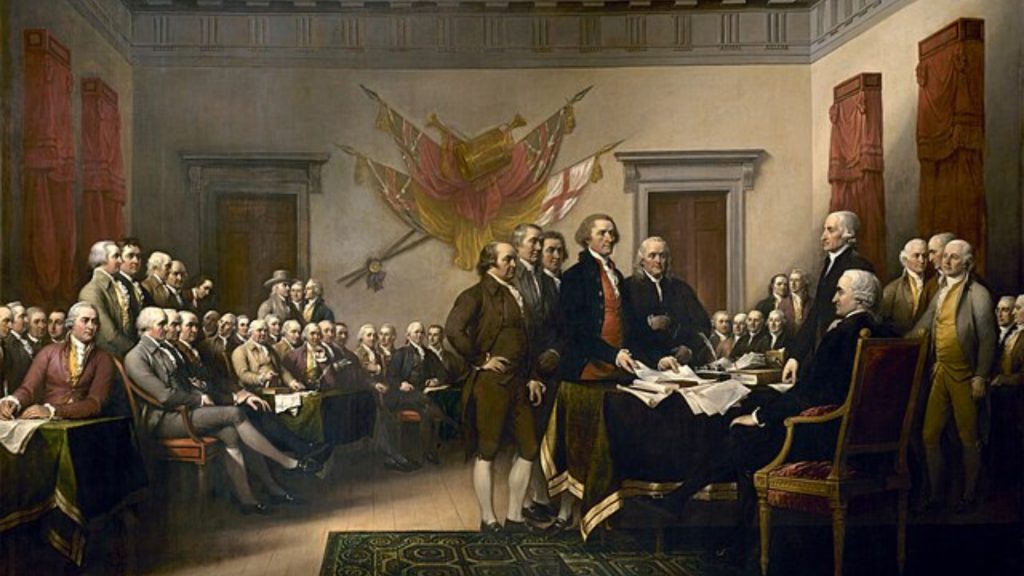
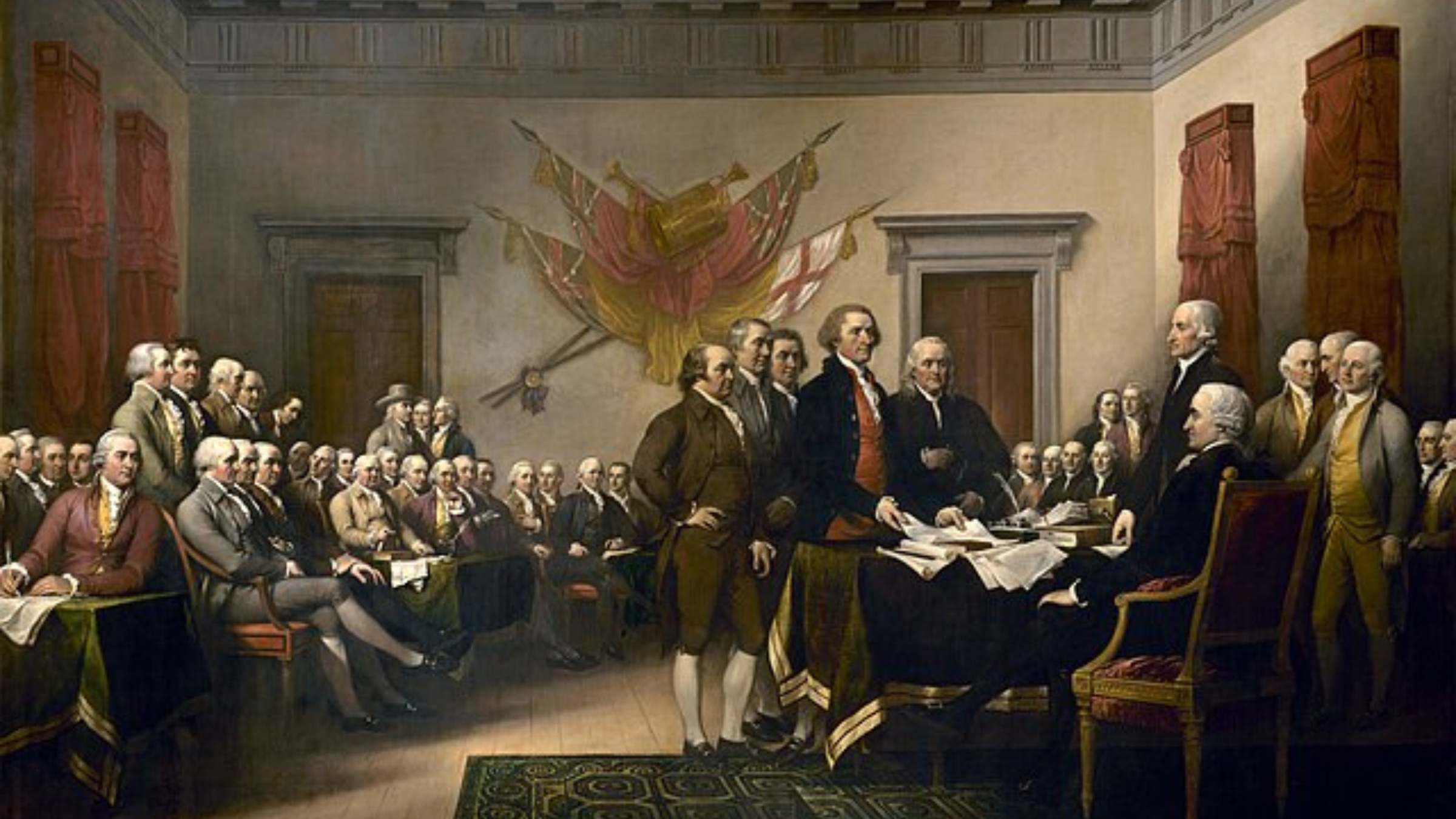
The First Amendment guaranteed more. In just 45 words, it protects conscience rights that are public. Thus, nonsensical campus chants that “speech is violence” or “silence is violence” are, in law, separated from actual violence. The founders wanted a country in which citizens could think and worship as they believed but could also assemble together and take those beliefs out into the world. Both Belgium and Britain, which is currently debating whether saying things that offend Islam should be illegal, could use something like that, written down into law, about now.  

Of course, all freedoms have limits. In the United States, that limit is not one’s own head or heart but real harm done to another. Certainly, that must be constantly clarified and adjudicated, but it’s a far better arrangement than a limit based on how someone else might feel.  

The First Amendment is a bulwark against speech police and one of the Founding Fathers’ greatest legacies. It’s a structured freedom that is part of the inheritance of the Christian view of humanity, recognized as both sacred and sinful. It’s a legacy that will not last if people are not willing to express their deeply held beliefs and defend the right to do so.

Copyright 2025 by the Colson Center for Christian Worldview. Reprinted from BreakPoint.org with permission.

Ecclesiastes on X: Guest Column

Why we’re not satisfied, even if we should be.

A few weeks ago, a self-described fitness enthusiast described life today this way: 

Work a desk job

Grind 9–6 Lift weights to feel something

Marry someone beautiful enough

Move to suburbs

Get a dog

Have 2 kids

Drive an American SUV to Costco on weekends

Buy a house you’ll never finish paying off

Call it happiness

Is this the dream? or just a life we were sold? 

The responses were varied. Many responded that, objectively speaking, the world—especially the Western part of it—is better off than it has ever been. One scientist noted that people used to live to an average age of 35, half of all kids died in childhood, even minor infections often led to death, and starving was a common human experience.

As my colleague Shane Morris observed, visit almost any old graveyard and it will be full of tombstones with only one year inscribed for both birth and death. Though miscarriages are still tragically common, deaths in infancy are increasingly rare. Only less than a century ago, nearly everyone would have had one or more siblings die in childhood. Today, our biggest health problems are from obesity, not starvation. Modern medicine, dentistry, technology, indoor plumbing, and all kinds of other things prevent and protect us from the diseases, calamities, and accidents that proved fatal in previous generations.

On the other hand, a different doom and gloom, the kind reflected in the X post above, still resonates with many. In fact, it sounds a bit like a work of poetry written almost 3,000 years ago by a man of wealth and power who learned that “having it all” isn’t all it is cracked up to be. His words are often quoted, perhaps most famously by the Byrds in their song, “Turn, Turn, Turn” and The Dave Matthews Band in “Tripping Billies.”

Ecclesiastes is easily the most depressing book in Holy Scripture. The bulk of the text is a meditation on how meaningless life is and then you die. The first chapter immediately declares that life is pointless.

Vanity of vanities, says the Preacher, 

vanity of vanities! All is vanity. 

What does man gain by all the toil 

at which he toils under the sun? 

… I have seen everything that is done under the sun, and behold, all is vanity and a striving after wind. 

“The Preacher” has tried a life of wisdom, a life of pleasure, and a life of wealth. None was satisfying. Everyone dies. All seems pointless. Everything we attempt to live for or build our lives around turns to dust. Within just a few generations, no one will remember our names. 

With language stark and hopeless, the Preacher sounds like someone who has lost faith in God. However, the words describe life without God. The things he listed—money, pleasure, wisdom—none are bad. They’re blessings given by God for our use and joy. But none will bring us the peace, meaning, or fulfillment for which we long. 

Much later, in his ConfessionsAugustine of Hippo would describe why. “[Y]ou have made us for Yourself, O God, and our hearts are restless till they find their rest in Thee.” When people complain this world is broken and unfulfilling, they miss that God’s good gifts are instead meant to point to the Giver of the gifts. They cannot fulfill the human heart because the hole in it is God-sized, not stuff-sized. We were made for bigger things. We were made for God.

Copyright 2025 by the Colson Center for Christian Worldview. Reprinted from BreakPoint.org with permission.

A Double Standard on Terrorism: Guest Column

In November 2022, Anderson Lee Aldrich killed five people and injured 25 others in a shooting at Club Q, an LGBTQ nightclub in Colorado Springs, CO. Aldrich identified as nonbinary, used they/them pronouns, had multiple violent encounters with law enforcement, threatened to kill Christians, and dabbled in the gay lifestyle. However, in a matter of hours, the New York Times, the Washington Post, and multiple other news outlets and commentators implicated Focus on the Family, either directly or indirectly, for “creating a culture” that led to this violence. A few weeks later, the campus of the ministry was vandalized with the words, “Their Blood Is On Your Hands.” 

The false accusation was based on the notion of “stochastic violence,” that saying the wrong thing about a group or a behavior creates an environment that can lead to violence. Similarly, political conservatives were accused of “stochastic violence” when a homeless, mentally ill man attacked Nancy Pelosi’s husband with a hammer. 

So far, no one has been accused of stochastic violence after Mohamed Sabry Soliman, an Egyptian-born man living in Colorado Springs illegally, threw Molotov cocktails into a group of peaceful pro-Israel demonstrators while yelling, “Free Palestine!” At least 12 people were burned in the attack, including a holocaust survivor. After the attack, the father of five, who had planned on dying that day, calmly and directly revealed that he was a committed antisemitic Muslim who had been planning the attack for over a year. 

The same voices that were certain that a Christian ministry which has never advocated violence in its history was responsible for the attack on Club Q seemed lost about any related motives or responsibility in this case. This, even though since October 2023, when Hamas militants killed nearly 1,200 Jews in Israel in a horrific attack, protestors on American streets and college campuses have been calling for violence on Jews everywhere. Even in Colorado Springs, in fact, some Colorado College students set up a protest village, refused to go to class, and chanted slogans that meant more than protestors realized.  

And now, the chant “Globalize the Intifada” has become a reality. In just the last few weeks, two Israeli embassy workers were murdered on the street in Washington D.C., the Molotov cocktail attack was carried out in Boulder, and—in a story mainstream media outlets largely ignored—a Muslim man in Michigan plotted to massacre kids at a Jewish daycare. Thankfully, his plan was uncovered before he was able to inflict harm.  

As Ayaan Hirsi Ali put it in a post on X, “Antisemitism is not just rising, its metastasizing.” Everyone should be concerned. And yet, we are being told that what should concern us most is potential negative backlash against Muslims and Arab immigrants, not targeted violence against Jews, which is clearly on the rise.  

This is a clear example of the “Critical Theory mood” that clouds the thought of secular and religious progressives. One consequence of this view is that the “good guys” and the “bad guys” of any situation are pre-determined. If violence happens against the “bad guys,” they somehow deserve it. If the “good guys” commit violence, they are justified because of how oppressed and mistreated they are. 

The Critical Theory mood was already in place at Thomas McLaren School, where some of the children of the Boulder terrorist attended. When Soliman’s daughter, recently named one of the “Best and Brightest” seniors in Colorado Springs, started an Arab club at the school, school officials allowed the club to make regular announcements to the student body and meet inside where they highlighted Arab culture and occasionally discussed the Koran as part of the Muslim faith. But when a group of students opened a Decision Point chapter at the school, a Christian club for students to talk about their faith and the Bible, school officials did not allow them to meet in the building. They were forced to meet outside, even in bad weather.  

When the Critical Theory mood leads to the disenfranchising of students, it’s wrong and unfair. However, the stakes are way higher when these bad ideas cloud our collective ability to recognize or speak truthfully about the dramatic increase of antisemitic violence. The reaction to the Boulder attack has been, in large part, propaganda. As Thaddeus Williams pointed out, “Propaganda offers a highly edited history that paints the most damning picture it can of a given people group … and gives us a way to blame all of life’s troubles on that damnable group and its members.”   

Christians are called to be discerning and to defend truth anytime it is contested, but especially when lives are at stake. That time is now.

Copyright 2025 by the Colson Center for Christian Worldview. Reprinted from BreakPoint.org with permission.