Federal Courts Weigh Ten Commandments in Schools

A federal appeals court heard arguments last week in cases that could determine how states display the Ten Commandments in public buildings.

The U.S. Court of Appeals for the Fifth Circuit is reviewing laws from Louisiana and Texas that display copies of the Ten Commandments in public school classrooms. Last year, a three-judge panel ruled Louisiana’s law unconstitutional, but the state requested a full court review with all 17 judges.

Opponents of the Ten Commandments argued that displaying them amounts to religious coercion. Lawyers for the ACLU suggested the First Commandment could discriminate against families with different religious beliefs. One attorney even claimed posting the Ten Commandments in school would be “turning that school into a church.”

But Louisiana’s legal team pushed back, point out the Ten Commandments provide a long and rich tradition in America’s culture, law, and founding principles.

While we are watching the court proceedings play out in other states, it’s worth remembering Arkansas has made headlines in recent months for displaying copies of the Ten Commandments in public schools and buildings as well.

Act 573 of 2025 by Sen. Jim Dotson (R — Bentonville) and Rep. Alyssa Brown (R — Heber Springs) requires privately-funded copies of the Ten Commandments to be displayed in public schools and other public buildings in Arkansas. The measure received strong support in the Arkansas Legislature last year.

However, in an effort to block Act 573, lawyers from the ACLU and a group of atheist organizations sued to block the law in Fayetteville, Springdale, Bentonville, and Siloam Springs. Judge Brooks has issued decisions against Act 573, claiming the Ten Commandments posters would pressure children “to observe, meditate on, venerate, and follow the State’s favored religious text, and to suppress expression of their own religious beliefs and backgrounds at school.”

Nothing in Act 573 would “pressure” students. In 2017 Arkansas passed the National Motto Display Act allowing the national motto — “In God We Trust” — to be displayed in Arkansas’ classrooms along with the U.S. flag and the Arkansas flag. Act 573 amended the National Motto Display Act to add the Ten Commandments to the list of historical items displayed in school.

Over the years, the U.S. Supreme Court has ruled that states are free to honor and recognize documents or symbols that are important to our nation’s history — like the Ten Commandments or the national motto.

The Ten Commandments are one of the earliest examples of the rule of law, and they have had a profound impact in shaping our society and our government.

In his motion for summary judgment in the case, Arkansas Attorney General Tim Griffin wrote:

The Ten Commandments “have been the most influential law code in history.” … And displays and depictions of the decalogue and of Moses throughout government buildings and property reflect the significance of the Ten Commandments to our Nation’s history and heritage. … Act 573 does not violate the Establishment Clause because it is consistent with historical practices and understandings and does not bear any of the hallmarks of religious establishment.

During her testimony in support of Act 573 last year, Rep. Alyssa Brown noted that the U.S. Supreme Court now uses a “longstanding history and tradition test” to decide if it is constitutional to display something like a copy of the Ten Commandments. Rep. Brown said, “The Ten Commandments without a doubt will pass this longstanding history and tradition test.”

We believe our federal courts ultimately will agree and uphold Act 573 as constitutional.

Articles appearing on this website are written with the aid of Family Council’s researchers and writers.

Atheist Group Targets Arkansas School District Over Student Prayer

The Freedom From Religion Foundation has once again targeted religious expression in Arkansas. The Wisconsin-based atheist organization issued a statement last week saying it recently demanded the Highland School District to stop student-led prayer at school events.

The organization’s complaints stemmed from last September, when a student council president led prayer at a school pep rally and prayed during a Patriot Day memorial ceremony. FFRF’s staff attorney also objected to the school excusing students from class to voluntarily attend a prayer circle for a classmate in September and specifically promoting the Fellowship of Christian Students student-group.

This is just the latest example of FFRF’s ongoing campaign against religious expression in Arkansas. The organization is currently suing to remove the privately-funded Ten Commandments monument from the Arkansas Capitol lawn, and it recently joined a lawsuit to prevent public schools from displaying the Ten Commandments. In 2022, the group also celebrated the defeat of a proposed religious freedom amendment.

Arkansas families should be concerned when out-of-state groups try to intimidate local school districts into silencing student-led prayer. Students have clear constitutional rights to voluntarily pray and express their faith at school. These are fundamental freedoms protected by our constitution and our laws. There shouldn’t be anything controversial about that.

Articles appearing on this website are written with the aid of Family Council’s researchers and writers.

Gov. Sanders Refuses to Rescind Christmas Proclamation

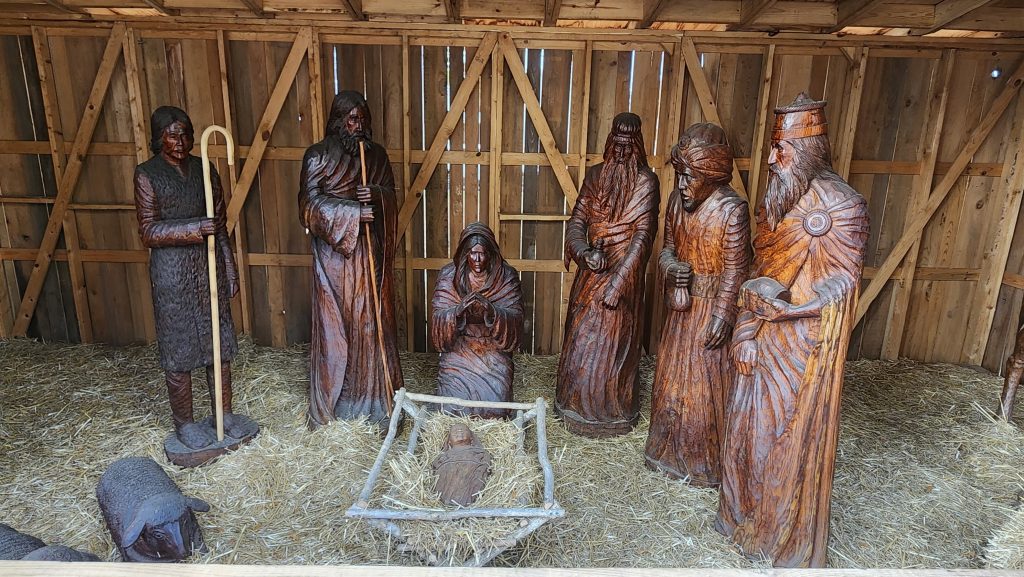
Above: The Nativity Scene the adorns Arkansas’ Capitol Lawn.

On Monday, Arkansas Governor Sarah Huckabee Sanders released a statement refusing to comply with a Freedom From Religion Foundation letter asking her to rescind her Christmas proclamation.

The governor’s proclamation tells the Christmas Story about the birth of Christ, and it ensures State offices will be closed December 25 and 26 in observance of Christmas.

In response, the Wisconsin-based atheist organization sent Gov. Sanders a letter claiming her proclamation violated the First Amendment by sharing the story of Christ’s birth. The group demanded she rescind the proclamation.

In her response, Gov. Sanders told the Freedom From Religion Foundation it would be “impossible” to keep religion out of Christmas.

“Christmas is not simply an ‘end-of-the-year holiday’ with ‘broadly observed secular cultural aspects,'” Sanders wrote. “Christmas is the celebration of the birth of Jesus Christ, and if we are to honor Him properly, we should tell His miraculous, world-changing story properly, too.”

This is not the first time the Freedom From Religion Foundation has targeted the free exercise of religion in Arkansas.

The Freedom From Religion Foundation is currently suing the State of Arkansas to remove a monument of the Ten Commandments from the Capitol lawn in Little Rock, and it recently joined a lawsuit to prevent public schools and buildings in Arkansas from displaying the Ten Commandments.

In 2022, the atheist group issued a statement celebrating the defeat of religious freedom amendment Issue 3, which narrowly failed at the ballot box in Arkansas.

The Freedom From Religion Foundation has opposed public prayer at meetings and gatherings in Arkansas.

In 2017 the group demanded that then-Gov. Asa Hutchinson stop sharing Bible verses on his Facebook page.

In 2016 the foundation went after Washington County election officials for using churches as polling places.

The Freedom From Religion Foundation has even complained about the fact that that Arkansas’ public school students can study the Bible academically — even though it is one of the oldest texts in existence and has had a profound influence on human history.

Gov. Sanders is right when she says Christmas is about Christ. There shouldn’t be anything controversial about acknowledging that.

Articles appearing on this website are written with the aid of Family Council’s researchers and writers.