Bringing Back the Bible: Guest Column
The Bible has been the book that has held together the fabric of Western Civilization. … The civilization we possess could not come into existence and could not have been sustained without it. – H.G. Wells
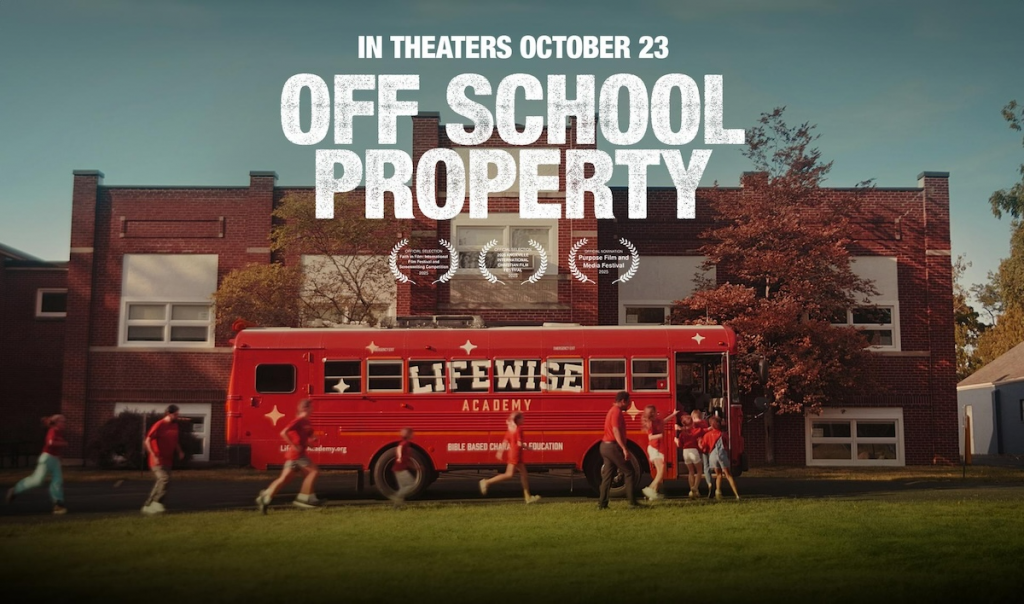
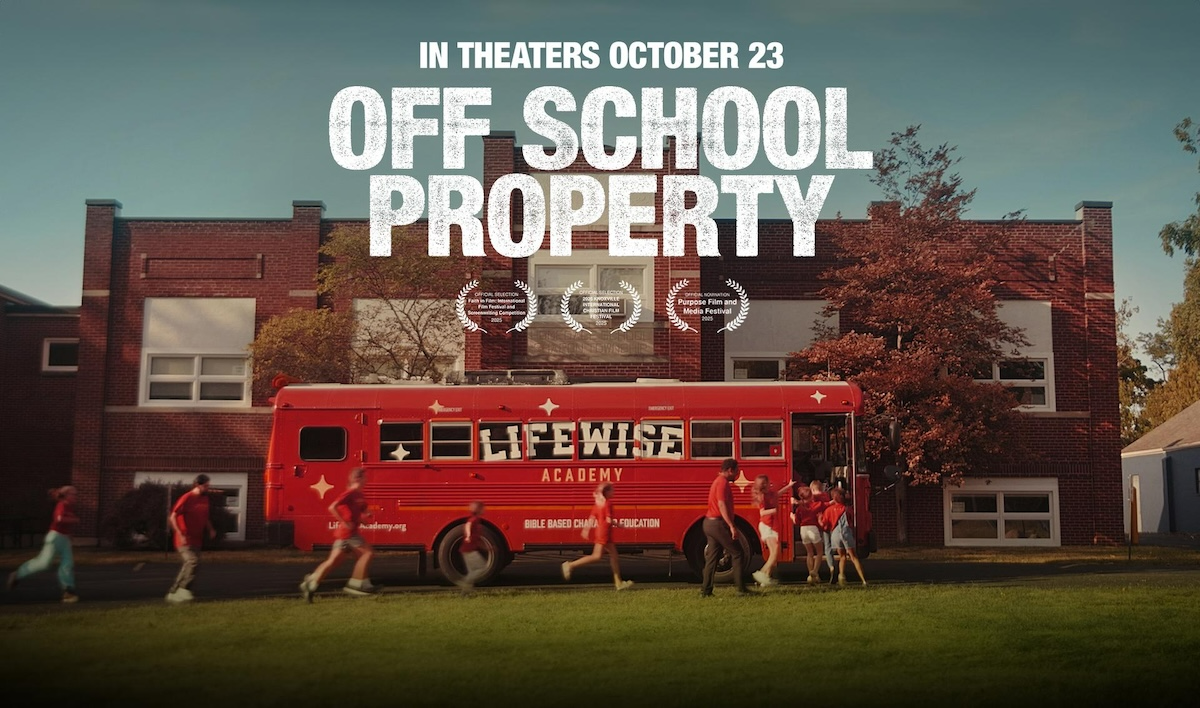
This quote opens a new documentary, Off School Property, which premieres in theaters on October 23. The film aims to correct the record on one of the most misunderstood aspects of America’s storied history: the separation of church and state. Specifically, the film attempts to convince Americans that it is not illegal to teach the Bible to public school kids.
Off School Property was produced by the team at LifeWise Academy and highlights something many Americans do not know. As the film website states:
[W]hile the Bible was being removed, an obscure 1952 Supreme Court ruling paved the way to bring it back. This solution has been sitting right under our noses for 70 years, and it allows students to study the Bible—legally—during the public school day.
The goal of LifeWise Academy is to expand Bible instruction to as many of America’s 50 million public school kids as possible, using a network of buses, off-site class space, and a growing number of trained teachers. In addition to the logistical challenge, the most difficult task is to correct the false assumption that there is no place for God or the Bible in government-run schools. It is an assumption based on the enduring myth that the freedom of religion guaranteed by the First Amendment is really freedom from religion.
This interpretation relies on a phrase from Thomas Jefferson’s Letter to the Danbury Baptists, the first reference to “a wall of separation between Church & State.” But this interpretation of The First Amendment and Jefferson’s letter is exactly backwards. In the vision of America’s Founders, religious freedom is not about keeping religion out of government but keeping government out of religion.
By the mid-twentieth century, this interpretation was replaced by hostility for religion. People were expected to leave their faith outside the voting booth, outside the courtroom, and, most notably, outside the schoolhouse door. When Madalyn Murray O’Hair pushed for Bibles to be removed from public schools, she did not appeal to “neutrality.” Rather, she declared, “We are Atheists. As such, we are foes of any and all religions. We want the Bible out of school because we do not accept it as being either holy or an accurate historical document.”
Ideas have consequences, and bad ideas have victims. American students have been told for generations that life has no meaning, that truth is an illusion, that moral claims are impositions of power, that they are animals, and that God is a matter of personal preference. In the Abolition of Man, C.S. Lewis argued against this approach to education, which he called making “men without chests”:
In a sort of ghastly simplicity we remove the organ and demand the function. We make men without chests and expect of them virtue and enterprise. We laugh at honour and are shocked to find traitors in our midst. We castrate and bid the geldings be fruitful.
Off School Property corrects the record about the separation of church and state as applied to America’s government-run schools. In 1952, the Supreme Court of the United States ruled that teaching the Bible during the school day was, in fact, legal, if it was privately funded, conducted off school property, and done with parental permission. LifeWise Academy has built a national model of launching and resourcing Bible education to public school students during school hours. The LifeWise model is “plug and play” and has been implemented in over 150 school districts across the country.
Off School Property premiers in theaters October 23. Visit lifewise.org/offschoolproperty for more information and to find a theater near you that will be airing the film.
Copyright 2025 by the Colson Center for Christian Worldview. Reprinted from BreakPoint.org with permission.