Federal Reserve Bank Report Shows Sports Betting Hurts Consumer Credit

A new report from the Federal Reserve Bank of New York shows consumer credit health is suffering in the wake of sports betting’s legalization.

Sportsbooks are now legal across most of the country, and financial data shows last year Arkansans wagered an average of nearly $1.8 million every day placing sports bets. But this type of gambling is taking a terrible toll on families’ finances.

A new report from the Federal Reserve Bank of New York found legalization of sports betting leads to a tenfold increase in spending at online sportsbooks. Researchers also found an increase in credit delinquencies and a decline in credit scores after legalization.

This is just the latest report showing the financial harm that sports betting causes.

Research now shows that the legalization of sports betting may be linked to serious financial problems like credit card debt, overdrafts, late payments on loans, lower credit scores, and higher bankruptcy rates.

A UCLA study found that states with online sportsbooks saw credit scores decline three times as much as states with only physical betting locations.

One writer at The Atlantic described sports betting’s impact as “a wave of financial and familial misery” for households that are least able to afford it.

Besides the financial impact, studies have also linked legal sports betting to increases in binge drinking, mental harm, and even violent crime.

Sports betting is out of control. It’s corrupting sports, and it’s ruining lives.

Tax revenue from gambling has not improved Arkansas’ roads or boosted the economy. As powerful corporations try to make gambling part of everyday life, it’s important for Arkansas to protect its citizens and families from predatory gambling.

Otherwise gambling addiction will simply continue wrecking lives and hurting families in our state.

Articles appearing on this website are written with the aid of Family Council’s researchers and writers.
Abortion Drugs Are Not About Women’s Health

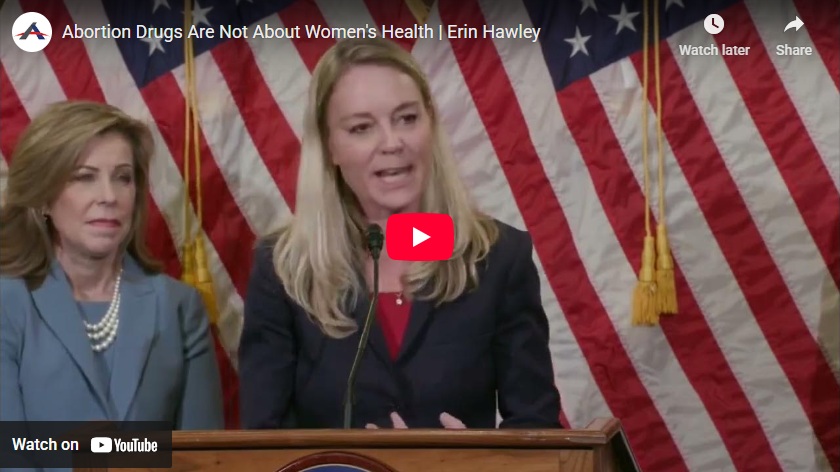
Our friends at Alliance Defending Freedom recently released a video highlighting how abortion drugs are not about women’s health.

Right now, Alliance Defending Freedom is working in court to protect women and unborn children from mail-order abortion drugs.

In June of 2022 the Supreme Court overturned Roe v. Wade in its Dobbs v. Jackson Women’s Health Organization decision. That good decision let several states — including Arkansas — enforce pro-life laws generally prohibiting abortion.

But in January of 2023 the Biden Administration’s FDA permanently removed the in-person dispensing requirement for RU-486 and made abortion drugs available by mail.

In October of last year, ADF attorneys and the State of Louisiana sued the FDA for letting abortionists mail these drugs across state lines.

In February, Family Council joined 43 other pro-life leaders in an amicus brief supporting ADF’s lawsuit against the FDA.

The amicus brief argues that states have the authority to restrict or prohibit abortion, and that the FDA’s abortion drug rules undermine states’ authority to enforce their own pro-life laws.

New evidence shows that abortion drugs are much more dangerous than the FDA previously thought.

A recent study by the experts at the Ethics and Public Policy Center found abortion drugs are at least 22 times more dangerous than the U.S. Food and Drug Administration labeling indicates. Nearly 11% of women experience serious health complications from abortion pills — including sepsis, infection, and life-threatening hemorrhage.

These drugs should not be available at all — much less through the mail. We appreciate ADF’s commitment to defending life in federal court.

Articles appearing on this website are written with the aid of Family Council’s researchers and writers.

Arkansas State Police Lead Gulf Coast HIDTA in Highway Drug Seizures

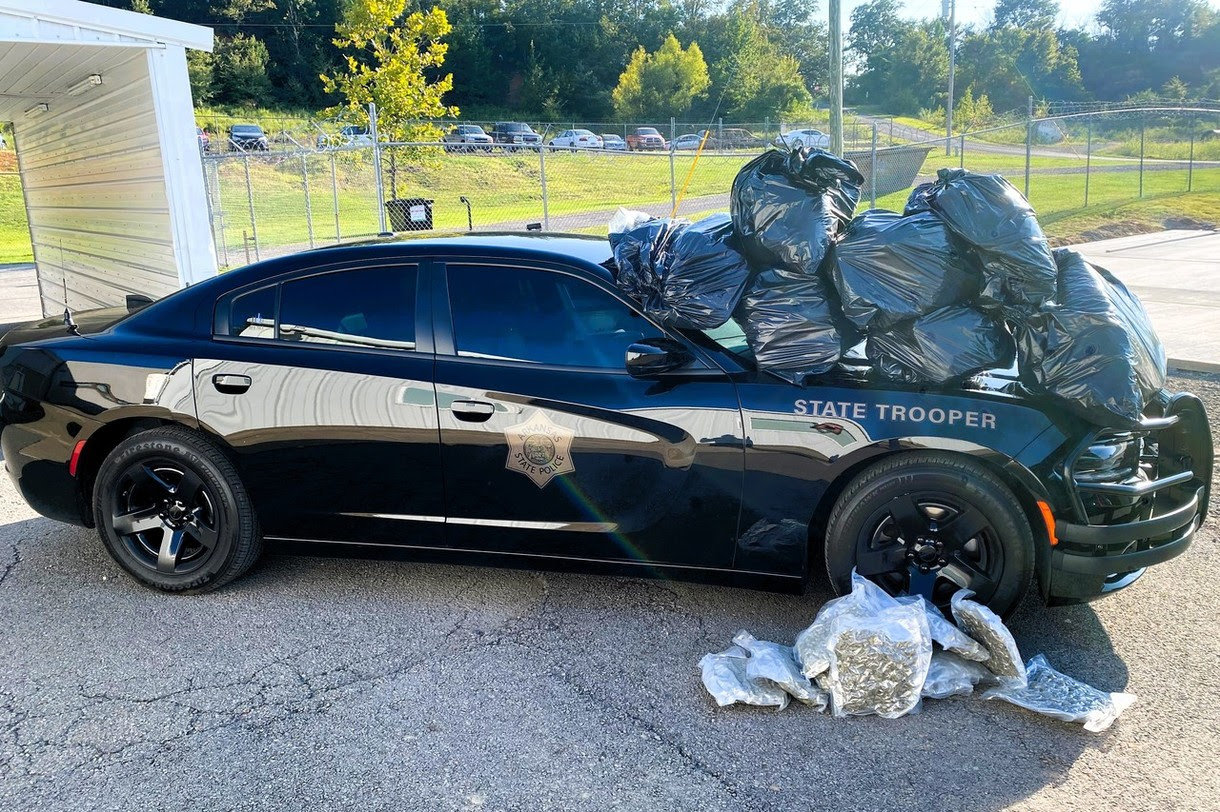
File Photo.

The following is a press release from the Arkansas State Police:

LITTLE ROCK, Ark. — Arkansas State Police (ASP) Troopers seized record amounts of illegal narcotics in 2025, leading all agencies in the Gulf Coast High Intensity Drug Trafficking Areas (HIDTA) region.

“Black‑market high‑grade marijuana is fueling violence in our cities,” said Gulf Coast HIDTA Chairman and ASP Director Col. Mike Hagar. “These seizures matter. Illegal marijuana, guns, and violence go hand in hand, and every load we intercept makes Arkansas communities safer.”

ASP’s Interstate Criminal Patrol (ICP) Unit reported increases across nearly every category of illegal narcotics:

  • 1,154 pounds of methamphetamine (up from 509 lbs. in 2024)
  • 750 pounds of cocaine (up from 254 lbs. in 2024)
  • 127 pounds of fentanyl (up from 69 lbs. in 2024)
  • 17,700 pounds of illegal marijuana
  • 74 pounds of THC wax
  • 4.6 pounds of heroin
  • 1,200 pounds of THC edibles and vapes

Troopers also seized $1.6 million in cash, 28 weapons, and 20 vehicles tied to criminal trafficking activity.

“The Arkansas State Police do a tremendous job intercepting illegal drugs on highways across the region. The results speak for themselves. In 2025, HIDTA invested $500,000 to support highway patrol initiatives across the region, and that investment returned more than $87 million in drugs and assets,” Gulf Coast HIDTA Executive Director Tim Valenti said. “For 2026, we’ve awarded $10,000 to the Arkansas State Police to help continue this vital work.  Arkansas plays a major role in our program, with Col. Hagar serving as a strong leader for both Arkansas State Police and Gulf Coast HIDTA.”

Col. Hagar was elected Chair of the Gulf Coast HIDTA in 2025 by a 25‑member executive board and serves as one of 33 HIDTA chairs nationwide.

“Protecting Americans from dangerous cartels doesn’t stop at our borders,” said Governor Sarah Huckabee Sanders. “Arkansas sits at the heart of major drug‑trafficking corridors, and our State Troopers, some of the country’s bravest men and women, sacrifice daily to keep our roads and communities safe.”

United States Attorney for the Eastern District of Arkansas Jonathan D. Ross, recently elected Vice‑Chairman of the Gulf Coast HIDTA, emphasized the importance of ASP’s interdiction efforts.

“Col. Hagar and the Arkansas State Police have proven to be national leaders in identifying and seizing illicit drugs. Our office works closely with ASP and federal partners to indict those transporting and distributing these drugs, including black‑market marijuana flowing from Oklahoma, Colorado, and California,” Ross said. “As the newly elected Vice-Chairman of the Gulf Coast HIDTA, I look forward to serving alongside Chairman Col. Hagar as he helps share his expertise with our other state and federal partners throughout the seven states that form the Gulf Coast HIDTA.”

The Gulf Coast HIDTA includes agencies from Arkansas, Louisiana, Mississippi, Tennessee, Alabama, and Florida, all positioned along major drug corridors connecting the Southwest Border to the East Coast and Midwest.

Nationwide in 2025, HIDTA agencies seized 4.1 million pounds of drugs and disrupted $17.7 billion in illegal profits.

###