


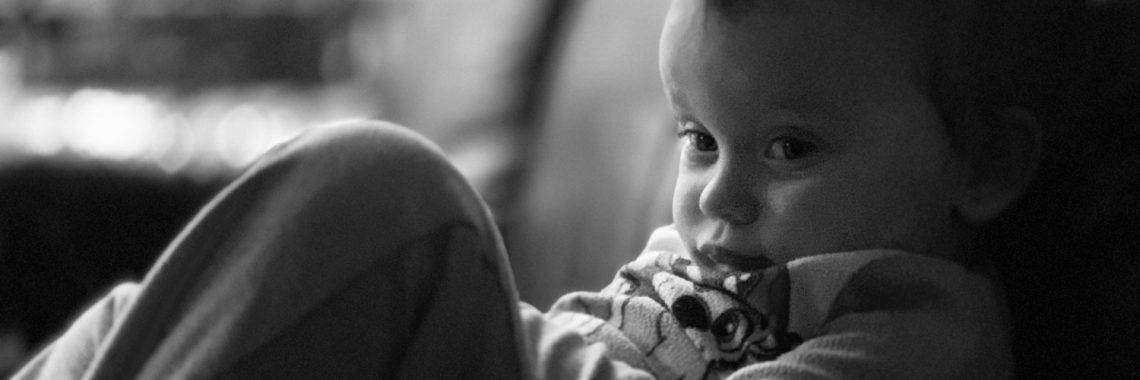

Republican Congressmen Introduce Measures to Prevent Sex-Offenders, Foreign Nationals from Acquiring Children Through Surrogacy

Earlier this month, more than a dozen GOP congressmen co-sponsored legislation preventing sex-offenders from acquiring children through surrogacy and prohibiting foreign nationals from entering into surrogacy contracts in the U.S.
Federal law prohibits sex-offenders from adopting children, but the law does not address commercial surrogacy contracts.
Last year, news outlets reported that a sex-offender convicted of crimes involving children was able to obtain a child through surrogacy in Pennsylvania as a result of loopholes in state and federal regulations.
News outlets also report Chinese nationals are exploiting America’s largely unregulated surrogacy industry to acquire children born in the U.S.
On June 3, Rep. Scott Perry (R-PA-10) along with several co-sponsors in the U.S. House of Representatives filed legislation to close these loopholes in U.S. surrogacy law.
The federal Protecting Kids from Creeps Act would “prohibit surrogacy agencies from facilitating surrogacy contracts with sex offenders,” and H.R. 9132 would “prohibit foreign nationals from entering into or enforcing surrogacy contracts in the United States.”
It’s bad when commercial surrogacy “goes wrong” because of loopholes in state or federal law — but it’s important to remember that surrogacy never “goes right” either.
Commercial surrogacy deliberately deprives children of their biological mothers or fathers.
It treats pregnancy like a “service” that can be purchased.
It exploits women by treating them like commodities, and it exploits children by treating them like products that can be made to order and sold for profit.
Human beings are not products that can be made to order, bought, and sold. That’s why Family Council opposes commercial surrogacy — and why we will continue to oppose it.
Articles appearing on this website are written with the aid of Family Council’s researchers and writers.


Ethicists Argue People Who Want to Starve Themselves to Death Should be Eligible for Assisted Suicide

Last month, three prominent bioethicists published a paper in the journal Bioethics arguing that people who try to commit suicide via self-starvation and dehydration should be eligible for “terminal sedation” — which other experts argue would be nothing more than assisted suicide. The column underscores the “slippery slope” that assisted suicide leads to.
For years, assisted suicide has been promoted as a “compassionate” way to help people with terminal illnesses avoid unnecessary suffering, and several countries as well as some U.S. states have legalized assisted suicide as a result. But experience shows that assisted suicide does not remain rare or limited once it’s legal.
For example, this year, Canada is set to mark its 100,000th assisted suicide death under the country’s “Medical Aid in Dying” (MAiD) program.
A physician in Quebec recently made headlines for actually suggesting the MAiD program be broadened to include babies.
And next year, Canada could expand assisted suicide to include people suffering solely from mental health conditions like anxiety or depression.
In the U.S., peer-reviewed research has found people with eating disorders have been wrongly approved for assisted suicide — even in states where assisted suicide is supposed to be limited to patients with terminal illnesses.
Once doctors and policymakers decide some lives are not worth living, it’s practically impossible to choose where to draw the line on assisted suicide.
Assisted suicide fundamentally changes the doctor-patient relationship from healing to killing, and in some countries, it’s driving palliative care specialists to leave the medical profession. That hurts everyone.
All of this underscores why Family Council has strongly opposed assisted suicide in Arkansas.
Being pro-life means believing innocent human life is sacred from conception until natural death.
Just like abortion, euthanasia and assisted suicide violate the sanctity of innocent human life.
Articles appearing on this website are written with the aid of Family Council’s researchers and writers.