

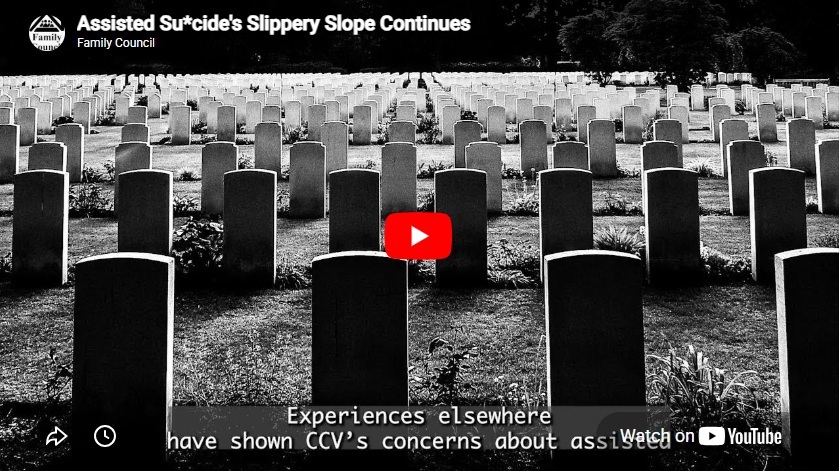


Suicide Advocates Continue to Promote “Medical Aid in Dying” in U.S. and Abroad

Advocates for assisted suicide continue to promote laws letting people receive prescriptions for lethal drugs.
In Ohio, legislators recently introduced an assisted suicide measure, arguing that “medical aid in dying” provides terminally ill people with a compassionate option. But our friends at the Center for Christian Virtue (CCV) rightly called the legislation “a Trojan horse for mandated death” that would pressure vulnerable people to end their lives via assisted suicide.
Experiences elsewhere have shown CCV’s concerns about assisted suicide are spot on.
In 1997, Oregon became the first state in America to legalize physician-assisted suicide, and since then policymakers have worked to make it easier for people to receive prescriptions for lethal drugs. In fact, a record 637 lethal prescriptions for assisted suicide were written in Oregon last year.
But out of those hundreds of patients, only two were referred for psychiatric evaluation before being given a prescription for suicide. That is a serious failure.
Besides failing to address patients’ mental and emotional health concerns, there is evidence that many may people feel financially pressured to opt for assisted suicide. More than one in 20 people (6%) who asked for assisted suicide in Oregon last year said they were concerned about the financial implications of medical treatment. That’s deeply concerning.
Despite these problems, supporters of assisted suicide have pushed to expand it globally. Forbes reports:
“In Belgium, nearly 4,500 patients died from medically-assisted suicide in 2025, accounting for 4% of all deaths. And in Spain, more than 1,000 patients received physician-assisted death last year. Other countries—including Luxembourg, Switzerland and Austria—have also legalized medically assisted dying. In the United Kingdom, the House of Commons passed an assisted-dying bill that has since stalled in the House of Lords.
“What’s notable is not just the growth of these programs but their scope.
“In some countries, eligibility has expanded beyond patients who are terminally ill to include those with chronic conditions or, in rare cases, severe psychological distress.”
Patients who are in distress need counseling and support — not a deadly prescription.
Experience has shown that assisted suicide doesn’t help people who are sick or dying, and it doesn’t remain limited to a few cases.
In the U.S., insurance companies have refused to pay for patients’ medical care, but have offered to cover assisted suicide drugs.
Patients in Europe and Canada reportedly have been denied care or actively euthanized as a result of assisted suicide laws.
In some countries, assisted suicide and euthanasia are driving palliative care specialists to quit. That hurts everyone.
Assisted suicide fundamentally changes the doctor-patient relationship from healing to killing.
The Hippocratic Oath promises to “first, do no harm.” Prescribing lethal drugs violates that sacred trust.
All of this underscores why Family Council has strongly opposed assisted suicide in Arkansas.
Being pro-life means believing innocent human life is sacred from conception until natural death.
Just like abortion, euthanasia and assisted suicide violate the sanctity of innocent human life.
Articles appearing on this website are written with the aid of Family Council’s researchers and writers.

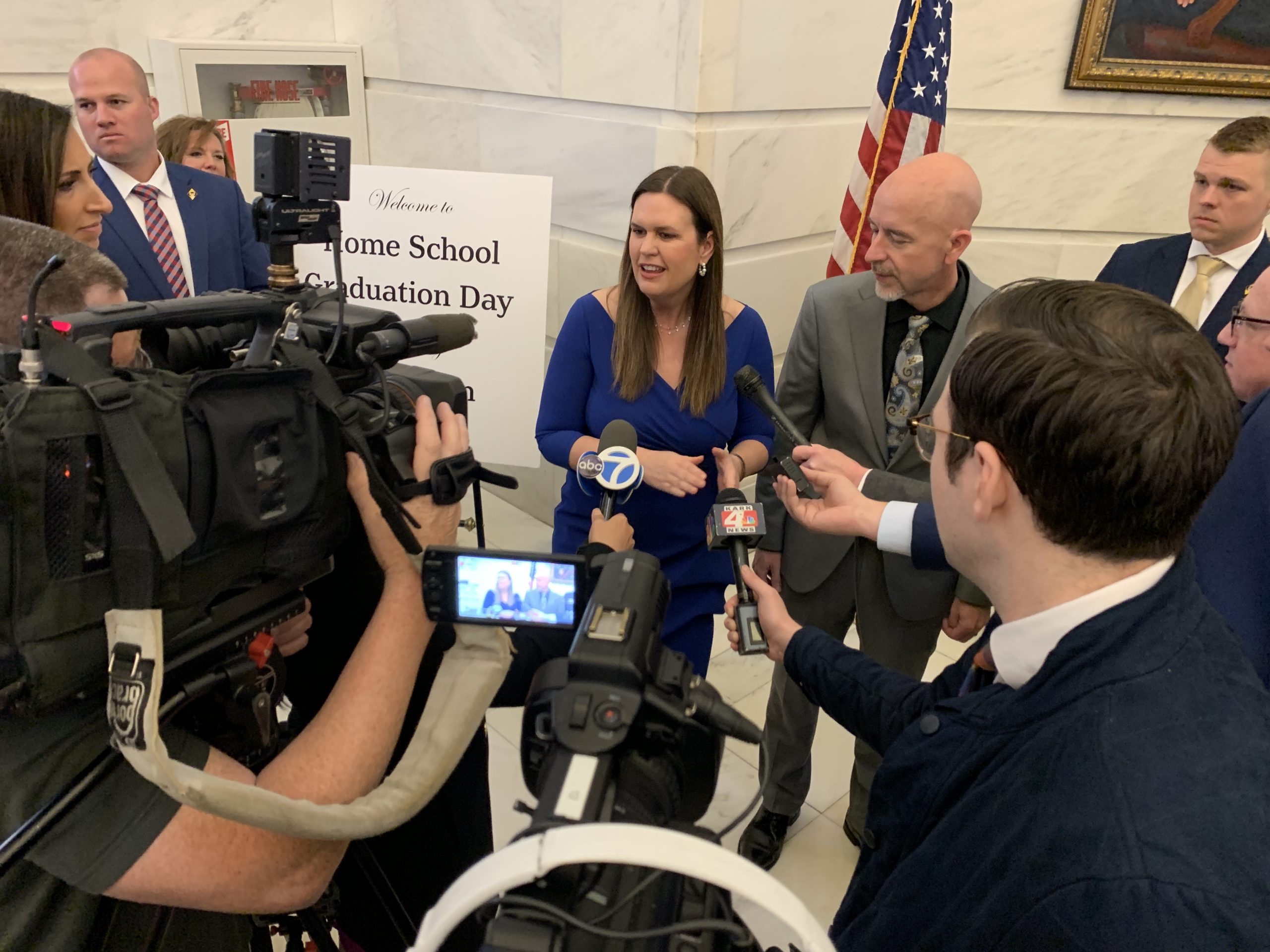
Governor Sanders Declares June “Fidelity Month” in Arkansas
Last week, Arkansas Governor Sarah Huckabee Sanders issued a proclamation declaring June “Fidelity Month” in the Natural State.
The governor’s proclamation says:
TO ALL TO WHOM THESE PRESENTS COME – GREETINGS:
WHEREAS: The United States of America was founded on the values of faith, liberty, and patriotism as acknowledged in its founding documents and in the statements of its Founding Fathers;
WHEREAS: The Declaration of Independence appeals to “the Laws of Nature and of Nature’s God” when establishing the United States as a free nation with a unique identity;
WHEREAS: George Washington stated that “Virtue or morality is a necessary spring of popular government” when discussing the necessity of virtue to proper self-government;
WHEREAS: The commitment of Arkansas to spiritual and civic institutions is at the core of the State’s collective identity;
WHEREAS: Cultivating fidelity to God, family, community, and country contributes to human flourishing and supports a healthy, stable, well-ordered society;
WHEREAS: Practices that encourage virtue, commitment, responsibility, and shared moral foundations strengthen both individuals and their communities;
WHEREAS: Fidelity Month provides an opportunity for residents to reflect on and renew commitments to these shared values and institutions; and
WHEREAS: The month of June is promoted by community and faith leaders as a time to encourage renewed dedication to these virtues and institutions.
NOW, THEREFORE, I, SARAH HUCKABEE SANDERS, by virtue of the authority vested in me by the laws of the State of Arkansas, do hereby proclaim the month of June 2026, as
“FIDELITY MONTH”
IN TESTIMONY WHEREOF, I have hereunto set my hand and cause the Great Seal of the State of Arkansas to be affixed this 27th day of May, in the year of our Lord 2026.
We have written repeatedly over the years about how morality and virtue are essential for self-government. Governor Sanders’ “Fidelity Month” proclamation celebrates those founding principles.
As our nation prepares to mark its 250th anniversary, it’s good to pause and remember the principles that make self-government possible in the first place.
Family Council deeply appreciates Gov. Sanders doing that by designating June as “Fidelity Month” in Arkansas.
Articles appearing on this website are written with the aid of Family Council’s researchers and writers.