Making Sense of Mixed Signals on Church Attendance, Religious Affiliation in America
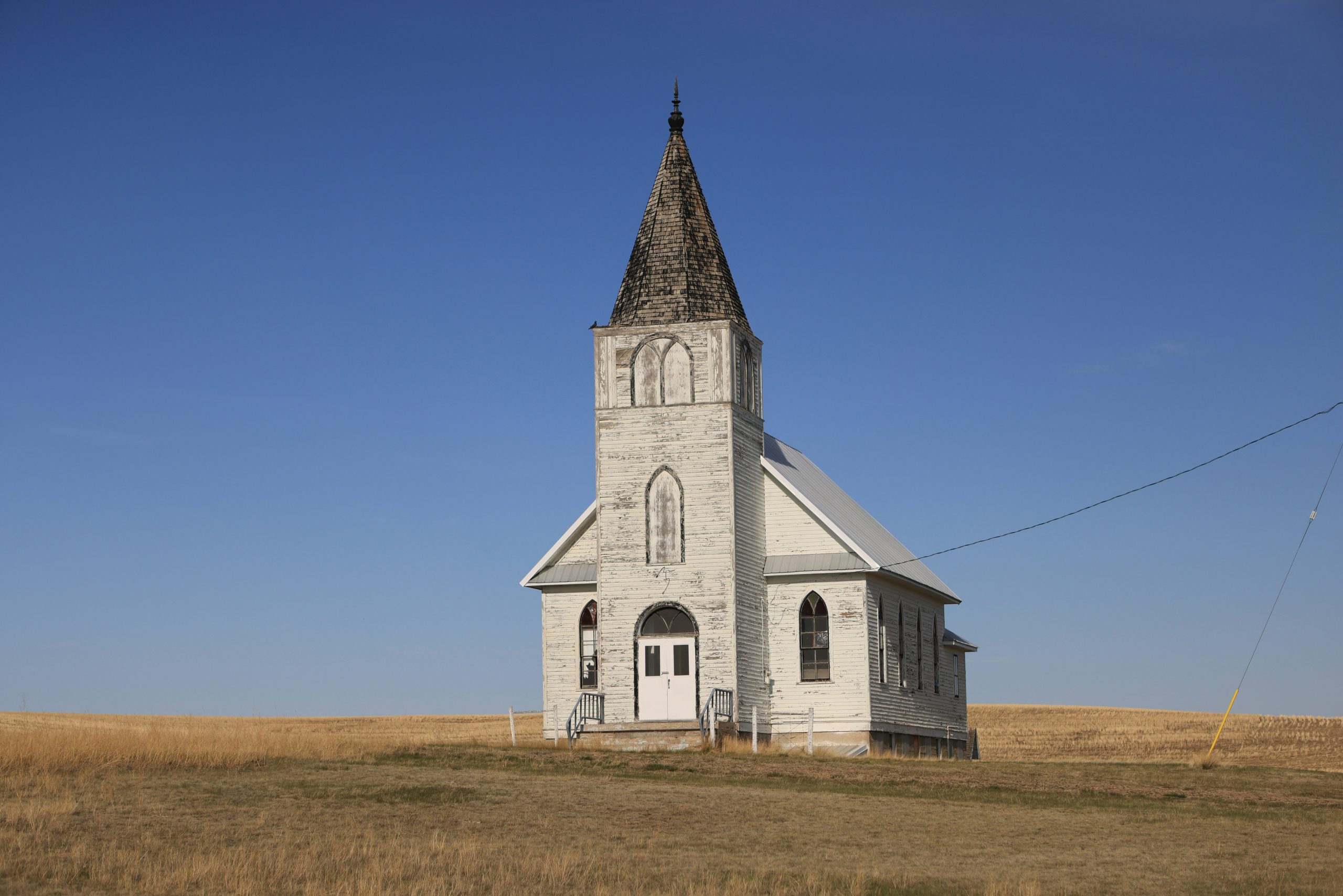
Public opinion polling seems to be sending mixed signals when it comes to Americans’ religious affiliation.

Bible reading surged in 2024 and 2025, and last year news outlets reported how a large share of American adults have rediscovered Christianity in the wake of the COVID-19 pandemic. According to Barna, Millennial and Gen Z churchgoers attend services approximately twice a month, on average, and teens are “very motivated to learn about Jesus.Gallup even announced last June that a growing share of Americans actually see religion’s influence increasing.

But earlier this month, Gallup released a poll showing that “religious engagement” in America is still low. Religiously unaffiliated “Nones” in America rose to 24% last year. Less than half of U.S. adults now say religion is “very important,” and less than one in three attend church weekly. Some predict the U.S. could see as many as 100,000 churches close in the next few years.

Some reports seem to show Christianity growing in America while others suggest it’s declining. Which is it?

There are a few possible explanations.

One may be that the distinction between religious and non-religious people is becoming more pronounced.

Few people may go to church weekly, but the ones who do go to church are highly committed to their faith.

Some people may describe this as a decline in cultural or “nominal” Christianity: People who don’t take their faith seriously may be less likely to call themselves Christians or attend church. But those who do profess to be Christians are very devout.

That could help explain why we see so much engagement with the Bible and so many headlines about young adults going to church even as the number of religious “Nones” has gone up.

Another point to consider is that Americans’ church preferences may be changing.

For decades Christians have shifted away from mainline churches and denominations in favor of less formal evangelical or nondenominational churches.

If some churches are shrinking — or closing altogether — while others are remaining stable or growing, that doesn’t represent a decline in Christianity. It may just mean that Christians’ church and denominational preferences are still changing.

On a broader level, in 2017, Pew Research Center found a growing share of Americans identify as “spiritual but not religious.” Many people may think they can be spiritual or even follow Christ without going to church. But being part of a local community of believers is an important part of discipleship. Christians encourage one another and help build each other up in the faith. Church isn’t optional for Christians. It’s essential.

Articles appearing on this website are written with the aid of Family Council’s researchers and writers.


Guest Column: Jesus Would Have Baked the Cake

. . . and other nonsense Jesus would not have done.

On a Saturday morning in 2012, sitting on my porch reading an actual newspaper, I first learned of a Denver baker named Jack Phillips. A gay couple, having been “married in a different state,” asked Jack, owner of Masterpiece Cakeshop, to custom design a cake for their same-sex “wedding” celebration. Jack offered them service and any cake in his store that was already made. What he could not do, he said, was use his creative talent to communicate a message that violated his conscience and said what he knew to be untrue. 

To say that a lot has happened since is, to put it mildly, an understatement. He was harassed by the state of Colorado, specifically the Civil Rights Commission. He was slandered online and subjected to death threats against him and his family. He was sued, not only by the state but also by a man—who claimed to be a woman—who repeatedly asked him to bake perverted and disgusting cakes. In the end, his case, which went all the way to the Supreme Court, has been pivotal in advancing the rights of conscience, suppressing state hostility to religion, and attracting many to Christ. 

But I also remember the chorus of voices, many of them Christian leaders, saying at the time, “Just bake the cake.” Or even, “Jesus would’ve baked the cake.” Jack was accused of hate, intolerance, and bigotry. But he stood courageously, even in the face of great criticism from brothers and sisters in Christ. 

Thank God he did. Recently, at an event hosted by Colorado Christian University and featuring the brilliant Ayaan Hirsi Ali—one of those who was inspired by Jack’s story—I asked Jack, and Kristen Waggoner, Jack’s attorney and CEO of the Alliance Defending Freedom what he thinks now as he looks back on the past decade and a half. 

Here’s Jack: 

God tells us to live by a truth. He says we need to know the truth and that the truth will set us free. Jesus is the Truth, and we just have to know Him. And we get to know Him better and more clearly through His Word, through good teaching, and by spending time with Him. The more time you spend with Him, the better you know Him, and you don’t want to disappoint somebody you know well.  

It would have been a huge disappointment to Jesus if I’d have [baked the cake] when He’s given us the power to live by what He says. And people want good news. There are tons of people who I’ve talked to who have been encouraged by this story. I think if I had made the cake . . . I don’t know because we’ve had so many things that have just happened that have been so good. Tonight is one of them. 

Kristin Waggoner added more context: 

In Jack’s situation, Jack modeled tolerance, and the other side did not. And so, it’s not about refusing to serve, because Jack serves everyone. Everybody. But when the government can compel you to speak messages and affirm lies that violate your conscience, then there is no limit to the government’s power. . .. So that’s really what that was about—it was “the message” that Jack was being asked to communicate.  

I can tell you, having talked to hundreds of people over the last 10 years, that they have said that courage begets courage. And they’ve modeled that because they heard of Jack’s story, and it caused them to consider Christ and come to salvation. But it also caused them to be courageous in their moment.  

One example that comes to mind is Sher Lori from Downtown Hope Center. She runs a homeless shelter in Alaska, and a man who identifies as a woman wanted to come into that shelter sleeping three feet away from the women in the shelter. As she’s coming down the stairs, she knows that the man is at the door wanting to come in. He had a reputation that would suggest that would not be a good thing. Even aside from the fact that he’s a man, he had violent tendencies and things like that. And what goes through her mind is, remember the baker. So, she gives that man cab money to go to the hospital to get his wounds cared for because he was in a fight earlier. But she does not let him in. She keeps that safe space for those women. So that’s what I think of; all the people who were inspired by Jack as well. 

Praise God. The entire conversation, preceded by a stunning and brilliant speech by Ayaan Hirsi-Ali, is now available on YouTube. And, of course, the stories of Jack Phillips and Ayaan Hirsi-Ali are told in Truth Rising: The Study and the Truth Rising documentary. Learn more at colsoncenter.org/truth.

Copyright 2026 by the Colson Center for Christian Worldview. Reprinted from BreakPoint.org with permission.