
Released Time Continues to Expand in Arkansas Public Schools

The Arkansas Democrat-Gazette recently reported that released time continues to expand in public schools throughout the state.

Released time makes it possible for students to be excused from school so they can attend Bible studies or other religious classes during normal school hours. Thanks to federal court rulings, released time programs have been in operation for decades — including in Arkansas.

Generally speaking, released time in Arkansas requires three components:

  1. A church or other organization that wants to fund and conduct a released time program off-campus.
  2. School board approval for a policy authorizing students to leave campus for released time during school hours.
  3. Parental consent for the student to participate in the program.

Once a church or other group properly plans and prepares to operate a released time program, they can go to the local school board to seek approval and then collaborate with the school district to set the best time in the day for a released time program.

As long as the program meets off-campus, obtains parental consent, and is privately funded, then the school board may authorize the program.

The private entity that oversees the released time program is encouraged to work with the local school district and school board to set up a mutually agreeable schedule that benefits students. If planned correctly, released time programs generally do not conflict with a student’s core courses like math or English.

Earlier this summer, the organization LifeWise Academy shared ways it is expanding released time opportunities for students in Arkansas. LifeWise serves more than 1,200 students at approximately a dozen locations across the state. The program is expected to continue to grow in the coming year.

Family Council hopes to work with state and local policymakers in the future to promote released time programs and help pass a law formally recognizing released time in Arkansas.

If you are interested in starting a released time program in your community, you are welcome to contact our office at 501-375-7000 for more information.

Articles appearing on this website are written with the aid of Family Council’s researchers and writers.

Legislators Ask Arkansas Department of Education About Delays in EFA Reimbursements

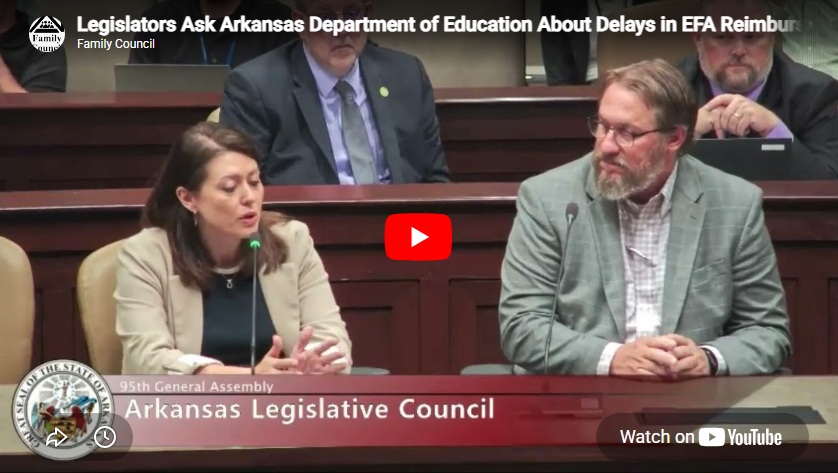
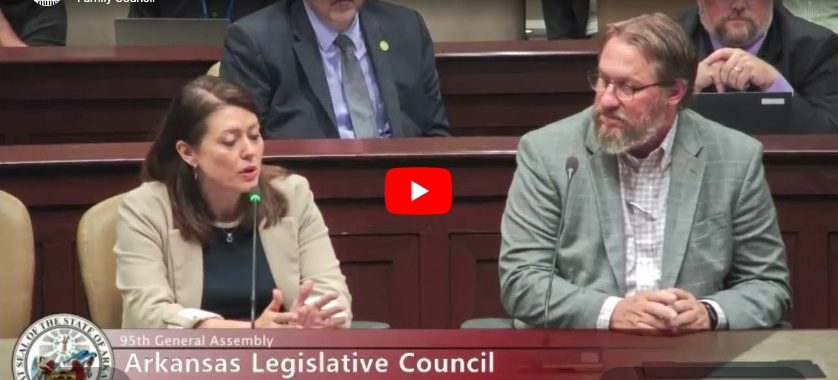
On Friday, the Arkansas Legislative Council (ALC) accepted a subcommittee’s approval of new Education Freedom Account (EFA) rules from the Department of Education. During discussion of the rules, lawmakers asked staff members from the Department of Education about delays in EFA reimbursements, and the department acknowledged that approval currently takes 30 days.

Arkansas created the EFA program in 2023, making it possible for students to use public funds to pay for an education at a public or private school or at home. Thousands of homeschool students have taken advantage of the program and test scores show they are excelling.

But earlier this spring the Arkansas Department of Education approved new administrative rules restricting how homeschoolers spend EFA funds on extracurricular activities and establishing complicated preapproval and reimbursement requirements for homeschoolers. Homeschoolers submitted comments to the State and testified in committee that approval for EFA expenses already takes weeks or months. The process created under these rules could take even longer.

The Arkansas Legislature’s Administrative Rules Subcommittee approved the rules without objection at its June 15 meeting, following some three hours of testimony from the Department of Education and from homeschoolers who are deeply concerned about changes the rules make to the EFA program.

On June 19, ALC accepted the subcommittee’s approval of the rules, but Sen. Terry Rice (R — Waldron) asked the Department of Education about the lengthy delays in approvals and reimbursements under the EFA program.

During discussion, the Department of Education indicated it has chosen to review EFA expenses and reimbursements in-house using department staff instead of outsourcing that responsibility to its vendor, Class Wallet, who is helping the state administer the EFA program.

The department also acknowledged that it currently takes its staff approximately 30 days to review expenses and approve reimbursements for homeschoolers, but says it is committed to reducing that timeframe.

You can watch the lawmakers’ discussion with the Department of Education here.

Articles appearing on this website are written with the aid of Family Council’s researchers and writers.

Proposed EFA Restrictions Do Not Appear on State Board of Education Agenda

The State Board of Education is scheduled to meet at 12:30 PM this Thursday, February 12, at the Arkansas Department of Education Building located at Four Capitol Mall in Little Rock. The meeting agenda is available here.

It appears the board does not plan to vote on proposed rules prohibiting homeschoolers from using Educational Freedom Account (EFA) funding to pay for team sports under the LEARNS Act.

Family Council has reached out to state officials about the status of the proposed rules. Sources tell us that the board may choose to “table” the rules for discussion later on. The situation is still very fluid, so we will let you know if we learn of any changes between now and the State Board of Education meeting on Thursday.

Here is a little more information about the situation:

In January the Arkansas Democrat-Gazette reported that the Department of Education planned to move forward with rules prohibiting EFA spending on team sports under the LEARNS Act despite public comments from more than 200 citizens who oppose them. Family Council and its homeschool division, the Education Alliance, were among those who submitted public comments against the proposed rules.

At the time, there was talk that the State Board of Education could cast a final vote on the rules at its February meeting.

The Department of Education’s proposed EFA restrictions go beyond what state law allows.

The restrictions would completely prohibit any EFA spending on registration fees, equipment costs, dues, and any costs associated with club or team sports.

Arkansas law clearly caps spending in these areas at 25% of a student’s total EFA funding, which means no more than one-fourth of a student’s EFA money can go toward team sports and extracurricular activities. The Department of Education wants to prohibit spending on team and club sports altogether.

Many homeschoolers have also pointed out that completely prohibiting EFA spending on team sports is unfair because public schools fund team sports with state money.

At this time it looks like the State Board of Education will not vote on the EFA restrictions at its February meeting this Thursday. Our office plans to monitor the situation. If the board decides to vote on the rules, we will let Arkansas’ home schoolers know.