Why Family Council Supports Regulating the Ballot Initiative Process
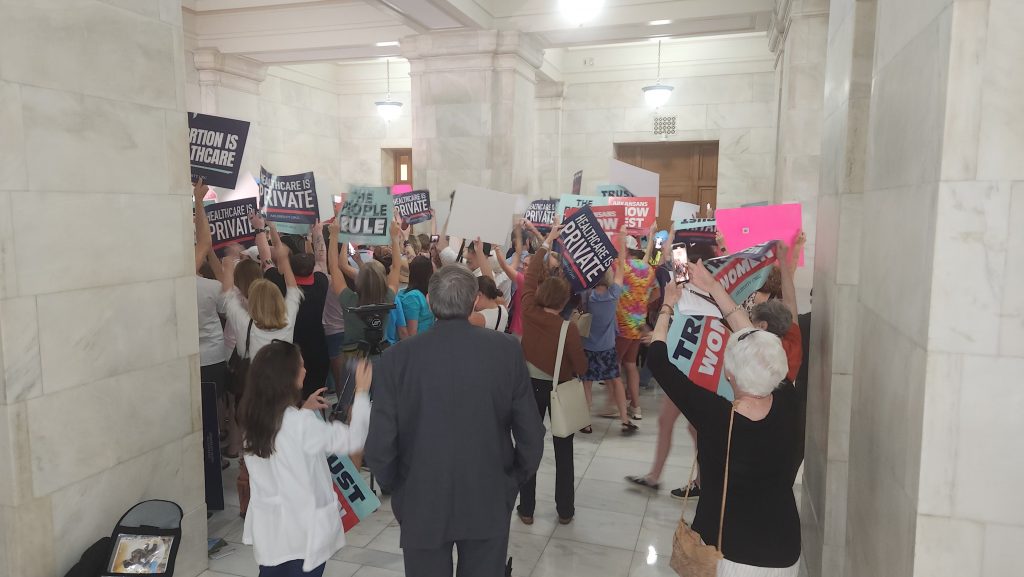
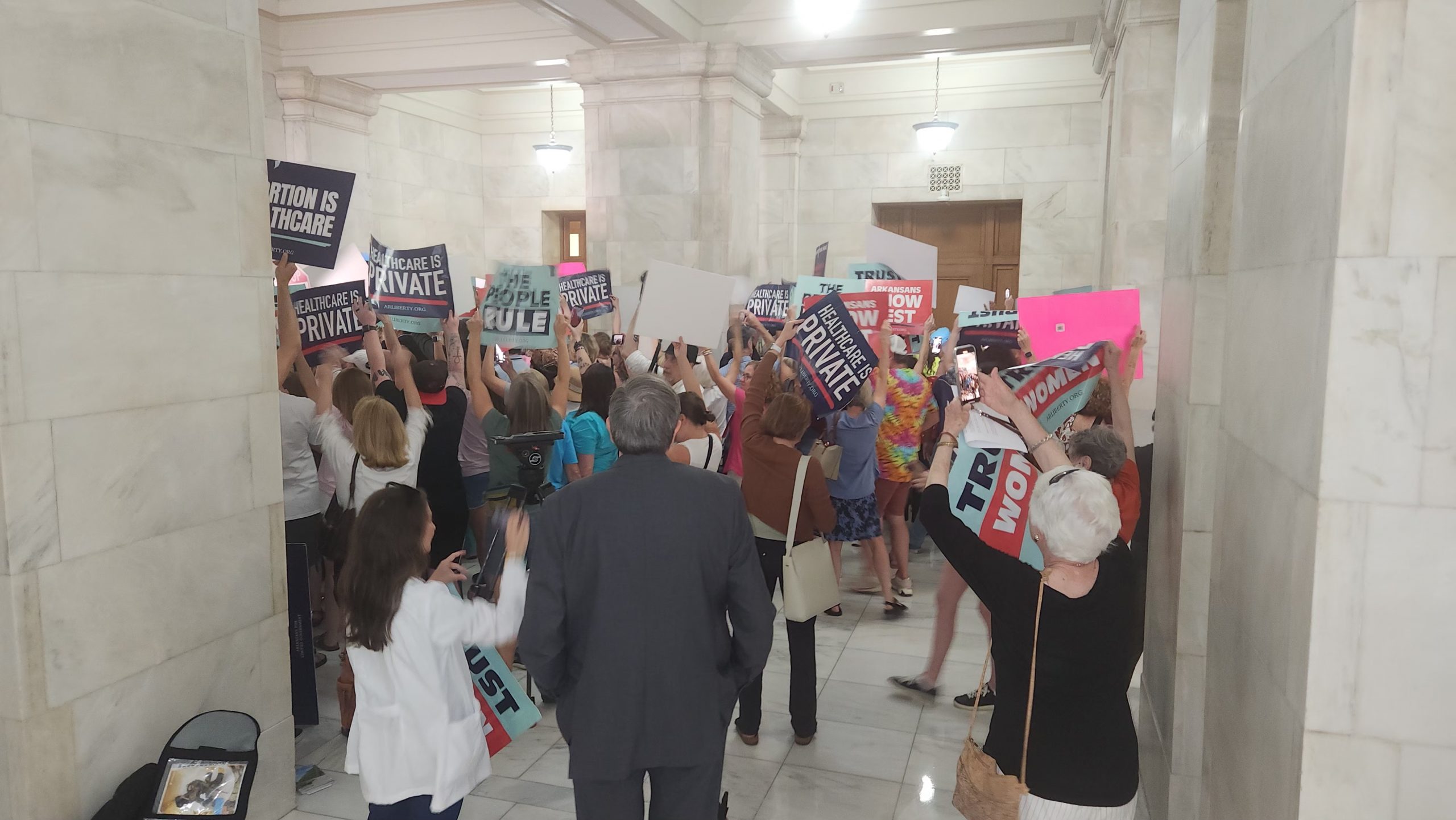
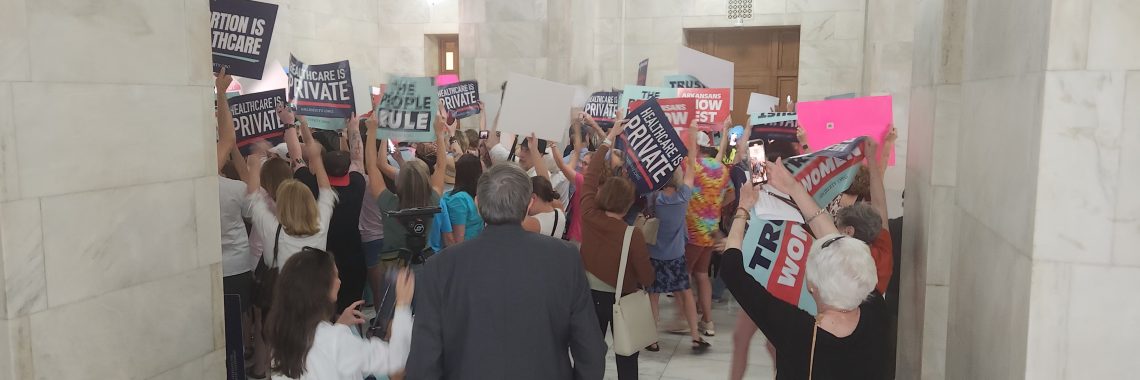
Above: Supporters celebrate as petitions for the Arkansas Abortion Amendment arrive at the state capitol on July 5, 2024.

The Arkansas ballot initiative process was passed by voters in 1910, giving them the constitutional right to propose laws by circulating petitions and placing measures on the ballot for a statewide vote. This law served Arkansans well for almost 100 years. But over the past century, the cost of running a political campaign has grown, and today the initiative process is out of reach for virtually everyone except wealthy special-interests who want to change Arkansas’ constitution or laws for their benefit. The growing influence of businesses that specialize in gathering petition signatures allows anyone with legislation, no matter how obscure or dangerous, to hire hundreds or even thousands of workers to gather as many petition signatures as is needed to qualify for the ballot. As a result, individuals or groups with enough money can easily acquire the necessary signatures. This makes it possible for almost any issue to be placed on the Arkansas ballot for a statewide vote, if the sponsors have enough money at their disposal. If the Arkansas Legislature does not enact good laws that bring accountability and transparency to the ballot initiation process, these problems will simply get worse.

Arkansas’ ballot initiative process has become the opposite of its intended purpose. Its original intent was to provide citizens a means of functioning as a “legislative body.” If lawmakers refused to act — and enough citizens decided “there ought to be a law” — the people could write the law, create a groundswell of public involvement, mount a volunteer effort to get the necessary signatures, and place their idea before voters in a statewide election. This works as long as the movement is truly grassroots, with average citizens taking time to circulate petitions because they believe, “It’s the right thing to do.”

In 2003 I worked with lawmakers at the capitol to propose a simple resolution stating that marriage is the union of a man and a woman. Lawmakers killed the resolution in a committee vote. So, in  2004 I led the effort to place an amendment on the ballot declaring that marriage in Arkansas is the union of one man and one woman. By the time we turned our signatures in to the Secretary of State, over 5,000 people statewide had volunteered and circulated petitions. That year, we needed about 85,000 signatures, but we turned in over 200,000. The marriage amendment was placed on the ballot, and Arkansas voters approved it with 75% of the vote. This was done without paying any canvassers or having to run deceptive ads, because it was a fundamental issue that lots of people cared deeply about. 

Today the Arkansas Constitution is for sale — and it’s cheap. We’re a small state, so it only takes about 90,000 petition signatures to qualify for the ballot. All you need is about 100 temporary workers who will work as canvassers and each get about 1,000 signatures and you’re done. Imagine how easy it would be if you had enough money to hire 400 or 500 paid canvassers, which is what sponsors of the 2024 marijuana amendment did.  As far as I know every “citizen-led” measure that has appeared on the ballot in the past 20 years has used paid canvassers. What was once a form of direct democracy has become just the opposite. It is a tool of the powerful that they can use to impose their will on the rest of us. Something needs to be done to stop the harm already being done. 

Powerful corporate special interests have used our own ballot initiative process against us. The legislature tried to protect our citizens from a state-run lottery, but the special interests used the ballot initiative process to inflict it on our state anyway. They wrote the lottery into our state constitution. The legislature tried to protect our citizens from legalized marijuana, so the marijuana industry spent millions of dollars circulating petitions and successfully wrote “medical” marijuana into our state constitution. In 2018 powerful gambling interests paid people to gather signatures for a state constitutional amendment to give four casino operators a monopoly over the casino business in Arkansas. They succeeded, and now casino gambling is protected by our constitution. In 2022 and 2024 the marijuana industry returned for a second bite at the apple to further amend our State Constitution to give themselves a monopoly over the entire Arkansas marijuana business. In 2024, pro-abortion groups pooled their money and hired paid canvassers to go out and get signatures to overturn all of Arkansas’ pro-life laws. None of these measures would have seen the light of day if they had depended strictly on volunteer canvassers instead of hiring canvassers. 

The marijuana industry has money to burn. So it’s nothing for them to come back every two years with an amendment to give themselves a monopoly over the marijuana business in Arkansas. The same people who sponsored the amendment to gut Arkansas’ laws against abortion have vowed to return. Imagine how many signatures they can collect if they get funding from out-of-state to out-source all the signature gathering to a professional petition signature canvassing company. If these and other groups can successfully “buy” their way to the ballot, think of how much money they will spend to lie to voters and confuse them into making abortion a guaranteed constitutional right. 

Some might say that regulating the ballot initiative process is against democracy. There is nothing democratic about multi-billion dollar industries using this “democratic” process to write their business or vice into our constitution. 

Some might say that letting the people vote on these measures is the democratic way.  But it is unfair for clever lawyers and their high-powered business partners to write deceptively worded measures that mislead voters. The marijuana amendment that passed in 2016 was over 10,000 words long. The abortion amendment of 2024 used legal terms that sound one way to voters but mean something different in the courtroom. Sometimes people who are against a measure end up voting for it because the wording is so deceptive. Not to mention the advertising. Slander and liability laws do not apply to ballot measures, so proponents of an amendment that legalizes abortion for the entire nine months of pregnancy can run millions of dollars worth of ads that totally deceive voters. This has already been done in states like Ohio and Arizona. 

For years, I and my organization, Family Council, have defended attacks on the ballot initiative process. However, when I see dark forces using the ballot initiative process to inflict harm like marijuana, gambling, and abortion on our citizens, I have to stand up. 

In 2019 several lawmakers sponsored legislation, including a proposed state constitutional amendment, to address these and other problems. Most of these measures failed to pass. Things have only become worse since then, and they will continue to get worse unless lawmakers act now. 

That is why, going forward, people can expect Family Council to be in support of just about every bill that our lawmakers put forth to fix this dangerous situation.

By Jerry Cox. February 9, 2025.

Lawmaker Withdraws Bill Concerning Acts of Negligence by Healthcare Professionals

Last Tuesday Rep. Lee Johnson (R — Greenwood) withdrew a bill that dealt with criminal liability for negligence and misconduct by healthcare professionals.

Right now if someone is harmed because of a healthcare professional’s negligence or misconduct, authorities can investigate the situation, and prosecutors can take appropriate action.

H.B. 1168 was a bill similar to legislation that other states have proposed to protect healthcare professionals from being prosecuted for honest mistakes. But H.B. 1168 was drafted in such a way that its wording could have made it difficult to prosecute healthcare workers who deliberately hurt another person. Fortunately, Rep. Johnson took the time to listen to people with concerns about the way the bill was drafted, and he chose to withdraw it from the legislature.

It’s important to protect good healthcare professionals, but our laws need to hold bad actors accountable as well. That is part of the reason Family Council has consistently opposed legislation that would shield nursing homes and similar facilities when their negligence harms or kills another person.

Family Council deeply appreciates Rep. Johnson taking the time to listen to Arkansans who had concerns about unintended consequences H.B. 1168 might have caused, and we support his decision to withdraw the bill from consideration.

Articles appearing on this website are written with the aid of Family Council’s researchers and writers.

Beer, Bills, and Big Business: Here’s a Recap of Week 3 at the Capitol and the Issues We’re Tracking

The Arkansas Legislature is wrapping up the third week of its regular 2025 session.

On Tuesday the House Judiciary Committee passed H.B. 1204 — a bad bill limiting what people who are injured through no fault of their own may recover in damages for their injuries.

The Arkansas House of Representatives passed H.B. 1204 on Wednesday and sent it to the Arkansas Senate for consideration.

The House Rules Committee passed H.B. 1173 expanding the legal alcohol content in beer and malt beverages.

On Thursday the Senate City, County, and Local Affairs Committee passed S.B. 98, a bad bill expanding alcohol delivery in Arkansas.

Below is a rundown of some of the legislation Family Council is following.

Good Bills Filed

H.B. 1139 (Religious Liberty): This good bill by Rep. Brit McKenzie (R — Rogers) and Sen. Joshua Bryant (R — Rogers) would strengthen Arkansas’ law concerning public school “released time.” The bill clarifies that public schools must excuse students from school, if the students’ parents request it, to receive religious instruction off-campus. Read The Bill Here.

H.B. 1180 (Pro-Life): This good bill by Rep. Mary Bentley (R — Perryville) and Sen. Clint Penzo (R — Springdale) ensures public schools show students a high-definition ultrasound video that is at least three minutes long as part of sex-education and human growth and development education courses. The bill also ensures students see Live Action’s computer-animated “Meet Baby Olivia” video that teaches about human development from conception to birth. Read The Bill Here.

H.B. 1202 (Pro-Life): This good bill by the Joint Budget Committee appropriates money for the Department of Finance and Administration for the 2025-2026 fiscal year. The budget includes $2 million in grant funding to pregnancy help organizations that promote maternal and infant wellness and provide material support to women with unplanned pregnancies. Read The Bill Here.

H.B. 1142 (Bioethics): This good bill by Rep. Alyssa Brown (R — Heber Springs) and Sen. Jim Dotson (R — Bentonville) would promote ethical fertility treatments such as restorative reproductive medicine in Arkansas. The bill also protects healthcare providers who have conscientious objections to unethical in vitro fertilization (IVF) and similar procedures. Read The Bill Here.

H.B. 1221 (Ballot Initiatives): This good bill by Rep. David Ray (R — Maumelle) and Sen. Kim Hammer (R — Benton) clarifies Arkansas’ laws concerning initiatives and referenda. The bill makes it clear that petition signatures expire at the end of a General Election cycle. This would prevent canvassers from collecting signatures across multiple election cycles and help ensure sponsors don’t submit old signatures that are outdated or more likely to be invalid. Read The Bill Here.

H.B. 1222 (Ballot Initiatives): This good bill by Rep. David Ray (R — Maumelle) and Sen. Kim Hammer (R — Benton) clarifies Arkansas’ laws concerning initiatives and referenda. The bill the Arkansas Attorney General cannot approve a measure’s sponsors to begin collecting signatures to place a measure on the ballot if the measure conflicts with the U.S. Constitution or federal law. The bill also prevents sponsors from asking the attorney general to certify conflicting measures. Read The Bill Here.

H.R. 1006 (Marriage): This good resolution by Rep. David Ray (R — Maumelle) recognizes February 7-14 as “National Marriage Week” in Arkansas. The measure notes how marriage is the foundation of strong families and societies and that healthy marriages improve people’s emotional, physical, and financial well-being. Read The Resolution Here.

H.B. 1162 (Good Friday): This good bill by Rep. Matt Duffield (R — Russellville) would establish Good Friday as an official state holiday in Arkansas. Some school districts in Arkansas already close in honor of Good Friday. This bill would ensure Arkansas’ public school students, teachers, and state employees are able to observe and celebrate Good Friday with their churches and their families. Read The Bill Here.

S.B. 49 (Used Car Tax): This good bill by Sen. Justin Boyd (R — Fort Smith) and Rep. Lee Johnson (R — Greenwood) would eliminate the sales tax on used cars sold for less than $10,000. Read The Bill Here.

S.B. 82 (Used Car Tax): This good bill by Sen. John Payton (R — Wilburn) would eliminate the sales tax on used cars sold for less than $10,000. Read The Bill Here.

H.B. 1082 (Internet Privacy): This good bill by Rep. Zack Gramlich (R — Fort Smith) and Sen. Justin Boyd (R — Fort Smith) generally prevents websites and similar platforms from collecting, using, or sharing personal data of users aged 16 or younger without parental or individual consent. It also addresses targeted advertising based on children’s personal data. Read The Bill Here.

H.B. 1083 (Internet Privacy): This good bill by Rep. Zack Gramlich (R — Fort Smith) and Sen. Justin Boyd (R — Fort Smith) requires internet platforms to adopt safety measures concerning data collection, harmful content, and advertising. The bill would require platforms to automatically default to the most protective privacy settings for minors, and it would require them to give parents tools to manage privacy settings, monitor usage, and restrict purchases for their children online. Read The Bill Here.

Bad Bills Filed

H.B. 1204 (Tort Reform): This bad bill by Rep. Jon Eubanks (R — Paris) and Sen. Missy Irvin (R — Mountain View) restricts what people can recover in damages when they are injured through no fault of their own. The bill effectively reduces what a person or company might be forced to pay when they injure an innocent person. H.B. 1204 benefits insurance companies who might not be forced to pay as much in lawsuits. That might increase the insurance companies’ profits, but there is no guarantee it will result in lower premiums for customers. Family Council has concerns about potential, unintended consequences this bill could have on families. See How Your Representative Voted HereRead The Bill Here.

 S.B. 98 (Alcohol): This bad bill by Sen. Breanne Davis (R — Russellville) and Rep. John Maddox (R — Mena) expands alcohol delivery in Arkansas. The measure expands the list of stores that can deliver alcohol to include grocery stores, small farm wine convenience stores, and retail beer sellers. The bill also lets delivery companies obtain permits to deliver alcohol to consumers on behalf of the stores. Currently, retailers are directly responsible for ensuring all alcohol deliveries comply with state laws — including laws against delivering to minors. S.B. 98 shifts liability from the retailer to the delivery service. Right now, retailers have accountability in following alcohol laws. Under S.B. 98, alcohol deliverers may not have the same amount of oversight or accountability — which, for example, could increase the chances of alcohol being delivered to a minor. Read The Bill Here.

H.B. 1173 (Alcohol): This bad bill by Rep. Matt Brown (R — Conway) and Sen. Scott Flippo (R — Bull Shoals) raises the legal alcohol content for beer from 5% to 14% alcohol by weight, and it allows malt beverages to contain up to 21% alcohol by weight. Under this measure, beer could contain nearly three times as much alcohol as it currently does. That could make stronger alcoholic drinks more widely available in stores and other locations where beer is currently sold across Arkansas. Read The Bill Here.

H.B. 1011 (Abortion): This bad bill by Rep. Andrew Collins (D — Little Rock) would repeal virtually all of Arkansas’ pro-life laws, and it would legalize abortion throughout the state. Read The Bill Here.

S.C.R. 2 (DEI): This bad resolution by Sen. Jamie Scott (D — North Little Rock) and Rep. Jay Richardson (D — Fort Smith) calls Diversity, Equity, and Inclusion (DEI) “essential to creating a society where all individuals are valued, heard, and included,” and says that “efforts to attack DEI are harmful to the bottom line and health of our economy.” DEI policies are closely aligned with critical theory and have been shown to be bad for business and government. Read The Resolution Here.

H.B. 1013 (Bioethics): This bad bill by Rep. Ashley Hudson (D – Little Rock) governs fertility treatments in Arkansas. The bill would let fertility labs in Arkansas create, freeze, store, and kill human embryos as part of unethical in vitro fertilization—or IVF—practices. Human beings are not lab material. This bad bill fails to respect every unborn child’s right to life. Read The Bill Here.

H.B. 1014 (Bioethics): This bad bill by Rep. Andrew Collins (D — Little Rock) would require the State and Public School Life and Health Insurance Program to pay for unethical IVF practices. Read The Bill Here.

H.B. 1020 (School Choice): This bad bill by Rep. Andrew Collins (D — Little Rock) would repeal the 2023 LEARNS Act’s education freedom account program that lets students use public funds to pay for an education at a private school or at home. Read The Bill Here.

H.B. 1028 (Libraries): This bad bill by Rep. Andrew Collins (D — Little Rock) would repeal Arkansas’ laws that protect children from harmful sexual material. It also would let libraries lend or share obscene material, and it requires public libraries to have “a written policy prohibiting the practice of banning books or other materials because of partisan or doctrinal disapproval” in order to receive public funding. Read The Bill Here.

H.B. 1031 (Sex Education): This bad bill by Rep. Denise Garner (D — Fayetteville) would make it possible for the Arkansas Department of Education to implement Planned Parenthood-style sex education as part of larger changes to public school health curriculum. Read The Bill Here.

H.B. 1032 (LGBT): This bad bill by Rep. Andrew Collins (D — Little Rock) would prevent healthcare professionals from helping people overcome unwanted same-sex attraction or gender confusion. The way the bill is written, H.B. 1032 would let counselors, doctors, and other healthcare professionals encourage people to be LGBT, but healthcare professionals would not be able to help people overcome unwanted same-sex attraction or accept their biological sex. Read The Bill Here.

H.B. 1033 (Red Flag Law): This bad bill by Rep. Tippi McCullough (D — Little Rock) would create a “red flag” law in Arkansas making it easier for authorities to confiscate firearms from citizens that the government deem a danger to themselves or others. Read The Bill Here.

Other Legislation

H.B. 1018 (Family and Medical Leave): This bill by Rep. Andrew Collins (D — Little Rock) would create an income tax credit for employers who provide paid family and medical leave, such as maternity leave, to employees. Family Council has no position on this bill. Read The Bill Here.

H.B. 1044 (Raffles): This bill by Rep. R. J. Hawk (R — Bryant) and Sen. Jonathan Dismang (R — Little Rock) amends Arkansas’ charitable raffles and bingo laws. The bill would let colleges and universities conduct raffles in-person or online during sporting events. Schools would be able to sell raffle tickets themselves or use a nonprofit charity affiliated with the school to conduct the raffle. The bill contains a provision preventing casinos from operating or administering a raffle on a school’s behalf. Schools could use raffle proceeds to benefit school athletic programs — including purchasing and maintaining athletic facilities or providing financial aid, scholarships, stipends, and other compensation to student-athletes. Family Council has no position on this bill. Read The Bill Here.

H.B. 1323 (China): This bill by Rep. Mindy McAlindon (R — Centerton) prohibits Arkansas’ public pension and retirement system from investing in entities closely connected with the People’s Republic of China and the Communist Party of China. The measure does not affect private investments. The bill would help Arkansas avoid financial ties with companies affiliated with the Chinese government. Family Council has no position on this bill. Read The Bill Here.