

Three Things You May Have Missed About Last Week’s Pro-Life Lawsuits
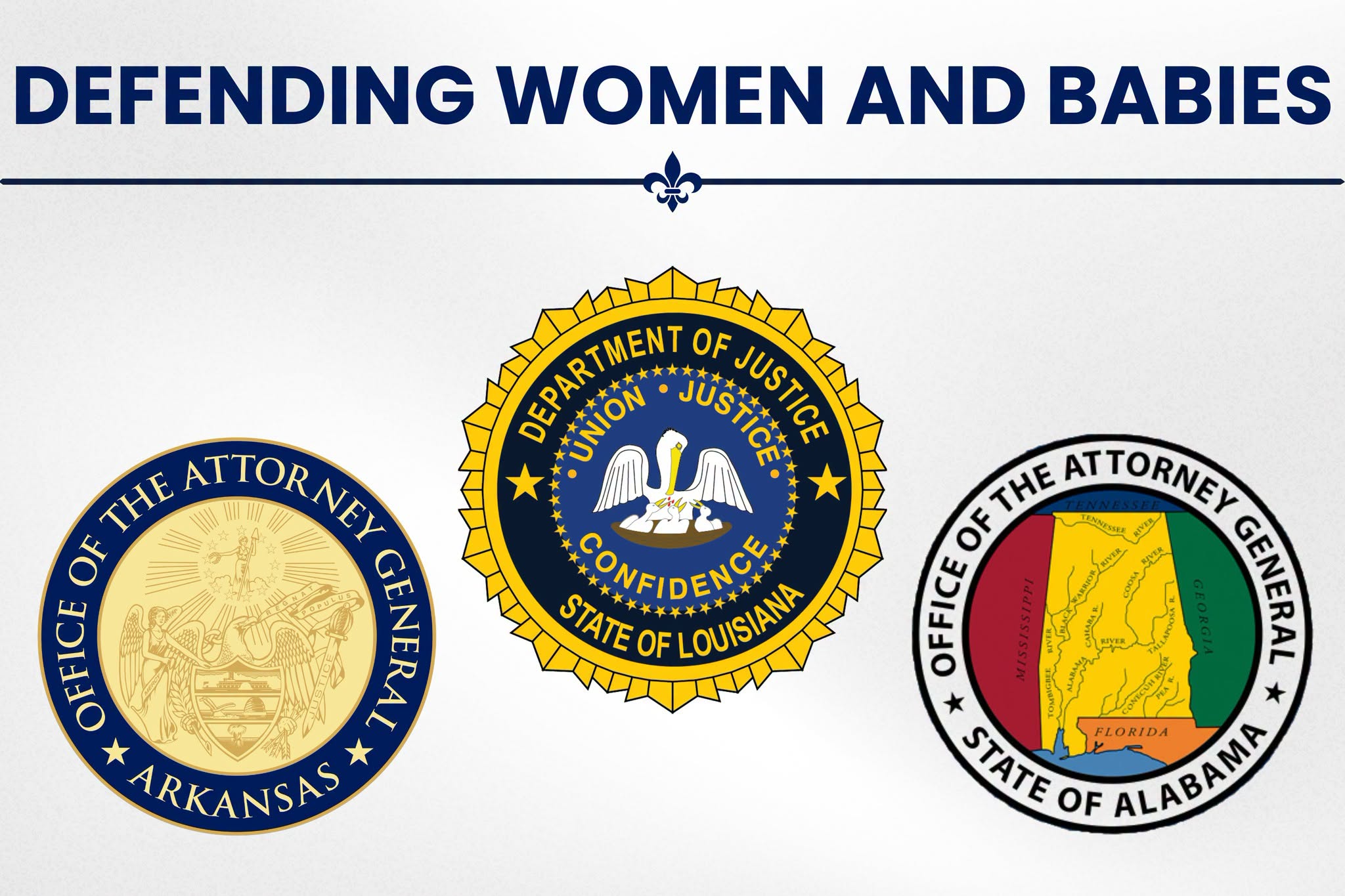
Last week, the State of Arkansas joined Louisiana and Alabama in two new, multistate lawsuits over abortion drugs.
Since 2022, Arkansas law has generally prohibited abortion except to save the life of the mother, and it is a crime for an abortionist to mail abortion drugs into Arkansas. But Biden-era policies and state “shield laws” enacted by pro-abortion legislatures have made it possible for abortionists in other parts of the country to mail abortion drugs into states like Arkansas.
Last week’s federal lawsuits challenge this dangerous mail-order abortion industry. But many of the news stories about the lawsuits overlooked important facts pro-lifers need to know.
Below are three things you may have missed about last week’s pro-life lawsuits:
1. These are Actually Two Lawsuits Addressing Abortion Pills from Two Different Angles
Louisiana, Arkansas, and Alabama filed two different lawsuits that address abortion pills from two different angles.
The lawsuit Louisiana v. New York was filed with the U.S. Supreme Court against the States of New York, Massachusetts, and California. It argues that these three states have created legal systems specifically designed to protect abortionists who break abortion laws in Arkansas, Louisiana, and Alabama, and it asks the Supreme Court to strike down their state “shield laws.”
The second lawsuit is Louisiana v. Nouhavandi, which was filed against 29 people and organizations in federal court in Louisiana. It alleges the people and groups named in the lawsuit are part of a nationwide network that ships abortion pills through the mail. Louisiana v. Nouhavandi says these organizations and individuals committed deceptive trade, designed their operations to avoid state medical laws, and have harmed women and girls.
The Louisiana v. Nouhavandi lawsuit includes approximately 90 exhibits it says support these claims.
Most of the media coverage seems to be focused on the Louisiana v. New York lawsuit that asks the U.S. Supreme Court to stop pro-abortion states from giving special protection to abortionists who send abortion pills through the mail.
Overturning these pro-abortion “shield laws” would be a huge victory, but winning the deceptive trade case in Louisiana v. Nouhavandi could be just as important.
2. Louisiana v. Nouhavandi Says Abortionists and Their Associates May Have Engaged in Racketeering
The Louisiana v. Nouhavandi lawsuit accuses 29 individuals and organizations of “a sweeping, coordinated scheme to violate” abortion drug and consumer protection laws in Louisiana, Arkansas, and Alabama, writing:
“The scheme is simple. The organizations operate websites advertising abortion drugs in Plaintiff States [Louisiana, Arkansas, and Alabama]. The organizations use a short questionnaire in which website users (anonymous men, women, and children) can represent (or misrepresent) their alleged pregnancy status. The website users then pay a fee for the abortion drugs or represent that they cannot afford the fee (in which case most organizations will assume the cost). Some organizations then use mail-order pharmacies to ship the drugs (predominantly from California) to addresses in Plaintiff States; others handle their own shipments after ‘pill-packing parties fueled by pizza and wine.’ The drugs are then used to abort babies in Plaintiff States and, in documented instances, send women to emergency rooms with severe bleeding and excruciating pain.”
The lawsuit goes on to argue that this scheme not only violated consumer protection laws, but also may have broken state and federal laws against racketeering.
On page 85, the lawsuit says:
“Given the allegations in this complaint, Plaintiff States believe that Defendants—or at least a subset of Defendants—are violating the federal Racketeer Influenced and Corruption Organizations Act (RICO) and its state law counterparts. At this time, however, Plaintiff States lack a complete picture of the full extent of Defendants’ conduct. Accordingly, Plaintiff States reserve their rights to amend their complaint to add federal and state RICO claims if discovery confirms Plaintiff States’ belief that Defendants are violating RICO. In addition, Plaintiff States reserve their rights to amend their complaint to add further corporate entities and individuals that discovery reveals to be implicated by the schemes detailed above.”
In lawsuits like this one, the “discovery” process gives the lawyers at the attorney general’s office an opportunity to subpoena documents, conduct depositions, and collect evidence.
The Louisiana, Arkansas, and Alabama attorney general offices seem to believe that racketeering has occurred and that the discovery process will show just how much.
3. A Third Lawsuit Is Coming “Soon” Against an Abortion Pill Seller Overseas
The Louisiana v. Nouhavandi consumer protection case mentions Aid Access — an abortion pill seller that Arkansas Attorney General Tim Griffin sent a cease-and-desist letter to in 2024.
Aid Access advertises that it provides “abortion services” to all 50 states by selling abortion pills online and working with abortionists to send the pills through the mail.
But Aid Access is located in Amsterdam, and it is not included as a defendant in the Louisiana v. Nouhavandi lawsuit. However, Louisiana, Arkansas, and Alabama apparently plan to sue Aid Access soon.
A footnote on page 35 of the lawsuit says, “Due to unique issues surrounding foreign service of process, Plaintiff States will soon file a separate lawsuit against Aid Access.”
In other words, at least one more lawsuit is still on the way.
Conclusion
We appreciate Arkansas Attorney General Tim Griffin working with Louisiana Attorney General Liz Murrill and Alabama Attorney General Steve Marshall on this important issue.
Abortion drugs are dangerous. They hurt women, and they kill unborn children.
Research shows nearly 11% of women experience serious health complications from abortion pills — including sepsis, infection, and life-threatening hemorrhage.
These drugs should not be available at all — much less through the mail without an in-person visit with a doctor. That is why Family Council is encouraging pro-lifers everywhere to ask the federal government to stop letting abortionists deliver abortion drugs through the mail.
Arkansans should be proud of their pro-life leaders at the Attorney General’s office and in the state legislature.
We are confident our federal courts ultimately will recognize how dangerous these abortion drugs are and let states like Arkansas enforce their pro-life laws.
Articles appearing on this website are written with the aid of Family Council’s researchers and writers.
Arkansas State Police Seize 60 Pounds of Illegal Marijuana in Back-to-Back Traffic Stops
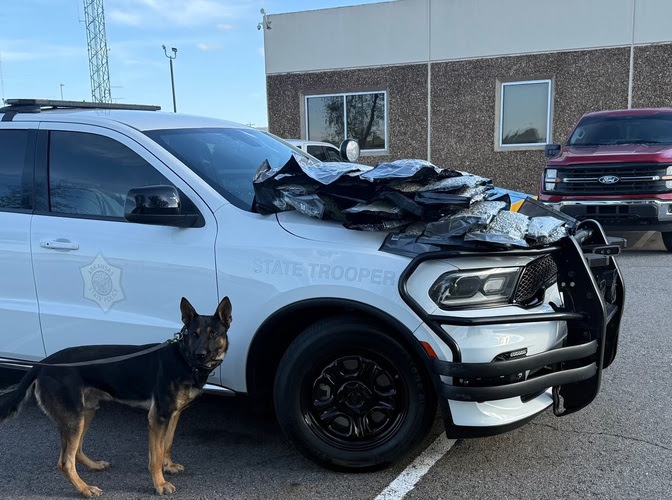
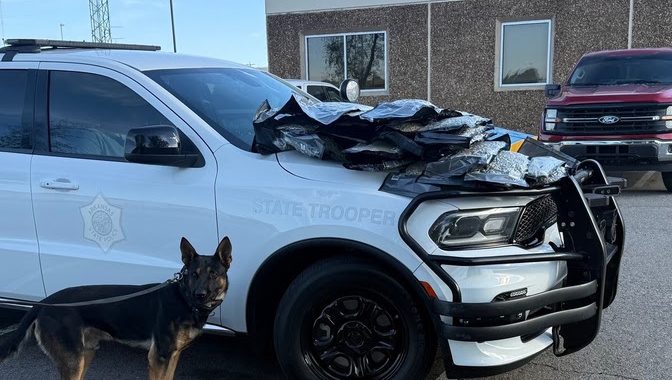
On September 23, state troopers intercepted nearly 60 pounds of illegal marijuana and 200 grams of THC vape products during back-to-back traffic stops on I-40.
Nationwide, many states have legalized marijuana to varying degrees, and federal regulators have eased restrictions on the drug. But legalization has actually emboldened drug cartels to ship illicit marijuana across the country — including through states like Arkansas.
In a statement, the Arkansas State Police said:
“Around 2:15 p.m., Troopers stopped a Nissan Rogue traveling eastbound on I-40 near mile marker 72 for traffic violations.
“A search of the vehicle revealed suitcases containing 30 individually packaged bundles of illegal marijuana with a combined weight of approximately 30 pounds. The driver, Darnell Keith Russell Reed, 39, of Waynesboro, Va., was arrested along with passenger, Ashley Renee Carter, 36, also of Waynesboro. Troopers also seized $4,510 in cash from Carter. Reed and Carter were transported to the Pope County Detention Center. Both are being held on charges of Possession of Drug Paraphernalia and Possession of a Controlled Substance with Purpose to Deliver. Reed was also found to be driving on a suspended license.
“Around 4:15 p.m., Troopers stopped a Ford Bronco Sport traveling eastbound on I-40 near mile marker 77 for a traffic violation.
“A search of the vehicle uncovered 29 vacuum-sealed packages of illegal marijuana, weighing about 29 pounds, and 100 THC vape cartridges.
“The driver, Jermaine Bowers, 35, was arrested and transported to the Pope County Detention Center, where he was charged with Possession of a Controlled Substance with Purpose to Deliver.”
I-40 is part of a major drug trafficking corridor that passes through Arkansas, and the Arkansas State Police routinely intercept marijuana from other parts of the country that appears to be intended for the black market.
Contrary to popular belief, legalizing marijuana does not weaken the black market. If anything, it makes the black market stronger.
Authorities in California seized more than 63,000 pounds of illegal marijuana from April to June of this year and made multiple raids at illegal marijuana sites over the summer. Law enforcement officers have told news outlets that legalization has been “a total failure in California,” saying the state had been inundated with black market marijuana.
The U.S. Department of Justice has said organized crime from Mexico and China may be making millions of dollars from marijuana grown on U.S. soil. Grow sites often use illegal pesticides that poison users and pollute the local environment.
These illegal marijuana operations often are believed to be tied to labor trafficking and violent crime, contributing to what some have called “modern day slavery on American soil.”
However, the problem is much larger than illegal grow sites.
In many cases marijuana may be grown legally but then illegally diverted to the black market. In Oklahoma, for example, growers produce an estimated 60 times more marijuana than Oklahomans can legally use. Authorities say much of Oklahoma’s marijuana is sold on the black market.
In Arkansas, marijuana’s supporters have argued that legalization could decrease Arkansas’ crime problems or be good for police, but experience shows that has not been the case in other states.
All of this underscores what we have said for years: Marijuana may be many things, but “harmless” simply is not one of them.
Articles appearing on this website are written with the aid of Family Council’s researchers and writers.