
Gov. Sanders Refuses to Rescind Christmas Proclamation

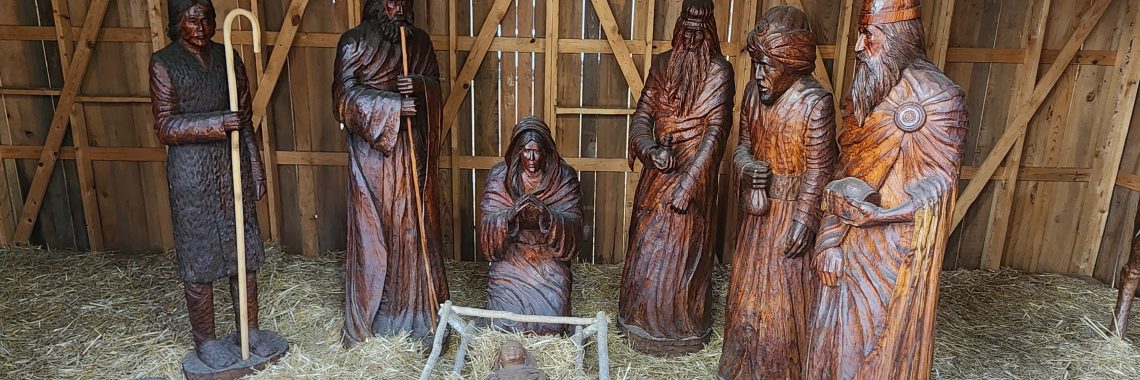
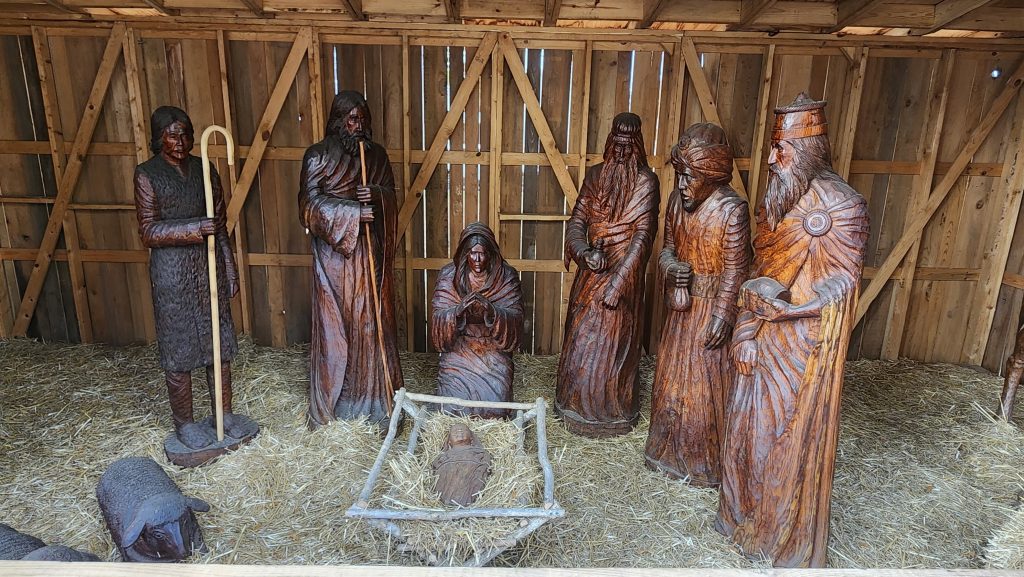
Above: The Nativity Scene the adorns Arkansas’ Capitol Lawn.

On Monday, Arkansas Governor Sarah Huckabee Sanders released a statement refusing to comply with a Freedom From Religion Foundation letter asking her to rescind her Christmas proclamation.

The governor’s proclamation tells the Christmas Story about the birth of Christ, and it ensures State offices will be closed December 25 and 26 in observance of Christmas.

In response, the Wisconsin-based atheist organization sent Gov. Sanders a letter claiming her proclamation violated the First Amendment by sharing the story of Christ’s birth. The group demanded she rescind the proclamation.

In her response, Gov. Sanders told the Freedom From Religion Foundation it would be “impossible” to keep religion out of Christmas.

“Christmas is not simply an ‘end-of-the-year holiday’ with ‘broadly observed secular cultural aspects,'” Sanders wrote. “Christmas is the celebration of the birth of Jesus Christ, and if we are to honor Him properly, we should tell His miraculous, world-changing story properly, too.”

This is not the first time the Freedom From Religion Foundation has targeted the free exercise of religion in Arkansas.

The Freedom From Religion Foundation is currently suing the State of Arkansas to remove a monument of the Ten Commandments from the Capitol lawn in Little Rock, and it recently joined a lawsuit to prevent public schools and buildings in Arkansas from displaying the Ten Commandments.

In 2022, the atheist group issued a statement celebrating the defeat of religious freedom amendment Issue 3, which narrowly failed at the ballot box in Arkansas.

The Freedom From Religion Foundation has opposed public prayer at meetings and gatherings in Arkansas.

In 2017 the group demanded that then-Gov. Asa Hutchinson stop sharing Bible verses on his Facebook page.

In 2016 the foundation went after Washington County election officials for using churches as polling places.

The Freedom From Religion Foundation has even complained about the fact that that Arkansas’ public school students can study the Bible academically — even though it is one of the oldest texts in existence and has had a profound influence on human history.

Gov. Sanders is right when she says Christmas is about Christ. There shouldn’t be anything controversial about acknowledging that.

Articles appearing on this website are written with the aid of Family Council’s researchers and writers.
Out-of-State Attorneys Join Ten Commandments Lawsuit

Out-of-state attorneys from atheist organizations have been given a green light to participate in a lawsuit  that would block the Ten Commandments in Arkansas’ schools and public buildings.

Arkansas law requires a copy of the national motto, “In God We Trust,” to be displayed in public schools and other public buildings. Act 573 of 2025 by Sen. Jim Dotson (R — Bentonville) and Rep. Alyssa Brown (R — Heber Springs) requires a historical copy of the Ten Commandments to be displayed as well. The measure received strong support in the Arkansas Legislature earlier this year, and the governor signed it into law on April 14. Act 573 is slated to take effect later this summer.

However, the ACLU filed a lawsuit on June 11 to block Act 573. On Monday, the federal court issued a series of procedural orders letting attorneys from the Freedom From Religion Foundation in Wisconsin and Americans United for Separation of Church and State in Washington, D.C., represent plaintiffs in the case as well.

This is not the first time these groups have opposed laws in Arkansas. The Freedom From Religion Foundation is currently part of a lawsuit to remove a monument of the Ten Commandments from the capitol lawn in Little Rock. And both organizations also have a history of complaining about religious expression in Arkansas.

Over the years, the U.S. Supreme Court has ruled that items that are important to our nation’s history — like the Ten Commandments or the national motto — may be honored and recognized publicly without running afoul of the First Amendment.

The Ten Commandments are one of the earliest examples of the rule of law in human history, and they have had a profound impact in shaping America’s concept of the rule of law as well.

Besides being culturally and historically significant, copies of the Ten Commandments have often appeared in artwork at courthouses and similar locations around the country.

During her testimony in support of Act 573 last April, Rep. Alyssa Brown noted that the U.S. Supreme Court uses a “longstanding history and tradition test” to decide if it is constitutional to display something like a copy of the Ten Commandments. Rep. Brown said, “The Ten Commandments without a doubt will pass this longstanding history and tradition test.”

We believe our federal courts ultimately will agree and uphold Act 573 as constitutional.

Articles appearing on this website are written with the aid of Family Council’s researchers and writers.

Atheist Displays Placed Alongside Nativity Scene at Arkansas Capitol

Above: One of the atheist displays placed near the Nativity on the Arkansas Capitol lawn.

This month the Freedom From Religion Foundation and the Arkansas Society of Freethinkers placed atheist “winter solstice” displays on the state capitol lawn.

The atheist displays appear alongside the state’s longstanding Nativity display carved by Arkansas artisans and another atheist display by the Arkansas Society of Freethinkers.

The Freedom From Religion Foundation’s display celebrates the winter solstice and the Bill of Rights, and the freethinkers’ display celebrates atheism and atheist organizations, among other things.

In 2009 a federal judge in Little Rock ruled Arkansas’ Secretary of State was obligated to allow a local group of atheists to put up a display marking the winter solstice on the capitol grounds.

The Secretary of State and the Arkansas Legislature likely could prevent these types of displays from appearing on the capitol grounds each December by redesignating its lawn as a limited public forum intended to celebrate state and federal holidays like Christmas.

The irony is that America’s Bill of Rights — which the Freedom From Religion Foundation display celebrates — is the product of a Judeo-Christian worldview.

For example, historians have long recognized the Ten Commandments as one of the earliest examples of the rule of law in human history, and they profoundly shaped our nation’s legal system and ideas about justice.

That’s why there is a carving of Moses holding the Ten Commandments at the apex of the U.S. Supreme Court Building in Washington, D.C.

The Christian understandings of personal liberty, self-government, and rule of law were woven into the founding of our country. Without the birth of Christ, the Bill of Rights arguably never would have been born either.

As Founding Father John Adams put it in 1798, “Our Constitution was made only for a moral and religious people. It is wholly inadequate to the government of any other.”

Or as President Ronald Reagan said at the 1984 Ecumenical Prayer Breakfast in Dallas, Texas:

Without God, there is no virtue, because there’s no prompting of the conscience. Without God, we’re mired in the material, that flat world that tells us only what the senses perceive. Without God, there is a coarsening of the society. And without God, democracy will not and cannot long endure. If we ever forget that we’re one nation under God, then we will be a nation gone under.

The Nativity Scene above adorns Arkansas’ Capitol Lawn each year.