
Most Americans Want to Keep Kids Off Social Media

A recent survey from the Pew Research Center shows most Americans support banning children under 16 from using social media.

Between Facebook, Instagram, X, TikTok, YouTube, and other platforms, most teens and young adults are on some form of social media. The U.S. Surgeon General says 95% of American teenagers use social media, and about one-third say they use it “almost constantly.” But parents, policymakers, and pundits have raised concerns about the harm that social media can cause to kids.

According the survey Pew conducted, 56% of U.S. adults support a ban on social media use for anyone under 16. Only 21% oppose it. Pew found support for the ban is bipartisan and is strong across every major age group. Among parents with children under 18, with 65% support keeping kids off social media.

Besides banning social media for children under 16, adults support other restrictions on social media platforms. Eighty-five percent support requiring parental consent before a child can create a social media account. Seventy-eight percent support age verification requirements for social media platforms. Another 78% support setting time limits on how long minors can use these platforms. All of these figures are up from past surveys — which shows more and more Americans believe social media platforms need guardrails when it comes to children.

A growing body of evidence shows that — by design — social media platforms are not appropriate for children.

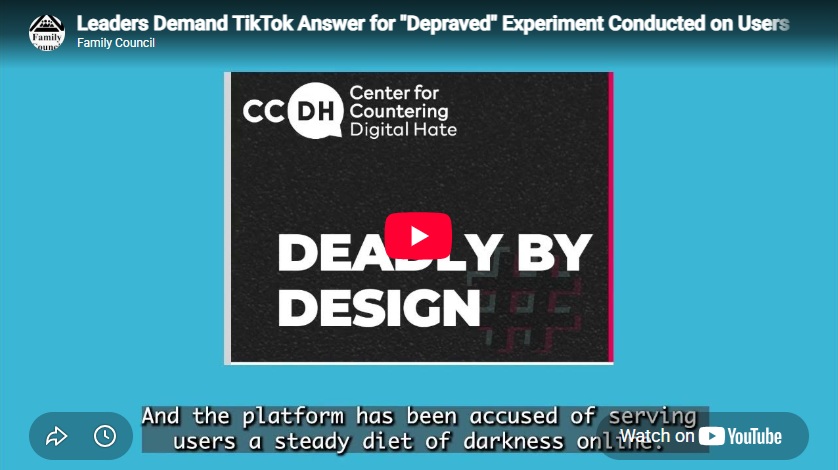
Arkansas Attorney General Tim Griffin has filed a lawsuit accusing Facebook and Instagram of using algorithms intentionally designed “to exploit human psychology and foster addiction to maximize users’ screen time.” TikTok has been accused of serving kids a steady “diet of darkness” online. Courts in New Mexico and California have already found Meta liable for harming children on its platforms.

Social media is more than just websites or phone apps. These are multibillion dollar businesses with tremendous influence. The adults who own and profit from these businesses have a responsibility to protect children on their platforms.

Arkansas has been ahead of the curve on this issue. The Arkansas Legislature passed laws designed to protect children online, and Arkansas Attorney General Tim Griffin has sued Meta and TikTok in state court. In fact, Family Council is not aware of any attorney general in America who is doing more to hold social media giants accountable and protect children online than Attorney General Griffin. But more needs to be done.

Pew’s survey confirms that adults understand these platforms are not safe for kids and support stronger protections for children online. Policymakers need to be sure those protections are put in place.

Articles appearing on this website are written with the aid of Family Council’s researchers and writers.

TikTok in the Dock: Arkansas A.G. to Take on Social Media Giant in 2026 Showdown

The Arkansas Attorney General’s lawsuit against social media giant TikTok is scheduled to go to trial in October 2026, according to a recent scheduling order from the Cleburne County Circuit Court.

With upwards of a billion users worldwide, including some 150 to 170 million in the U.S., TikTok is among the most popular social media outlets on earth.

But TikTok is more than an app. It’s a major corporation owned by a China-based parent company, and it is valued at $300 billion.

However, TikTok has found itself embroiled in controversies over its failure to protect private user data from entities in China — including the Chinese Communist Party. In May 2025, Ireland’s Data Protection Commission fined TikTok $600 million for unlawfully transferring European user data to China.

The platform also has been accused of serving users a steady “diet of darkness” and violating laws intended to protect children online.

In 2023, the Arkansas Attorney General’s office filed a lawsuit against Chinese-based company ByteDance — the corporation that owns TikTok — in Cleburne County Circuit Court.

Attorneys for TikTok worked relentlessly to have the lawsuit dismissed, but the Arkansas Supreme Court has given the A.G.’s office a green light to pursue the case.

Attorney General Griffin’s lawsuit alleges TikTok violated Arkansas’ Deceptive Trade Practices Act by falsely claiming that graphic and mature content on its platform is appropriate for teens. The lawsuit also calls the TikTok app “a Chinese ‘Trojan Horse’ unleashed on unsuspecting American consumers.”

As we keep saying, social media platforms are more than just websites or phone apps. These are multibillion-dollar businesses. The people who own and profit from these companies have a responsibility to protect their users.

Family Council is not aware of any attorney general in America who is doing more to hold social media giants accountable and protect children online than Arkansas Attorney General Tim Griffin. We appreciate his willingness to continue this legal fight against TikTok in state court.

Articles appearing on this website are written with the aid of Family Council’s researchers and writers.

8th Circuit Gives Arkansas A.G. Greenlight to Appeal Case Protecting Kids Online

Earlier this month the Eighth Circuit Court of Appeals gave Arkansas Attorney General Tim Griffin’s office a greenlight to continue defending a state law designed to protect children online.

In 2023 the Arkansas Legislature passed the Social Media Safety Act. This good law by Sen. Tyler Dees (R – Siloam Springs) and Rep. Jon Eubanks (R – Paris) requires major social media companies to ensure minors don’t access social media platforms without parental consent. A social media company that violated the law could be held liable.

In response, a group of social media tech giants sued to strike down the Social Media Safety Act as unconstitutional.

In March U.S. District Judge Timothy Brooks in Fayetteville issued a final order blocking the State of Arkansas from enforcing the Social Media Safety Act. Among other things, Judge Brooks’ ruling claims that Arkansas’ Social Media Safety Act is unconstitutionally broad and vague.

However, the A.G.’s team has appealed that decision. A panel of judges at the Eighth Circuit have now asked Attorney General Griffin to submit a brief in the case by November 3.

A growing body of evidence shows that — by design — social media platforms are not appropriate for children.

TikTok has been accused of serving kids a steady “diet of darkness” online and struggling to protect private user data from entities in China, such as the Chinese Communist Party.

The Arkansas Attorney General’s Office has filed documents in other court cases alleging that platforms like Facebook and Instagram are built around algorithms intentionally designed “to exploit human psychology and foster addiction to maximize users’ screen time,” and that this exploitation is especially true of young users with developing brains.

Social media platforms are more than just websites or phone apps. These are multibillion dollar corporations, and the adults who own and profit from them have a responsibility to protect children on their platforms. They should not be able to register children as users and let those children post photos and videos on their platforms without parental consent.

Family Council is not aware of any attorney general in America who is doing more to hold social media giants accountable and protect children online than Arkansas Attorney General Tim Griffin. We appreciate his willingness to appeal to the Eighth Circuit, and we are confident our federal courts ultimately will let Arkansas protect children on social media.

Articles appearing on this website are written with the aid of Family Council’s researchers and writers.