
Bringing Back the Bible: Guest Column

The Bible has been the book that has held together the fabric of Western Civilization. … The civilization we possess could not come into existence and could not have been sustained without it. – H.G. Wells 

This quote opens a new documentary, Off School Property, which premieres in theaters on October 23. The film aims to correct the record on one of the most misunderstood aspects of America’s storied history: the separation of church and state. Specifically, the film attempts to convince Americans that it is not illegal to teach the Bible to public school kids.  

Off School Property was produced by the team at LifeWise Academy and highlights something many Americans do not know. As the film website states:

[W]hile the Bible was being removed, an obscure 1952 Supreme Court ruling paved the way to bring it back. This solution has been sitting right under our noses for 70 years, and it allows students to study the Bible—legally—during the public school day. 

The goal of LifeWise Academy is to expand Bible instruction to as many of America’s 50 million public school kids as possible, using a network of buses, off-site class space, and a growing number of trained teachers. In addition to the logistical challenge, the most difficult task is to correct the false assumption that there is no place for God or the Bible in government-run schools. It is an assumption based on the enduring myth that the freedom of religion guaranteed by the First Amendment is really freedom from religion.  

This interpretation relies on a phrase from Thomas Jefferson’s Letter to the Danbury Baptists, the first reference to “a wall of separation between Church & State.” But this interpretation of The First Amendment and Jefferson’s letter is exactly backwards. In the vision of America’s Founders, religious freedom is not about keeping religion out of government but keeping government out of religion.  

By the mid-twentieth century, this interpretation was replaced by hostility for religion. People were expected to leave their faith outside the voting booth, outside the courtroom, and, most notably, outside the schoolhouse door. When Madalyn Murray O’Hair pushed for Bibles to be removed from public schools, she did not appeal to “neutrality.” Rather, she declared, “We are Atheists. As such, we are foes of any and all religions. We want the Bible out of school because we do not accept it as being either holy or an accurate historical document.”

Ideas have consequences, and bad ideas have victims. American students have been told for generations that life has no meaning, that truth is an illusion, that moral claims are impositions of power, that they are animals, and that God is a matter of personal preference. In the Abolition of Man, C.S. Lewis argued against this approach to education, which he called making “men without chests”: 

In a sort of ghastly simplicity we remove the organ and demand the function. We make men without chests and expect of them virtue and enterprise. We laugh at honour and are shocked to find traitors in our midst. We castrate and bid the geldings be fruitful. 

Off School Property corrects the record about the separation of church and state as applied to America’s government-run schools. In 1952, the Supreme Court of the United States ruled that teaching the Bible during the school day was, in fact, legal, if it was privately funded, conducted off school property, and done with parental permission. LifeWise Academy has built a national model of launching and resourcing Bible education to public school students during school hours. The LifeWise model is “plug and play” and has been implemented in over 150 school districts across the country.

Off School Property premiers in theaters October 23. Visit lifewise.org/offschoolproperty for more information and to find a theater near you that will be airing the film.

Copyright 2025 by the Colson Center for Christian Worldview. Reprinted from BreakPoint.org with permission.
The Quiet Revival of Gen Z: Guest Column

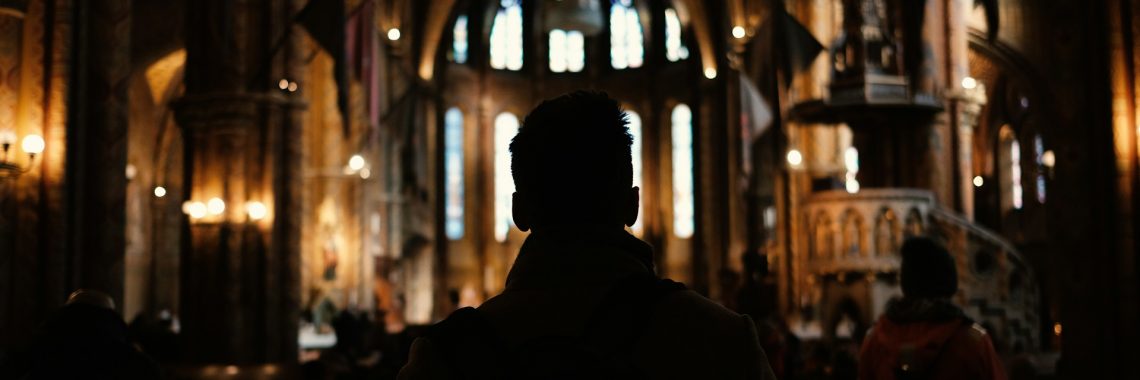
Back in April, The Bible Society of the U.K. issued a report describing a “quiet revival” across England and Wales. “Church decline in England and Wales has not only stopped,” read the subheading, “but the Church is growing, as Gen Z leads an exciting turnaround in church attendance.” Though the report has its fair share of critics, it launched an essential conversation. 

Last Sunday, James Marriott continued that conversation with an article in the U.K. publication The Times entitled “Full-fat faith: the young Christian converts filling our churches.” Marriott, who labels himself “a dry and desiccated materialist,” described what he called “a comeback for Christianity.” At least part of this comeback is, Marriott thinks, due to a widespread and growing disenchantment with atheism. Once, he wrote: 

[I]t was widely held that the world was soaring ineluctably along an arc of enlightened progress. We were all destined to become richer, more democratic, more just, more rational and more secular. But those optimistic beliefs have been sorely tested in difficult recent years. Anyone tempted to simply dismiss the idea that religion could ever revive may not grasp how dramatically the cultural and economic landscape inhabited by young people has changed. 

Instead of the utopia that was promised, the post-9/11 reality included economic disruption, Covid, wokeness, and thought police. As a result, many young people are rebelling to a more traditional form of the Christian faith. According to Marriott: 

If you’re young, the establishment is obviously secular. Nowadays, it is precisely Christianity’s marginal status that lends it glamour and charisma, comparable perhaps to the appeal of exotic-seeming eastern religions in the 1960s.  

Last week, I spoke about the “quiet revival” in the U.K. with podcaster, author, and apologist Justin Brierley. He was among the first to identify what he called “the surprising rebirth of belief in God.” For example, according to a recent poll of non-Christian, Gen-Z students, 75% said they’d consider attending church if invited. And though church attendance is typically higher on Easter, this past Resurrection Sunday broke records all over Europe. According to one poll, the number of 16– to 24-year-olds in the U.K. attending church at least once a month jumped from 4% in 2018 to 16% in 2024.

There’s still much to learn about this phenomenon, and it remains to be seen how sticky this new-found faith will be for these young people raised in such highly secular environments. It’s fascinating how, merely a decade ago, we were focused on the rise of “the Nones,” who often claimed the church had let them down. Today, we are talking about the rise of the religious who were let down by secularism.  

One more factor worth mentioning, as Marriott put it (perhaps channeling John Calvin)— humans are inescapably religious: 

I suspect the supernatural side of life—not much catered for in secular rationalist democracies—is a constant of human nature, even if only for a minority. It has more room for expression now. If man is a religious animal, God may never really be banished. 

Indeed, secularism as a worldview is simply not big enough for the God-shaped hole in the human heart. As more young people realize this, the Church has an incredible opportunity to help them find the One who can. You can hear my entire conversation with Justin Brierley about the “quiet revival” on a special bonus episode of the Breakpoint podcast.

Copyright 2025 by the Colson Center for Christian Worldview. Reprinted from BreakPoint.org with permission.
Abortion Isn’t Good for Anyone: Guest Column

In a recent article in National Review, Wesley J. Smith described a new study of over one million women in Quebec from 2006 to 2022. The study found that, “Compared with live births and stillbirths, patients with induced abortions had a greater risk of admission for psychiatric disorders, substance use disorders, and suicide attempts over time. ” 

Also, 

Abortion was associated with the long-term risk of hospitalization for psychiatric disorders, substance use disorders, and suicide attempts in models adjusted for age, comorbidity, preexisting mental illness, material deprivation, rural residence, and time period. Abortion was more strongly associated with eating disorders, hallucinogen use disorders, and cocaine use disorders. 

This isn’t the first study to find that abortion, in addition to killing an innocent preborn child, is harmful for women. Back in April, the pro-life group LiveAction reported on another study which indicated that 11% of women who undergo chemical abortion suffer “serious adverse events,” a number far higher than reported by the FDA: 

This means one in ten women experience at least one serious complication from taking mifepristone within 45 days—22 times higher than the “less than 0.5 percent” serious adverse events rate reported by the FDA on the mifepristone label, according to this study. The study authors state that serious adverse events in multiple categories were accounted for in the reported rate. 

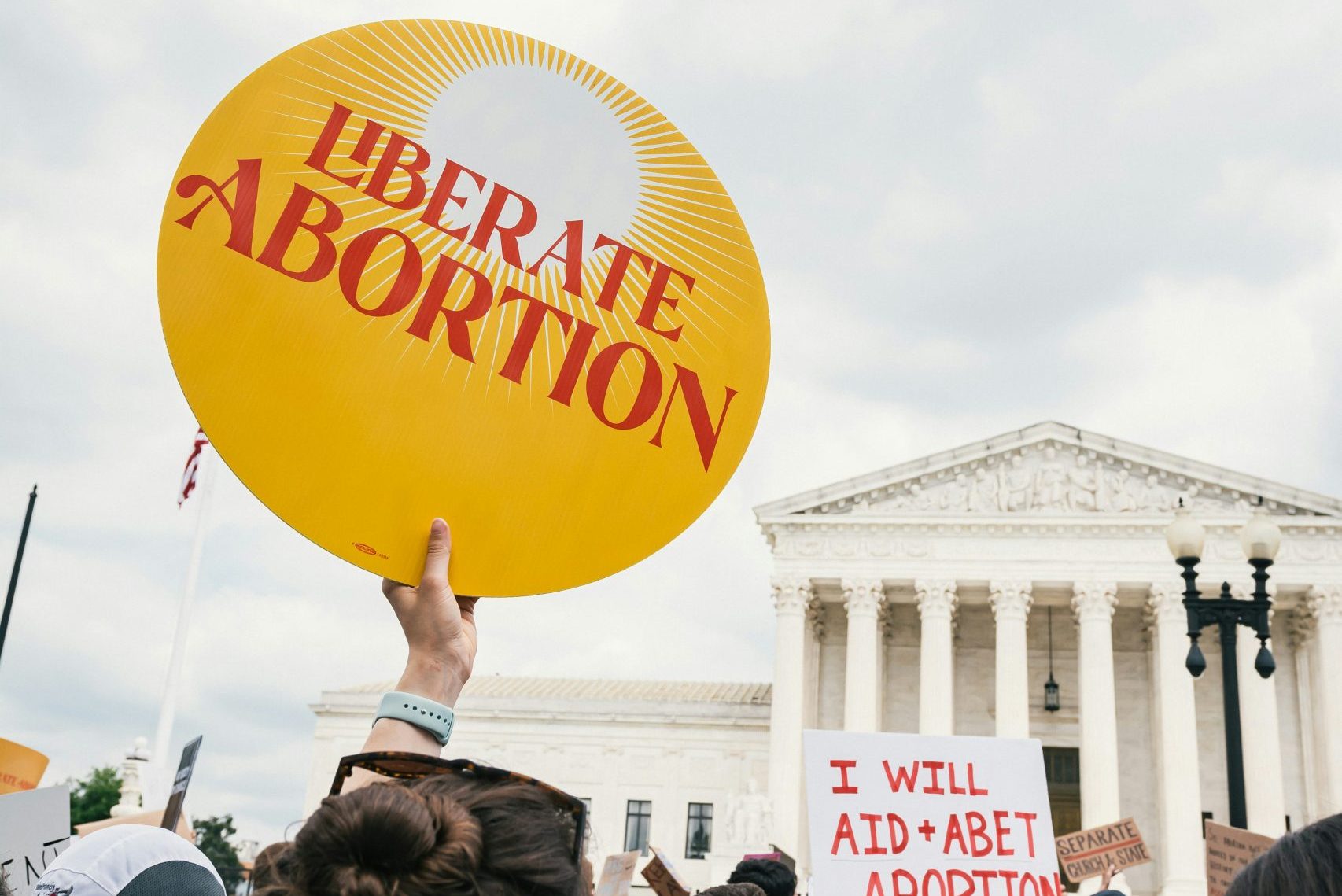
If abortion is truly about women’s health, as advocates claim, they should immediately demand more regulations and limits on the practice. That they do not, but rather double down on demanding abortion as a “right” demonstrates that abortion sits at the center of their worldview. After all, if it were discovered that a common prescription drug, medical procedure, or food had this same likelihood of negative side effects, there would be an immediate call to act and to ban the offending substance. There would not be nationwide rallies claiming whatever it was, was a human right. Yet, in this way and many others, abortion goes unquestioned, treated as if it is the fundamental right of a free people. 

In a recently posted video, Kristan Hawkins, president of Students for Life, shared an encounter with a Michigan State student who approached her and declared, “I love abortion.”  When asked what she liked about abortion, the young woman replied, “I like that people don’t die through birth, and also, babies aren’t being born to people who don’t want babies.” Unwanted babies, she continued, burden the foster care system. When asked if that meant it would be good to kill kids presently in foster care to alleviate the burden on the system, the woman was shocked anyone would suggest killing children. 

Like so many, she refused to connect obvious dots and instead regurgitated talking points. Her response illustrates how challenging it has become to change hearts and minds about abortion, even when the facts are so clearly on the pro-life side. In fact, even as the facts of the matter become more obviously pro-life, commitment to abortion has grown. According to the General Social Survey, agreement with the statement “women should be able to get an abortion for any reason if she wants one” increased from 42% in 2012 to 57% in 2022. 

This is how deeply held beliefs work, especially those held at a foundational worldview level. When absolute autonomy, especially sexual autonomy, is the fundamental source of human value, abortion must become an absolute. Christians who want to move the needle on abortion must understand how worldview works. It’s the only way to make sense of those who refuse the facts about abortion and those who don’t like abortion but refuse to vote to restrict it. The most dominant idea over American culture right now is that nothing should prevent people from living as they please, not even the consequences of reality.  

Unless we engage, counter, and unseat this first principle of this culture’s dominant worldview, it will not matter how many studies we present or how clever our rhetoric. Yes, we should pass as many laws as possible restricting this horror, but we must also pray for God to intervene, love and serve those who are most vulnerable, and seek to persuade as many as we can.

Copyright 2025 by the Colson Center for Christian Worldview. Reprinted from BreakPoint.org with permission.