State Library Board Advances Rules to Protect Children from Explicit Material
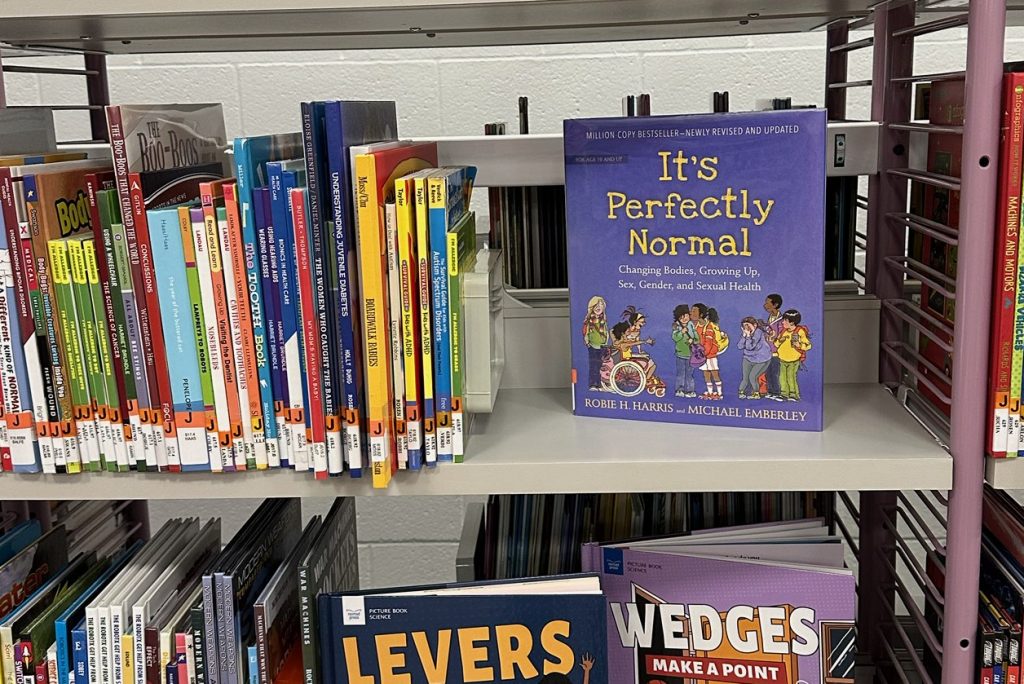
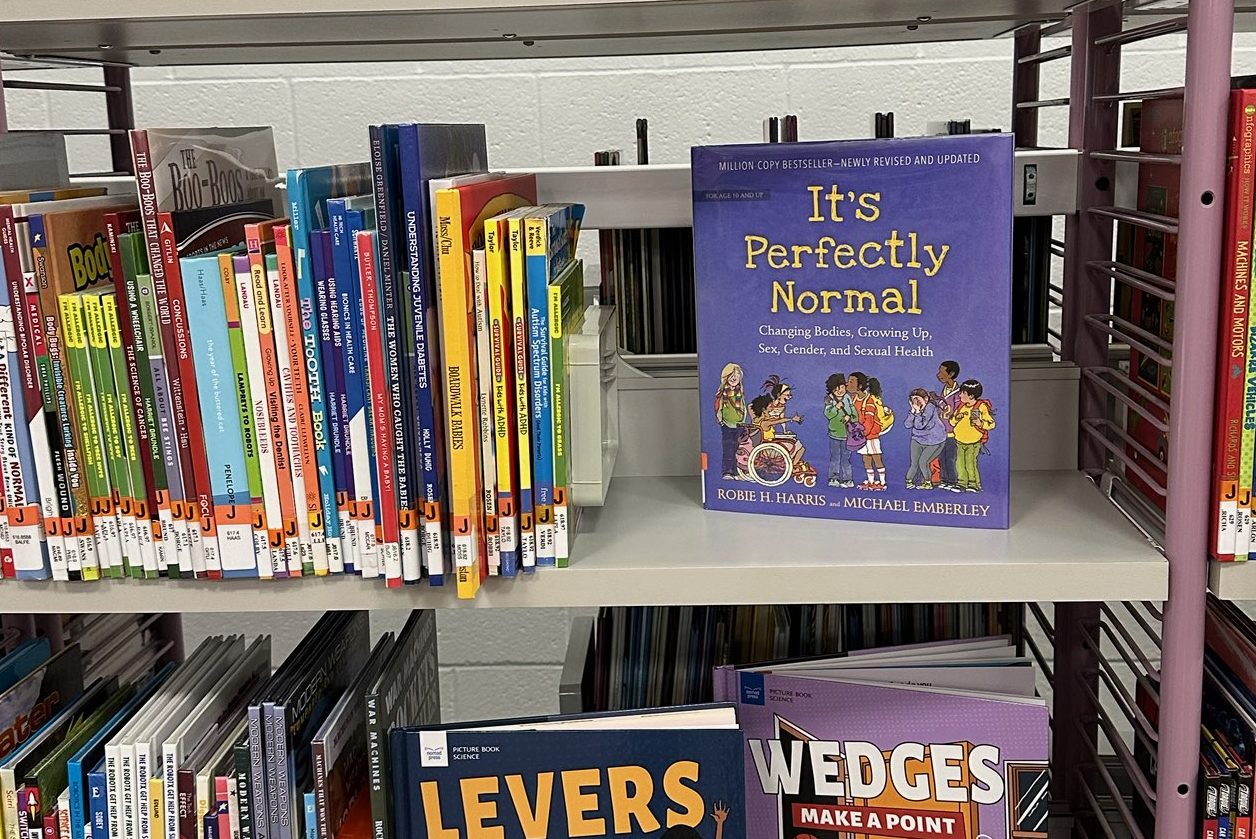
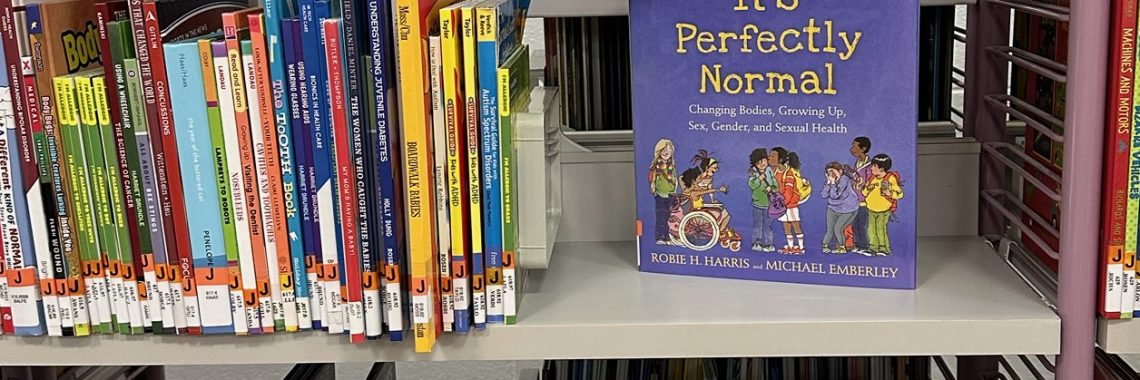
Above: The book It’s Perfectly Normal sits on display in the children’s section of the Craighead County Public Library in Jonesboro in this file photo from 2024. The book contains inappropriate illustrations depicting nudity and sexual activity.

Last week, the Arkansas State Library Board advanced a proposal to help protect children from sexually explicit material in public libraries.

Arkansas is home to many public libraries all across the state, and the library board helps oversee them. But in recent years, parents and policymakers alike have expressed serious concerns about obscene and explicit children’s books that some librarians have placed on the shelves of their local libraries.

At its May 8 meeting, the Arkansas Library Board unanimously approved a proposed set of rules requiring public libraries to ensure children under the age of 16 may not check out sexually explicit materials without parental consent.

Under the rules, libraries would also keep explicit material separate from other areas of the library, and could not knowingly advertise explicit material. Libraries that fail to abide by the rules may not receive state funding.

These proposed library rules are a step in the right direction, because too many libraries in Arkansas have made headlines for promoting sexually explicit material to young children.

For example, the Jonesboro public library has been at the center of multiple controversies over its decision to place books with sexually explicit images in its children’s section and for failing to adopt a policy that separates sexual material from children’s books.

The library even went so far as to post on Facebook that it isn’t the library’s responsibility to protect kids from obscenity.

The controversy in Jonesboro escalated to a point that voters finally decided to reduce the library’s millage in 2022.

Other public libraries in Arkansas have included explicit children’s books in their catalogs and failed to separate sexual material from children’s material as well. Some of these books actually contain explicit images of minors engaged in sexual acts.

Families should not have to worry about what their children might see in the children’s section of a library, and taxpayers should not be forced to subsidize library material that is explicit or obscene. These new rules from the State Library Board could help address those concerns.

Articles appearing on this website are written with the aid of Family Council’s researchers and writers.
Department of Education Data Shows Homeschoolers Excelling Under EFA Program

FOR IMMEDIATE RELEASE
Wednesday, May 13, 2026

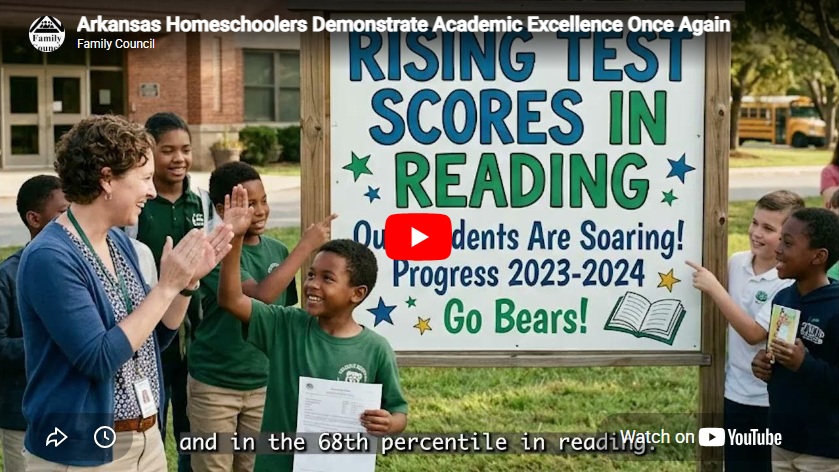
Little Rock, Ark. – Homeschoolers participating in the Educational Freedom Account (EFA) program under the LEARNS Act outperformed students in private schools on state-mandated tests. According to data that Family Council obtained from the Arkansas Department of Education under the Freedom of Information Act homeschoolers, on average, scored in the sixty-third percentile in math and in the sixty-eighth percentile in reading. Meanwhile, private school students enrolled in the same EFA program scored at the fifty-fifth percentile in math and at the fifty-seventh percentile in reading, on average.

In 2023 the Arkansas Legislature created the EFA program to provide funding for students to cover education expenses at a private school or pay for approved homeschool education expenses. Students who receive EFA funds must take a nationally recognized norm-referenced test each year. Supporters of homeschooling say the testing data shows homeschoolers continue to outperform their peers in public and private schools.

In a statement, Family Council President Jerry Cox said, “The test scores speak for themselves. The State of Arkansas is getting more bang for the education dollars invested in homeschooling than anywhere else. When you break down the testing data we received, you find that Arkansas’ homeschoolers don’t just do better, on average. Many of Arkansas’ homeschoolers in the EFA program are outperforming 80% or 90% of their peers. These test scores prove what the Department of Education learned through 30 years of annual homeschool testing from 1985 to 2015: Arkansas homeschoolers score above average in every subject at every grade level every year. These high test scores and the success of homeschooling are evidence that when the government gets out of the way and lets parents educate their children, good things happen.”

Cox said that he hopes this strong showing by homeschoolers will prompt lawmakers and the Department of Education to maintain EFA funding for homeschoolers. “There have always been a few lawmakers and a few people at the Arkansas Department of Education who oppose homeschooling. This opposition has been evident with the introduction of two laws to restrict EFA funds for homeschoolers and with proposed Department of Education rules to place new restrictions on homeschoolers in the EFA program. A lot of homeschoolers are concerned those rules go beyond state law and will make it harder for homeschoolers to educate their children. Lawmakers could vote on those rules soon. The EFA program clearly is working well for homeschool families, and we hope our elected officials will keep it that way.”

###

We are urging Arkansans to ask their lawmakers to make sure the new EFA rules are fair to homeschool families. If you need help contacting your state legislators, please call or email our office, and we will assist you.

Articles appearing on this website are written with the aid of Family Council’s researchers and writers.